
Load-Bearing Capacity of Mobile Toilets
The load-bearing capacity of mobile toilets varies depending on their type and design, primarily falling into two categories: maximum load per unit and floor load-bearing capacity. The following provides an explanation from the perspectives of materials, structure, and usage scenarios:
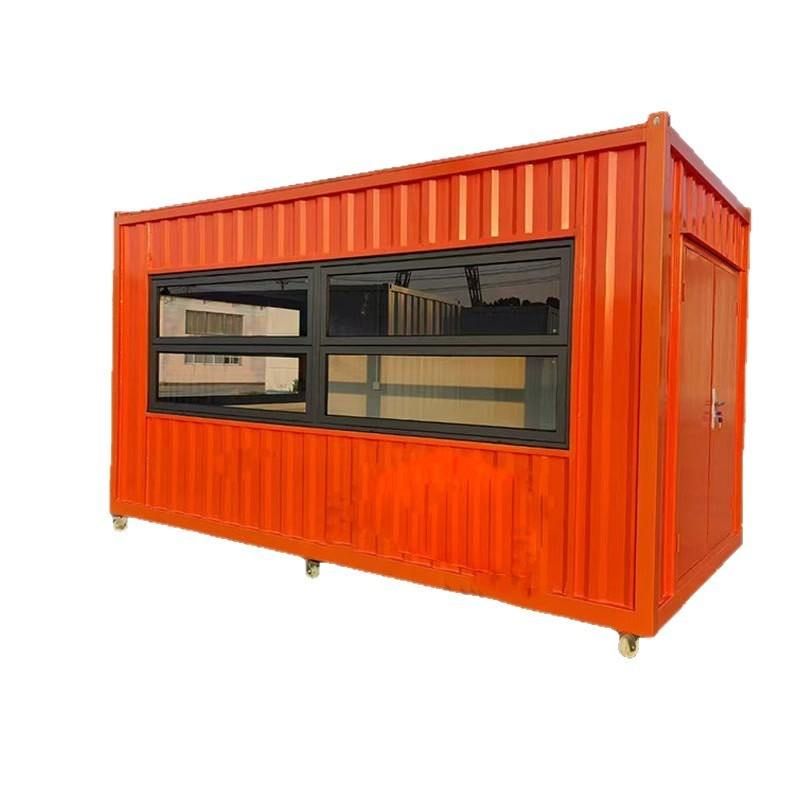
The maximum load per unit typically ranges from 1.5 tons to 3 tons, depending on the material and structural design. Mobile toilets with steel frames have a higher load-bearing capacity due to their stable structure and strong compressive strength, reaching 2.5 tons to 3 tons. They are suitable for large-scale events, temporary construction sites, and other crowded scenarios. These toilets are usually equipped with thicker walls, reinforced support structures, and non-slip floors to distribute weight and enhance stability. In contrast, lightweight mobile toilets made of plastic or composite materials have a lower load-bearing capacity, approximately 1.5 tons to 2 tons, due to their low material density and simplified structure. They are mostly used in daily parks, scenic spots, and other low-frequency usage scenarios. Their design focuses more on portability and cost, but they can still meet basic needs by optimizing internal layout (e.g., reducing non-load-bearing components).
The floor load-bearing capacity is usually between 300 kg and 500 kg per square meter, depending on the toilet size and facility configuration. Simple and small mobile toilets have a lower floor load-bearing capacity, approximately 300 kg per square meter, due to their small footprint and few internal facilities. They are suitable for flat and hard surfaces (e.g., concrete floors). Larger mobile toilets with complete facilities (e.g., equipped with independent compartments and washbasins) have a higher floor load-bearing capacity, reaching 400 kg to 500 kg per square meter, due to their wider weight distribution. They need to be laid on reinforced foundations or concrete bases. Special customized mobile toilets (e.g., for military or disaster relief scenarios) may increase the floor load-bearing capacity to 600 kg per square meter or even higher by thickening the floor and adding support columns to adapt to extreme environments.
In practical applications, it is necessary to comprehensively evaluate load-bearing requirements. For example, in temporary exhibitions, if the expected daily foot traffic exceeds 5,000 people, it is advisable to prioritize toilets with steel frames and a floor load-bearing capacity of 500 kg per square meter, ensuring the ground is flat and crack-free. In low-traffic scenarios such as community parks, toilets made of plastic materials with a floor load-bearing capacity of 300 kg per square meter can meet the needs. Additionally, for long-term usage scenarios, it is essential to regularly inspect the structural stability of the toilets to prevent a decrease in load-bearing capacity due to foundation settlement or material aging.


