Integrated Mobile Toilet
The integrated mobile toilet is a portable sanitation facility that combines multiple functions and structural features. It offers advantages such as water conservation, versatility, and flexible structure, making it suitable for various temporary or special scenarios.

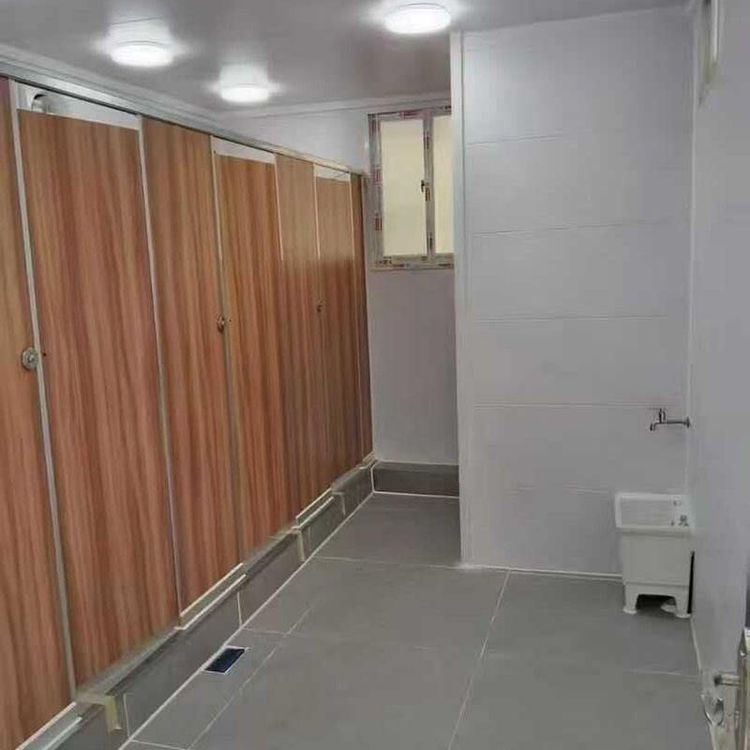
In terms of structural characteristics, some mobile toilets feature a one-piece molded shell with a reinforced chassis, ensuring overall stability and ease of transportation. Internally, they are equipped with vacuum squat toilets and pneumatic flushing devices, requiring only 1 liter of water per flush. This represents an 80% water savings compared to conventional toilets, demonstrating outstanding water conservation performance. Additionally, there are shower-toilet integrated designs that combine toilet and shower functions. These feature a frame made of galvanized steel with a unique shape, such as an apple-pod design, with a central public handwashing area and clearly separated male and female sections. The men's toilet is equipped with squat positions and partitions, fully protecting user privacy.
Regarding components, an integrated mobile toilet typically consists of a fecal sewage storage tank (or fecal sewage treatment device), flooring, sanitary ware, walls, washing facilities, water tanks, roofs, and mobility devices. These components work together to ensure the normal use and convenient mobility of the toilet.
From a classification perspective, mobile toilets can be divided into single-structure and composite-structure types based on their structural form. Single-structure mobile toilets are relatively independent and suitable for scenarios with limited space or high flexibility requirements. Composite-structure mobile toilets are composed of multiple single units, offering more comprehensive functions to meet the needs of more users. Based on mobility methods, they can be classified as lifting/handling mobile toilets and powered/trailer-mounted mobile toilets. Lifting/handling mobile toilets are suitable for short-distance movement or when site conditions permit, while powered/trailer-mounted mobile toilets can be towed by vehicles for rapid long-distance movement. According to sewage treatment methods, they can be categorized as water-flush and non-water-flush suction mobile toilets, circulating water-flush mobile toilets, and dry-packing mobile toilets. Water-flush and non-water-flush suction mobile toilets handle sewage directly; circulating water-flush mobile toilets enable water resource recycling, further conserving water; and dry-packing mobile toilets do not require water, using a packing method to handle feces, making them suitable for water-scarce areas.