
Mobile Toilet Insulated Door
Currently, no standardized independent product of an 'insulated door' specifically designed for mobile toilets has been found, but similar functions can be achieved by combining insulation materials with the door structure. The insulation needs of mobile toilets are usually indirectly met through overall wall insulation design or general-purpose insulated door products. The following analysis is conducted from the perspectives of technical principles, existing solutions, and optimization directions:
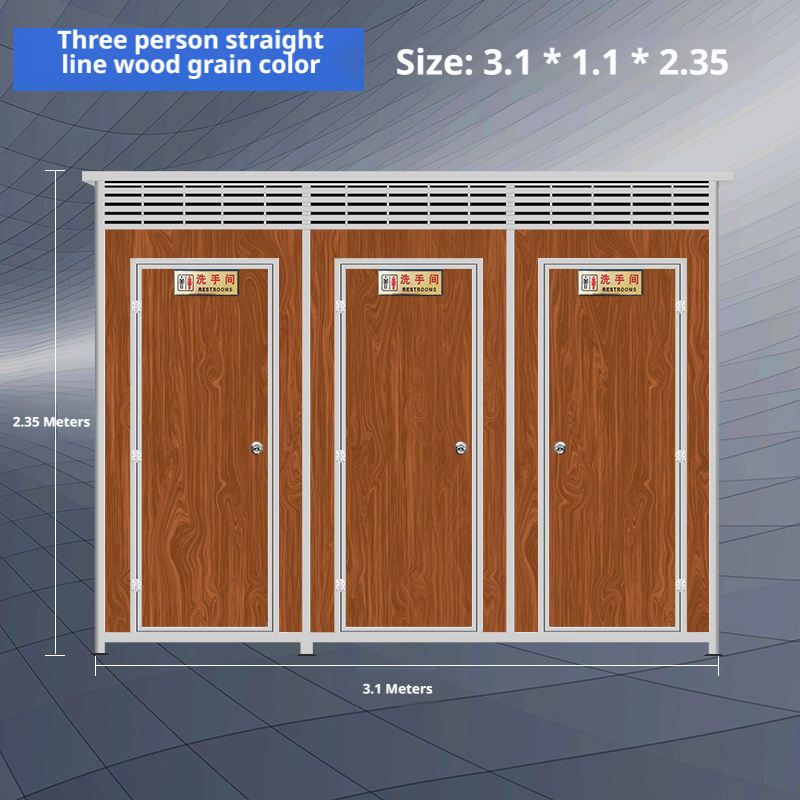
I. Core Insulation Needs of Mobile Toilets
Mobile toilets are mostly used in outdoor or temporary settings. In winter, two key issues need to be addressed:
- Heat Loss Control: Frequent opening and closing of the door allow cold air to infiltrate. If the insulation is insufficient, the internal temperature may drop below 0℃, affecting equipment operation (such as water tank freezing) and user experience.
- Condensation Prevention: When there is a large temperature difference between the inside and outside, water droplets are prone to condense on the inner side of the door, which may lead to mildew or corrosion of metal components over time.
Existing solutions mostly focus on wall insulation (such as using polyurethane sandwich panels or rock wool panels to construct thick walls), but there is little targeted design for the door. Insulation needs to be achieved by modifying general-purpose door types.
II. Technical Paths for Insulated Doors Suitable for Mobile Toilets
Modification of General-Purpose Insulated Doors
- Structural Selection: The honeycomb structure design of 'honeycomb blind interior sliding doors' can be referred to. The internal hexagonal cavities can effectively block air convection and reduce heat conduction efficiency. If such a structure is applied to mobile toilet doors, materials with strong weather resistance (such as PVC or aluminum alloy frames paired with waterproof honeycomb blinds) need to be selected, and door seam sealing strips should be added to reduce air leakage.
- Material Upgrade: The door panels can be filled with polyurethane foam or aerogel blankets. These two materials can maintain stable insulation performance in the temperature range of -20℃ to 80℃, and their thickness can be controlled (when the density of polyurethane foam is 30-50kg/m³, the thermal conductivity is about 0.022W/(m·K)).
Quick Disassembly and Assembly Design
Mobile toilets need to be transported frequently, and the door should balance insulation and lightweight. The track design of 'invisible sliding doors' can be adopted, and the insulated door can be designed as a detachable module. It is fixed to the door frame with buckles or bolts and can be stacked after disassembly during transportation to reduce space occupation.
III. Precautions in Practical Applications
- Moisture-Proof Treatment: The outdoor environment has high humidity, and the door materials need to be waterproof (such as being coated with fluorocarbon coatings on the surface) to prevent an increase in the thermal conductivity of the insulation materials after moisture absorption.
- Safety Compliance: If mobile toilets are used in public places, the door should comply with fire safety standards (such as using B1-grade flame-retardant materials) and be equipped with emergency opening devices to prevent the door from being deformed and unable to open due to an excessively thick insulation layer.
Although there is no specific product of a 'mobile toilet insulated door' on the market currently, similar functions can be achieved at a low cost by combining general-purpose insulation technologies and optimizing the door structure. It is recommended to adjust the material thickness and sealing level according to specific usage scenarios (such as severely cold regions in the north or damp and cold regions in the south).



