
Mobile Toilet in RV
A mobile toilet in an RV is an important part of RV life, providing convenience for travel.
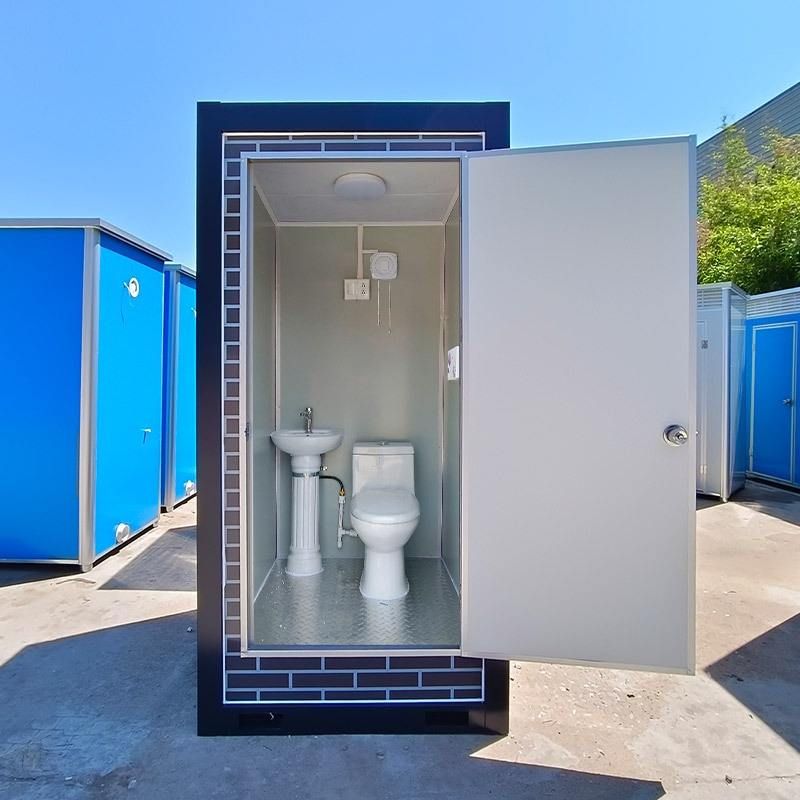
Mobile toilets in RVs mainly fall into three types: portable, fixed, and dry, each differing in structure, usage scenarios, and functional features.
Portable mobile toilets are typically composed of an independent water tank and a toilet bowl. They are compact and detachable, suitable for short trips or small RVs with limited space. Their main advantage is high flexibility, allowing users to adjust their positions or clean them as needed at any time. For example, the built-in portable toilet in the T6 Black Knight RV model not only meets basic excretion needs but also fits well with the overall layout of “one bedroom, one living room, one kitchen, and one bathroom,” demonstrating reasonable space utilization.
Fixed mobile toilets are directly installed inside the RV and connected to a wastewater tank through pipes, forming a closed sewage system. These toilets are commonly found in long-term travel or large RVs, offering strong stability and a user experience close to that of a home bathroom. For instance, some RVs optimize pipe design to directly channel waste into a black water tank, reducing the hassle of frequent cleaning. However, the wastewater tank needs to be emptied regularly to avoid odors.
Dry mobile toilets use special materials to decompose waste without the need for water flushing, meeting environmental protection requirements. Their core principle involves mixing waste with bacterial materials or degrading agents (such as coconut shells), which are then stirred and heated to rapidly decompose into harmless substances. The final products can be used as fertilizers. For example, biodegradable toilets use bacterial material decomposition and negative pressure exhaust technology to effectively suppress odors, addressing the pain point of traditional black water tank cleaning. Smart biotoilets further optimize degradation efficiency, requiring users to only replace the degrading material monthly for long-term use.
In addition, the design of mobile toilets in RVs also focuses on optimizing the user experience. For example, some models feature a separate shower and toilet with a wet-dry separation layout to improve hygiene conditions. Smart toilets simplify operation through automated stirring and heating functions. The fertilization of degraded products reflects the concept of resource recycling. These innovative designs have upgraded mobile toilets in RVs from single-function devices to comprehensive systems that combine convenience, comfort, and environmental protection.



