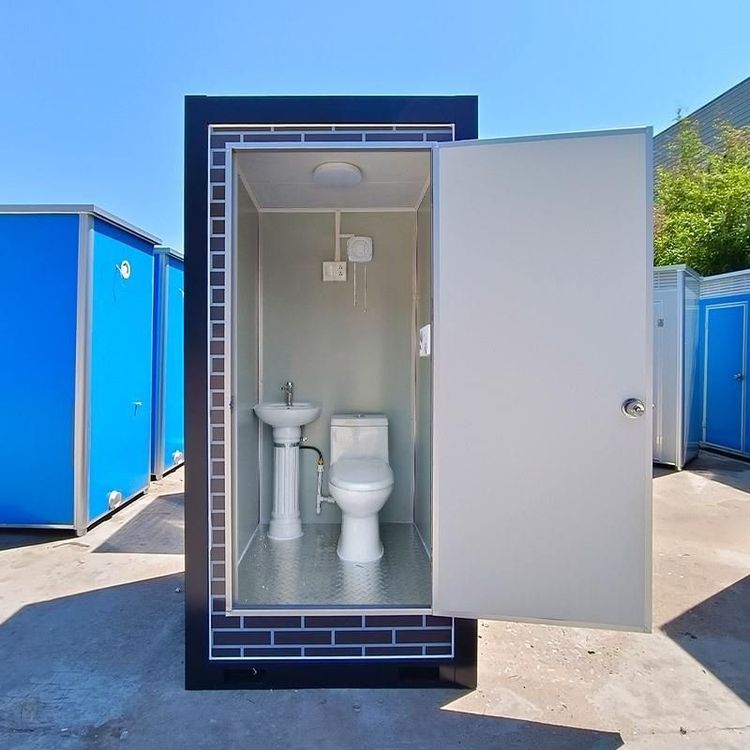
Mobile Toilet in Room
Mobile toilets can be placed in rooms, especially suitable for scenarios where the toilet is inconvenient or there is no fixed toilet in the room. Here are the specific details:

I. Applicable Scenarios
As a portable sanitation facility, mobile toilets are commonly used in home environments to meet temporary needs. For example, when the original bathroom is out of service due to maintenance, renovation, or expansion, a mobile toilet can serve as an alternative to maintain daily life order. If there is no fixed toilet in the room (such as in some old houses, temporary buildings, or special-purpose rooms), a mobile toilet can also provide basic sanitation protection. Its flexibility makes it an effective tool for dealing with sudden sanitation needs.
II. Product Characteristics
Mobile toilets are usually made of lightweight materials (such as plastic or composite materials), with a simple structure and light weight, making them easy to carry and reposition. Their core design allows for independent operation without the need to connect to a complex sewer system. Instead, they collect waste through built-in storage containers (such as waste tanks). Some models are also equipped with simple flushing or disinfection functions to reduce odors and bacterial growth. This design enables them to be used stably in indoor environments with limited space.
III. Selection and Installation
- Model Selection: Determine the capacity and functions according to actual needs. For temporary home use, it is recommended to choose a small-capacity model to save space and reduce the frequency of cleaning. If long-term use or multi-person sharing is required, medium or large-capacity models or those with flushing functions can be considered.
- Installation Steps: The installation process is simple. Just place the device on a flat surface, ensure stability, and then connect components such as the waste tank and battery (if electric functions are required) according to the instructions. No professional tools or complex construction are required, and ordinary users can complete the installation independently.
IV. Daily Maintenance
- Regular Cleaning: Empty the waste tank in a timely manner to avoid overflow or odor diffusion caused by waste accumulation.
- Surface Disinfection: Use chlorine-based disinfectants or special cleaning agents to wipe the outer shell and internal contact surfaces to kill bacteria and maintain hygiene.
- Ventilation Inspection: Ensure that the ventilation system (such as exhaust fans or air vents) is unobstructed to prevent mold growth in humid environments.
- Component Inspection: Regularly check the tightness of the waste tank, battery level (if applicable), etc., to ensure the normal operation of the device.
By making reasonable choices, correct installation, and regular maintenance, mobile toilets can be used stably in rooms for a long time, providing convenient and hygienic solutions for scenarios without fixed toilets or with temporary needs.