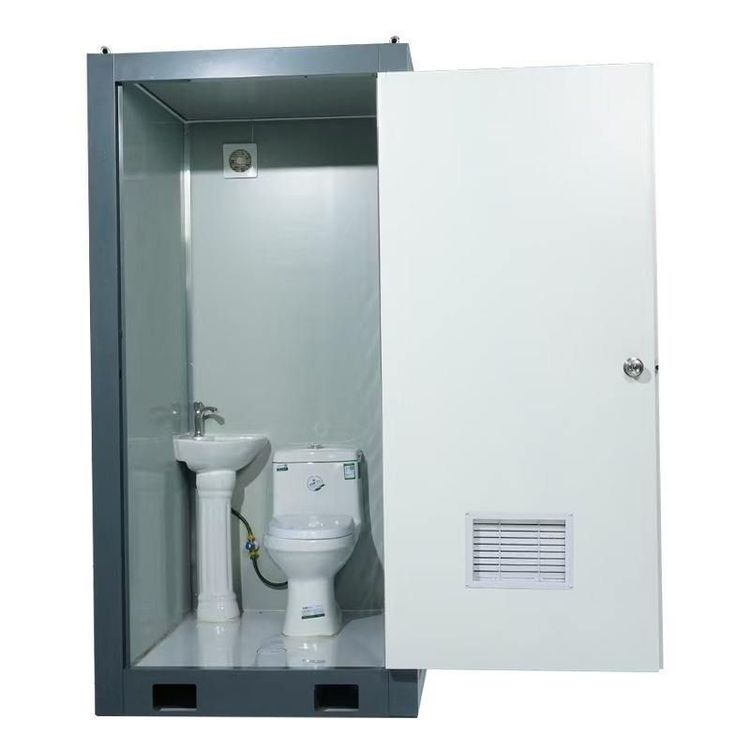
Mobile Toilet Illustration Guide
Currently, there is no complete publicly available 'Mobile Toilet Illustration Guide,' but classification explanations can be provided based on common types and characteristics:

The design of mobile toilets varies widely due to differences in functionality, usage scenarios, and technology. Their appearance and structure typically revolve around practicality, environmental friendliness, and aesthetics. The following analysis explores design features from three dimensions—materials, layout, and customization—using typical cases from publicly available information:
1. Materials and Structure: Balancing Durability and Lightweight Design
The outer shell material of mobile toilets directly affects their wind resistance, corrosion resistance, and service life. For example, the Xuanpu Mobile Toilet uses a metal-embossed panel exterior paired with an aerospace-grade aluminum alloy frame. The surface is treated with a special coating, achieving a wind resistance rating of Level 8 and a service life exceeding 5 years. This design ensures structural stability while reducing transportation costs through lightweight materials. Some high-end models also incorporate rust-proof treatments in the frame to adapt to humid or rainy environments. Additionally, the application of biodegradable toilets (such as those in Xuanpu's double-occupancy units) eliminates the need for water and electricity connections by using microorganisms to decompose waste, further simplifying structural complexity and making them suitable for outdoor scenarios without infrastructure.
2. Interior Layout: Functional Zoning and Human-Centric Design
The interior space of mobile toilets typically adopts a modular design. Taking the Xuanpu Double-Occupancy Unit as an example, its layout includes a 1.2-meter-wide independent stall equipped with an automatic sensor flushing system (with an optional water-saving mode), a storage shelf, handrails, and a ceiling exhaust fan. This design meets basic usage needs while enhancing safety and comfort through details like handrails and exhaust fans. For temporary public toilets, some models use single-stall or multi-stall串联 (tandem) layouts with unified water and electricity interfaces for rapid deployment, making them suitable for large-scale events or post-disaster emergency scenarios.
3. Exterior Customization: Brand Identity and Scenario Adaptation
To meet visual demands in different scenarios, mobile toilets support a high degree of exterior customization. For example, the TLXT Temporary Public Toilet offers 12 embossed pattern options or custom exterior designs based on client logos. This approach not only improves the toilet's harmony with the surrounding environment but also reinforces promotional effects through branding. Customization services typically cover elements such as exterior color, patterns, and text, with some manufacturers even providing 3D renderings for clients to preview and confirm design details in advance.
The design of mobile toilets is evolving from single-function solutions to a comprehensive approach integrating 'functionality, aesthetics, and environmental friendliness.' In the future, as new materials and smart technologies are applied, their illustration libraries will become even richer, though the core will remain focused on enhancing user experience and adapting to diverse scenarios.