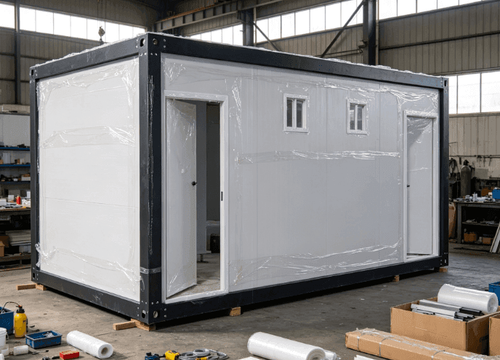
How to Make a Mobile Toilet
Mobile toilets can be made in different ways according to needs. Common methods include using a water storage tank to make a portable toilet, considering a solar-powered mobile toilet (specific steps to be completed), and choosing based on structure, mobility, and sewage treatment methods.

Making a Portable Toilet Using a Water Storage Tank
- Basic Modification: Use an angle grinder to split the water storage tank in half lengthwise. This forms the basic framework for the toilet. Fix universal wheels at the four corners of a wooden board for easy mobility, allowing the toilet to be placed flexibly in different locations. Attach wooden strips and self-tapping screws to the upper side of the tank to increase height and provide space for installing other components.
- Wall and Roof Construction: Create an opening on the side of the water storage tank and install a door frame. Embed plastic soft panels to form walls, ensuring privacy in the toilet. Place the upper half of the water storage tank on top of the wooden strips to form a roof, providing protection from wind and rain.
- Drainage and Water Storage Installation: Drill a hole at the bottom of the tank and install a drainage pipe to form a floor drain for easy sewage discharge. Drill holes on the side to connect direct fittings and attach plastic buckets to create small water storage units for storing flushing water.
- Sanitary Facility Installation: Install a bath heater, toilet, water tank, etc., made from water pipes, and connect the drainage pipe to the sewage tank to ensure proper functioning of sanitary facilities. Finally, install the inlet pipe for the sink to complete the toilet's water supply functionality.
Solar-Powered Mobile Toilet
Currently, only the idea has been mentioned, and the specific production steps have not been detailed. However, based on the principle, it may be necessary to install solar panels to convert solar energy into electricity, supplying power to lighting, ventilation, and other equipment in the toilet to achieve energy conservation and environmental protection.
Other Classification Options
Mobile toilets can be classified by structural form into single-structure mobile toilets and composite-structure mobile toilets; by mobility into hoisting and handling mobile toilets, powered and towed mobile toilets; and by sewage treatment method into water-flushing and non-water-flushing suction mobile toilets, and circulating water-flushing mobile toilets. Selection can be made based on factors such as the actual usage scenario, number of users, and environmental protection requirements.