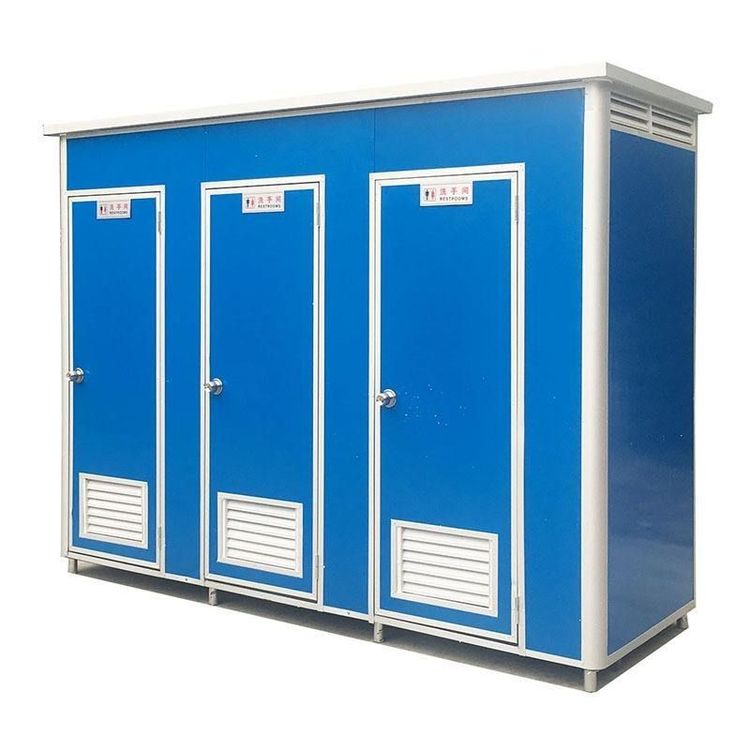
How to Fix Mobile Toilets to the Ground
The method for fixing mobile toilets to the ground should be selected based on the usage scenario, ground conditions, and toilet type. Common methods are as follows:

1. Expansion Bolt Fixing Method
Suitable for long-term fixed scenarios on cement or hardened ground. Use a level to locate the four corners of the toilet base in advance, mark the drilling positions, and then use an impact drill to drill holes. The hole depth should match the length of the expansion bolts. Place the expansion bolts into the holes and tighten them, ensuring the bolt heads are fully flush with the ground. Finally, connect the toilet base to the ground through the bolts. It is recommended to use 2-4 bolts on each side to distribute pressure and enhance stability, preventing loosening due to single-point stress.
2. Concrete Pouring Fixing
For long-term fixed or heavy-duty mobile toilets (such as those in scenic spots or construction sites). Excavate a foundation pit with a depth of 50 cm and a width of 60 cm according to the toilet size. Lay a 10 cm thick gravel cushion at the bottom of the pit and compact it. After formwork installation, pour C30 concrete and insert a steel reinforcement framework to enhance structural strength. After the concrete sets (about 3-5 days), connect the toilet base to the concrete foundation through embedded parts or bolts. This method requires prior application for a construction permit to avoid damaging underground pipelines or public facilities.
3. Counterweight Block Fixing Method
Suitable for temporary scenarios (such as exhibitions or events) or non-hardened ground (such as grass or sand). Place prefabricated concrete blocks or sandbags around the bottom of the toilet. Each counterweight block is recommended to weigh no less than 50 kg, and the total counterweight should be at least 1.5 times the self-weight of the toilet. To prevent rain erosion, wrap the counterweight blocks with waterproof tarpaulin. When moving the toilet, have professionals dismantle the counterweights to avoid injury from tipping.
4. Ground Anchor Fixing Method
Connect a fixing chain (or strap) to the ground using ground anchor pins or expansion screws, suitable for scenarios with strong winds or complex terrain. If space allows, concrete blocks or counterweight blocks can be driven into the bottom of the toilet for additional fixing. The ground anchor depth should exceed 30 cm to ensure sufficient pull-out resistance and prevent the toilet from tilting or shifting due to external forces.
5. Windbreak Rope and Diagonal Tension Fixing
Install windbreak ropes on the top of the toilet and fix the other ends to ground stakes or heavy objects (such as concrete blocks). If the wind is strong, adopt a "井"-shaped diagonal tension method, using nylon ropes or steel wires to tighten the toilet body from different angles, forming a multi-point support structure and significantly enhancing wind resistance.
6. Additional Counterweight Plan
If external fixing methods cannot be used due to site limitations, add heavy objects such as sandbags or water tanks inside or outside the toilet. For example, place 2-3 sandbags weighing 20 kg each on both sides of the toilet, or use a water tank filled with water. The counterweights should be evenly distributed to prevent tilting due to excessive weight on one side. Regularly check the counterweight status to prevent shifting or leakage.