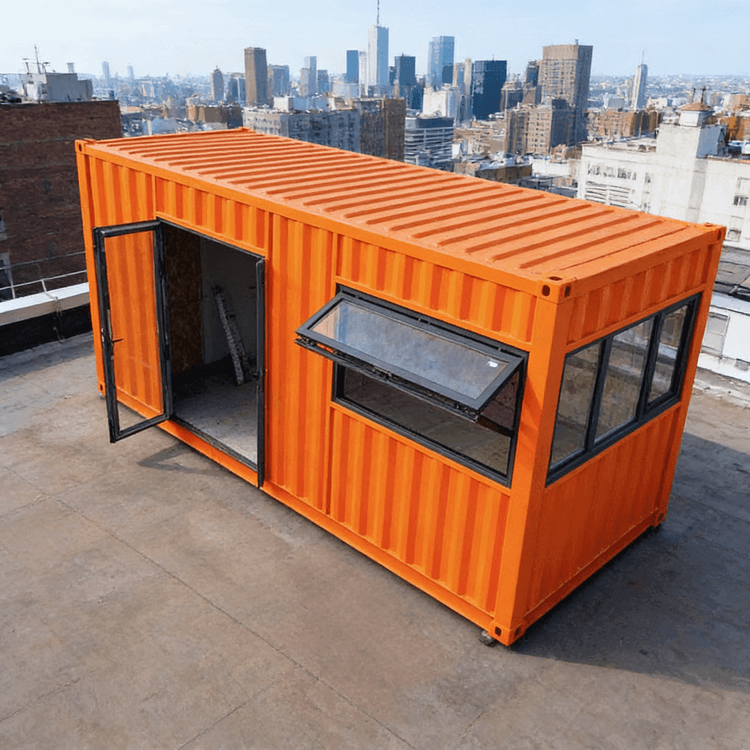
Mobile Toilet for COVID Home Use
Currently, there are no mobile toilets specifically designed for home use during the COVID-19 pandemic, but their functionality can be adapted to household needs through technical modules. Existing technical solutions for mobile toilets in epidemic prevention and control are primarily aimed at emergency or public settings. For home use, key considerations include disinfection, touchless design, and waste disposal, along with ensuring the product's size matches the available space in the home. Here is a detailed analysis:

I. Core Technologies of Existing Epidemic Prevention Mobile Toilets
Disinfection Modules:
- Nano-mist Disinfection: By pressurizing disinfectant into micron-sized particles, this technology provides comprehensive coverage of the toilet's internal air and surfaces, effectively killing viruses attached to objects (such as the COVID-19 virus). For example, epidemic prevention smart eco-friendly mobile public toilets use this technology to combine dynamic disinfection with static cleaning.
- Closed Waste Disposal Disinfection System: The toilet bowl and waste disposal pipes form a closed structure. Before entering the fecal storage tank, waste undergoes ultraviolet or chemical disinfection, blocking fecal-oral transmission routes. The design of the fecal storage tank in emergency mobile toilets is based on this principle, meeting the needs for centralized disinfection.
Touchless Design:
- Sensor-activated Door Opening and Flushing: Using infrared or microwave sensors, automatic door opening and flushing are achieved, avoiding hand contact with public areas. The "touchless door opening" function of epidemic prevention smart eco-friendly mobile public toilets has been applied in vaccination sites and other settings.
- Wave-controlled Panel: Some high-end models are equipped with gesture recognition technology, allowing users to operate lights, ventilation, and other functions by waving their hands, further reducing contact risks.
II. Challenges in Adapting to Home Settings
Size and Space:
Existing emergency mobile toilets are mostly standard container sizes (e.g., 6 meters × 2.4 meters). Although epidemic prevention smart eco-friendly public toilets can be modularly assembled, the smallest unit still requires about 3 square meters of space. Families need to choose compact designs based on the area of their bathrooms or balconies or opt for customizable, foldable, and portable lightweight versions.Waste Disposal Methods:
- Municipal Sewer Connection: If the household is already connected to the sewage network, the existing toilet can be retrofitted into a touchless model and equipped with a disinfection module.
- Independent Fecal Storage Tank: Households without sewer connections need to choose models equipped with fecal storage tanks, with regular professional collection or the use of biodegradation technology for waste treatment.
Cost and Maintenance:
The unit price of epidemic prevention mobile public toilets is approximately 100,000 to 200,000 yuan. Emergency mobile toilets have lower costs due to simplified materials, but for home use, it is necessary to balance functional requirements with the budget. Additionally, nano-mist disinfection requires regular replenishment of disinfectant, and negative pressure fresh air systems need filter cleaning, so maintenance costs should be considered.
III. Recommended Actions
If there is a need for isolation at home, priority can be given to retrofitting the existing bathroom: installing sensor-activated faucets, ultraviolet disinfection lamps, and regularly cleaning the toilet bowl and floor with chlorine-based disinfectants. If an independent device is needed, manufacturers can be contacted to customize a small-scale mobile toilet, with a focus on integrating disinfection modules and touchless functions, and ensuring compliance with local environmental emission standards.