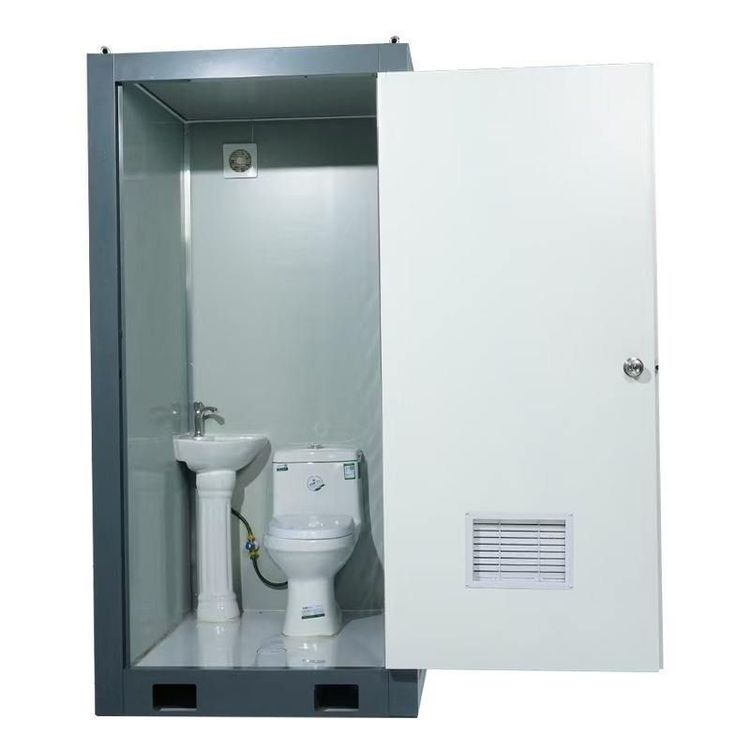
Mobile Toilet Floor Materials
Common materials for flooring in mobile toilets include non-slip patterned aluminum plates, rubber flooring, and some high-end versions use fiberglass reinforced plastic (FRP) anti-corrosion layers. Here is a detailed introduction:
Non-slip Patterned Aluminum Plates: These are a relatively common choice for flooring in mobile toilets. The surface features patterns that significantly increase friction, effectively preventing slips and falls by the elderly and children during use, ensuring the safety of users. At the same time, aluminum plates have good resistance to acid and alkali corrosion. In the daily use of mobile toilets, cleaning agents are used frequently, and non-slip patterned aluminum plates are not easily damaged even when frequently exposed to cleaning agents, offering a long service life. Additionally, aluminum plates are relatively lightweight, facilitating the transportation and installation of mobile toilets.
Rubber Flooring: Rubber flooring is also a common option for flooring in mobile toilets. It also has excellent non-slip properties, providing a stable standing environment for users. Rubber material has natural elasticity and softness, making it comfortable to walk on and reducing foot fatigue. Moreover, rubber flooring has strong resistance to acid and alkali corrosion, enabling it to adapt to the complex usage environment inside mobile toilets and not be easily eroded by chemicals such as cleaning agents, resulting in low maintenance costs.
Fiberglass Reinforced Plastic (FRP) Anti-corrosion Layer (Some High-end Versions): In some high-end mobile toilets, an FRP anti-corrosion layer is installed on the chassis. Although it is not directly used as a flooring material, it demonstrates the potential application of FRP in the relevant structures of mobile toilets. FRP is a material formed by compounding resin and glass fibers. It has outstanding anti-seepage properties, effectively preventing leakage problems inside mobile toilets and preventing sewage from leaking and polluting the surrounding environment. At the same time, it has good corrosion resistance, capable of resisting the erosion of various chemicals. Furthermore, FRP is lightweight, facilitating the transportation and installation of mobile toilets, which is a significant advantage for mobile toilets that need to be moved frequently.