
How to Collect Feces in Mobile Toilets
The collection methods for feces in mobile toilets mainly include water-flush and non-water-flush suction types, circulating water-flush types, dry packing types, foam sealing types, and microbial types, as detailed below:
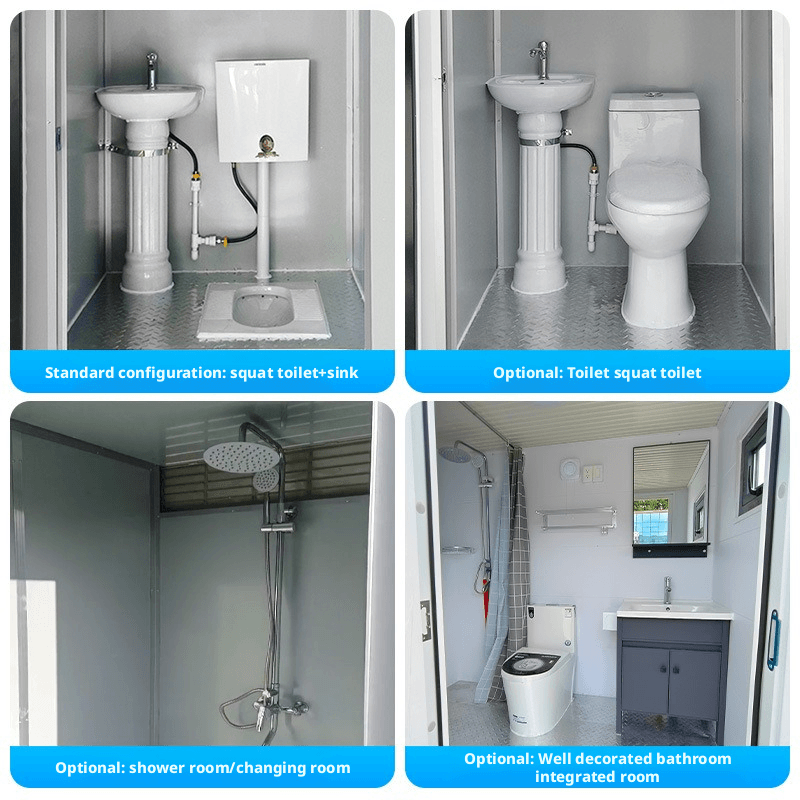
Water-flush and Non-water-flush Suction Types
Water-flush mobile toilets provide flushing water from a top water tank, with a sewage tank at the bottom to collect waste. Non-water-flush types directly collect waste in a bottom sewage tank. Both methods have limited sewage tank capacity and require timely cleaning by professional fecal suction trucks or suction equipment when the user limit is reached to prevent overflow. This method is suitable for short-term or small- to medium-scale use scenarios, such as temporary construction sites and small event venues.Circulating Water-flush Type
This type is equipped with intermittent aerobic and anaerobic treatment devices, accelerating the fermentation and decomposition of fecal sewage through the addition of biological strains and biofilm technology. The treated water is purified through a filtration device and then recycled for flushing toilet fixtures, forming a closed-loop system. This method significantly reduces water consumption but requires regular maintenance of the treatment device to ensure strain activity and filtration effectiveness, making it suitable for water-scarce or long-term use scenarios.Dry Packing Type
Biodegradable plastic bags are placed beneath the fixtures to collect waste, with a new bag automatically replaced after each use. Full plastic bags are collected and transported to a professional treatment plant for harmless disposal. Independent mobile toilets are often equipped with detachable fecal storage buckets or plastic bags that require manual regular cleaning. This method does not require flushing and is easy to operate, but plastic bags must be replaced promptly to avoid environmental pollution, making it suitable for arid regions or scenarios without a water source.Foam Sealing Type
Foam generated by a foaming liquid mixture covers the inside of the toilet bowl, replacing traditional flushing. The foam enters the collection device through side channels, and the system requires only a small amount of hand-washing water to meet foaming needs. This method significantly saves water and the foam can isolate odors, but the foaming liquid must be replenished regularly, and the feces in the collection device must be cleaned, making it suitable for public places with high hygiene requirements.Microbial Type
Waste is decomposed by microbial agents into harmless substances such as water and carbon dioxide, collected in a biochemical treatment tank. For large-scale events, row-connected mobile toilets are often connected to underground fecal storage tanks through pipelines, with professional fecal suction trucks used for centralized suction. This method is environmentally friendly and efficient but requires ensuring the activity of microbial agents and regular cleaning of the treatment tank, making it suitable for long-term, large-scale use scenarios.



