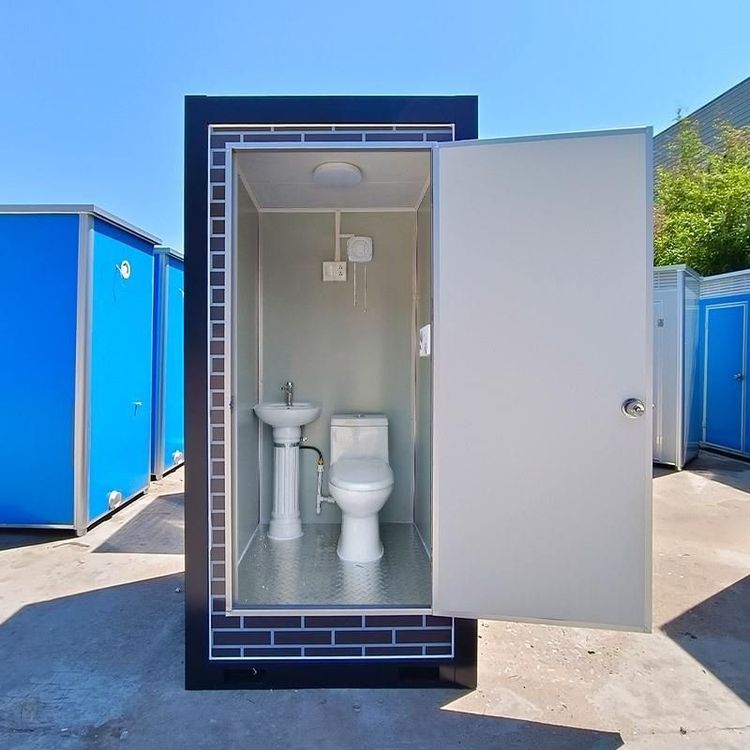
Mobile Toilet Fecal Treatment
There are various methods for treating fecal matter in mobile toilets, with the following being common approaches:
Direct discharge and fecal tanks are relatively basic treatment methods. Direct-discharge mobile toilets need to be connected to sewer systems, discharging fecal matter directly into the sewage system. This method is suitable for locations with well-established sewer infrastructure, offering convenient treatment but relying on external facilities. Fecal tanks store fecal matter inside the tank. When the tank is full, specialized vehicles transport it to a treatment plant for centralized processing. This method is applicable in scenarios without sewer connections but requires regular cleaning to prevent overflow.
Chemical treatment involves adding chemical agents to decompose excreta, control odors, and promote decomposition. The treated excreta can be further processed through specialized equipment or directly discharged into the sewage system. This method effectively reduces odors and pathogens but requires regular replenishment of chemical agents, and the treated liquid must meet discharge standards.
Anaerobic digestion utilizes microorganisms to decompose excreta in an oxygen-free environment, generating biogas and fertilizer. Biogas can be used as an energy source, while the fertilizer can be applied in agriculture or horticulture, achieving resource utilization. This method is suitable for locations far from treatment facilities, such as remote areas or outdoor construction sites, but requires the construction of anaerobic digestion tanks, with relatively high initial investment.
Compression and storage reduce the volume of excreta through mechanical compression, delaying the need for treatment. This method is suitable for scenarios like camping or outdoor construction sites, reducing the frequency of cleaning but requiring compression equipment and potentially generating odors during long-term storage.
Multi-functional sewage outlets are equipped with manual cleaning functions, such as fecal storage tanks or pre-installed septic tanks. Regular manual cleaning is required to transport the fecal matter to a treatment plant for centralized processing. This method is simple and reliable but has high labor costs and requires timely cleaning.
Mechanical treatment uses specialized equipment for solid-liquid separation, decomposition, and disinfection, reducing environmental impact. This method offers high treatment efficiency, ensuring hygiene and safety, but has high equipment costs and maintenance expenses, making it suitable for locations with high hygiene requirements.
Flush-type and non-flush suction-type are two common types. Flush-type mobile toilets may be equipped with circulating flush devices, using anaerobic treatment units for fecal sewage and biological strains to accelerate fermentation and decomposition, reducing the frequency of suction. Non-flush suction-type mobile toilets have a bottom sewage tank to collect excreta, which is regularly cleaned by suction trucks.
Dry-packing mobile toilets typically package fecal matter for treatment, possibly using biodegradable bags or sealed containers for easy transportation and subsequent processing. This method is suitable for locations without water sources or with high environmental requirements but requires ensuring the environmental friendliness of the packaging materials.