
Mobile Toilet Environmental Impact Assessment
The environmental impact assessment (EIA) of mobile toilets primarily involves evaluating the potential environmental impacts during the project's construction and operation phases and proposing corresponding pollution prevention and control measures to ensure the project meets environmental protection requirements.
I. Project Overview
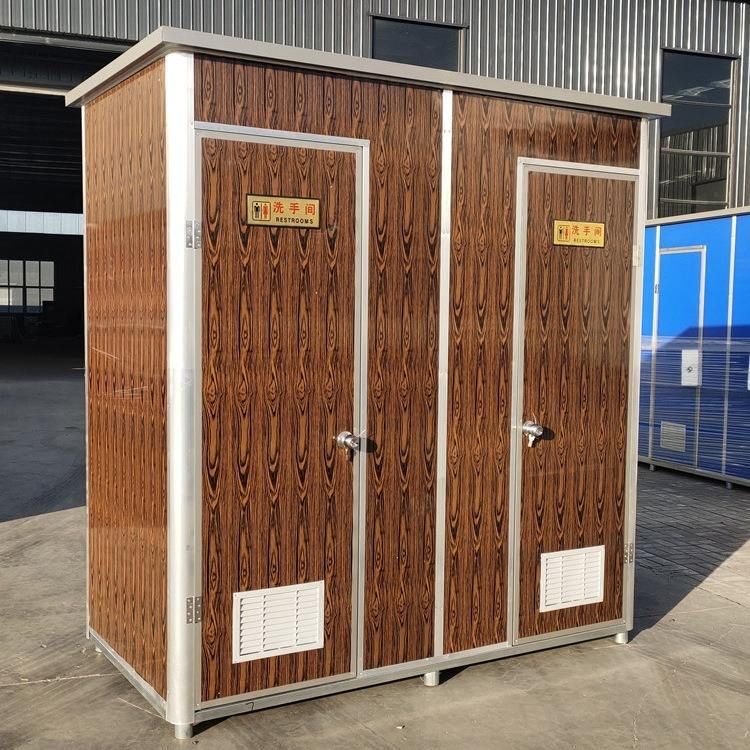
Mobile toilet projects vary among companies in terms of scale, investment, and construction content. For example, the project by Sichuan Xiang'er Electric Co., Ltd. is an environmentally friendly intelligent mobile toilet and semiconductor diode engineering construction project (Phase I), with an investment of 160 million yuan and an environmental protection investment of 1.115 million yuan. It covers a large area and includes the construction of production and reserved production plants. In contrast, the project by Jinan Luming Construction Engineering Co., Ltd. involves building a production line for multi-functional lightweight housing assembly and supporting facilities, with a designed annual output of 200 sets of multi-functional lightweight housing (including mobile toilets). The total project investment is 800,000 yuan, with an environmental protection investment of 20,000 yuan, and it utilizes existing factory buildings for construction.
II. EIA Focus
The focus of the EIA for mobile toilet projects lies in the prevention and control of pollution from exhaust gases, wastewater, noise, and other sources. In the project by Jinan Luming Construction Engineering Co., Ltd., it is explicitly required that the construction unit should prioritize pollution prevention and control in these areas. General industrial solid waste must be fully recovered and comprehensively utilized, while domestic waste should be entrusted to the sanitation department for centralized collection and disposal. Additionally, emergency management for environmental risks should be strengthened, and the environmental protection "three simultaneities" system should be strictly implemented, meaning environmental protection facilities should be designed, constructed, and put into operation simultaneously with the main project, and the project should undergo environmental protection acceptance procedures in accordance with regulations.
III. Public Participation and Approval
Public participation is also a crucial aspect of the EIA process. For instance, during the public announcement period for the project by Jinan Luming Construction Engineering Co., Ltd., no public objections were received, and the overall evaluation of the environmental impact report and the proposed ecological environmental protection measures were agreed upon in principle. This indicates that the project's EIA report has gained public recognition and provides strong support for the smooth implementation of the project.
You may also like

Portable Toilet Eco-Friendly: MOQ, Samples & Quotation Guide
Read More
Top Portable Toilet Color Steel Manufacturers: How to Choose a Factory Partner
Read MorePortable Toilet Picture: Types, Features & Buying Tips
Read More