
Mobile Toilet Development History Diagram
The development history of mobile toilets can be divided into four stages: material innovation, spatial design optimization, functional upgrades, and application scenario expansion.
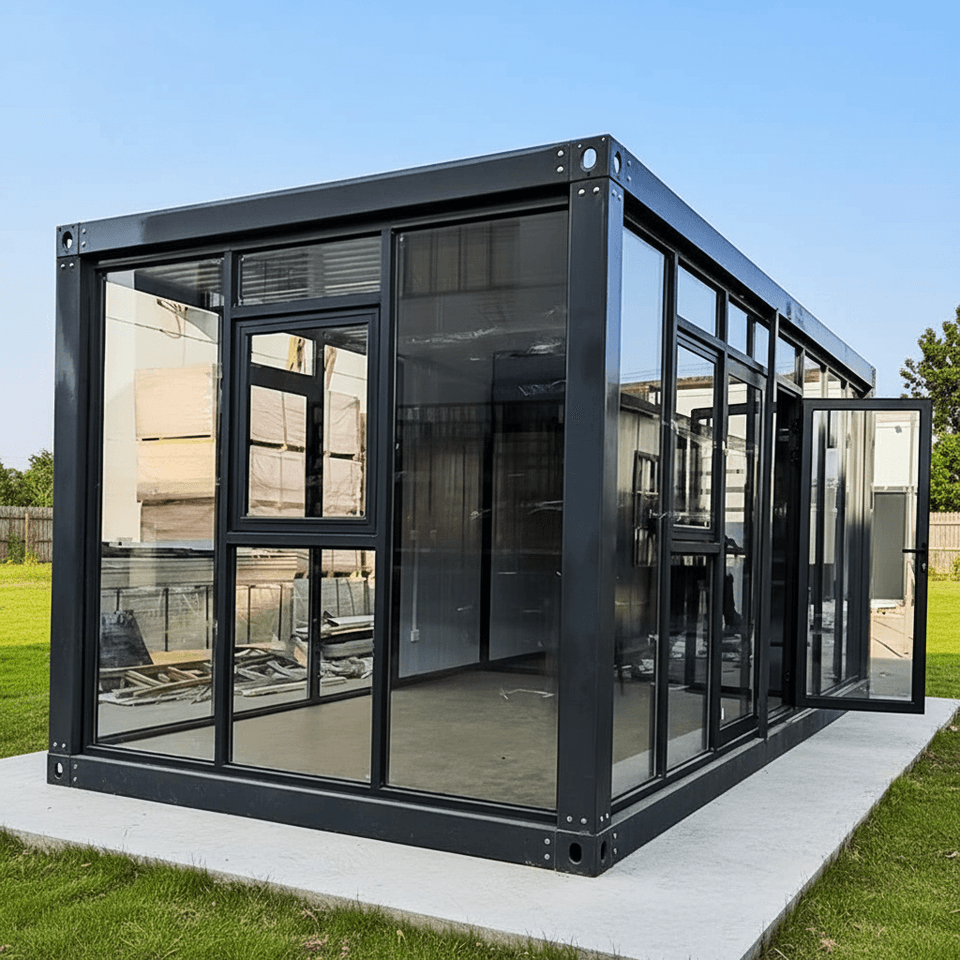
Material Innovation: Early mobile toilets were mostly made of materials like wood, with simple structures and functions. They easily absorbed odors and were like metal cages, being hot in summer and cold in winter. With technological progress, new materials such as fiberglass and polyethylene have gradually been used. For example, the polyethylene integrated toilets developed by manufacturers like Inner Mongolia Riyue are two-thirds lighter in weight but can withstand temperatures as low as minus 30 degrees Celsius. A complete range of materials has also been formed, including automotive-grade painted color-steel models for construction sites, imitation wood-grain fiberglass models for scenic spots, and polyethylene all-plastic models sharing the same origin as spacecraft, meeting the needs of different scenarios.
Spatial Design Optimization: Mobile toilets have achieved infinite possibilities in modular spatial design. Foldable toilets that occupy only 2 square meters during the day and can expand into six independent compartments at night have appeared in Beijing's hutongs. Container-type restrooms can be combined through modules to serve as both standalone street facilities and quickly assembled into a 20-stall matrix for marathon events. A mobile restroom with solar panels developed by a company in Suzhou can generate enough electricity per day to treat the waste of 200 people, improving spatial utilization efficiency and energy self-sufficiency.
Functional Upgrades: Mobile toilets have evolved from simple sanitation facilities into products integrating multiple high-tech features. The silver cube in Shenzhen parks is equipped with a vacuum suction system, consuming only one-eighth of the water used by a regular toilet. The mobile restrooms in Guangzhou Tower scenic area are equipped with facial recognition paper dispensers, enabling precise scheduling of cleaning through big data. Microbial degradation chambers convert waste into horticultural fertilizer, and air antibacterial systems maintain a micro-ecological balance. A solar-powered smart restroom launched by a manufacturer can not only convert waste into fertilizer but also allow users to check stall availability through a mobile app.
Application Scenario Expansion: The application scenarios of mobile toilets have expanded from the corners of construction sites to the prime locations in scenic spots, from meeting temporary needs to becoming a standard feature of smart cities. The antique-style mobile public toilets by West Lake in Hangzhou complement the Leifeng Pagoda, and the mini restrooms in Beijing's hutongs blend perfectly with the style of siheyuan courtyards. During the Canton Fair, 200 temporary restrooms were deployed within 48 hours and removed within 24 hours after the event. In a tech park in Shenzhen, movable 'shared restroom pods' even serve as private phone booths for employees during their lunch breaks.
You may also like

Portable Toilet Used in 2026: Buying Guide & Recommendations
Read More
Portable Toilet Custom Explained: How to Choose the Right One
Read More
Top Portable Toilet Smart Manufacturers: How to Choose a Factory Partner
Read More