Mobile Toilet Decomposition
The decomposition of mobile toilets can be elaborated from two aspects: biodegradation principles and component decomposition.

Biodegradation Principles
When mobile toilets involve biodegradation types, their decomposition primarily relies on microorganisms or enzymes to process human waste. The toilets are equipped with specialized degradation chambers containing specific microbial communities. Under suitable temperature and humidity conditions, these microbial communities can exert powerful decomposition effects. They gradually convert the organic matter in the waste into carbon dioxide, water, and a small amount of biomass. The entire decomposition process does not require the addition of chemical additives, effectively avoiding secondary pollution and ensuring both environmental friendliness and safety. For example, biodegradable mobile toilets used in ecological scenic spots or large-scale outdoor event venues utilize this principle to treat waste, reducing negative impacts on the environment.
Component Decomposition of Mobile Toilets
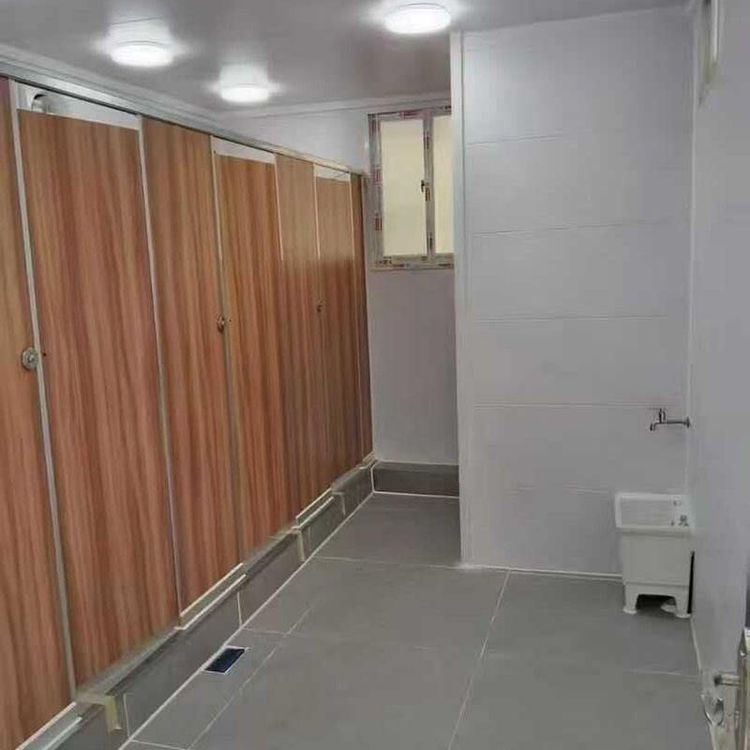
- Components: Generally, mobile toilets consist of multiple parts. The fecal sewage storage tank (or fecal sewage treatment device) is used to collect and process waste; the floor provides a stable standing and activity space for users; sanitary fixtures such as toilets are the primary facilities for excretion; walls serve to separate and protect privacy; washing equipment facilitates user cleaning; water tanks store water for toilet flushing; roofs provide shelter from wind and rain; and mobile devices enable the toilet to be easily moved and positioned.
- Structural Form Classification: Mobile toilets can be classified into single-structure and composite-structure types based on their structural forms. Single-structure mobile toilets are relatively independent and have simpler structures; composite-structure mobile toilets are composed of multiple parts and may have more complex and diverse functions.
- Mobility Classification: Based on mobility, mobile toilets can be divided into lifting and handling types, which are typically smaller in size or have structures that facilitate disassembly and can be moved using lifting equipment or manual handling; and powered and towed types, which are equipped with power devices or can be towed, enabling easier transfer between different locations.
- Sewage Treatment Classification: According to sewage treatment methods, mobile toilets can be categorized into water-flushing and non-water-flushing suction types. Water-flushing types use water flow to flush waste, while non-water-flushing suction types utilize suction equipment for treatment; circulating water-flushing types can recycle toilet-flushing water; and dry-packing types package waste in a dry manner for disposal.