
Mobile Toilet Cost Analysis
A comprehensive analysis of mobile toilet costs should consider construction costs, maintenance costs, and market pricing, as detailed below:
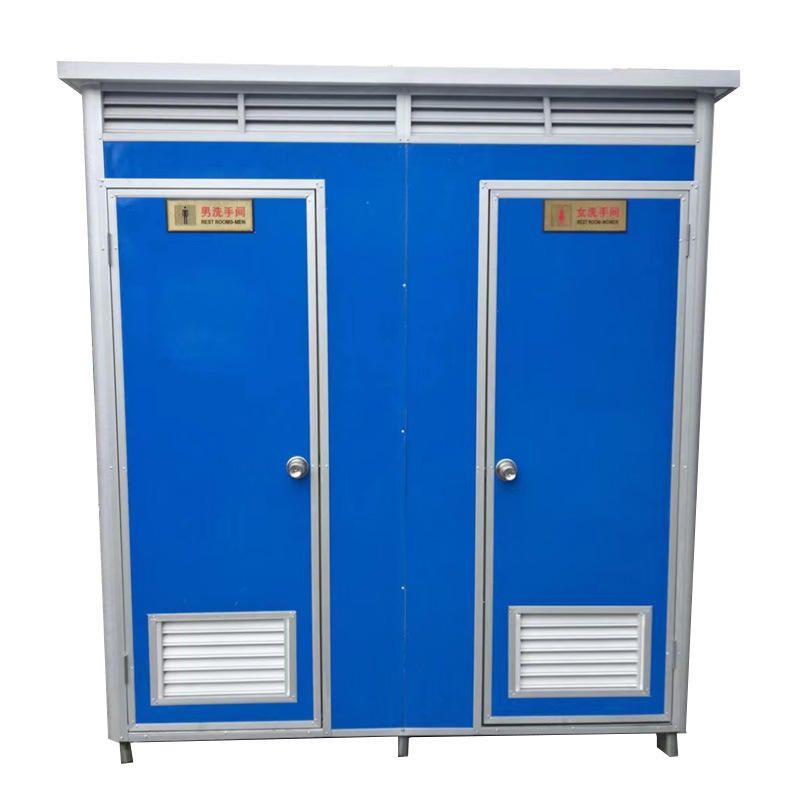
I. Construction Costs
The construction cost of mobile toilets is significantly lower than that of traditional fixed toilets, primarily due to modular design and mass production advantages. Taking the color-steel mobile toilet in Urumqi as an example, the cost structure consists of three main aspects: 1. Material Procurement: Variations in the thickness of color-steel plates (0.3mm-0.8mm), as well as differences in galvanizing and coating processes, result in price fluctuations of 30%-50% per square meter, directly impacting the overall cost. 2. Structural Design: Standardized modular assembly designs are 15%-20% cheaper than customized irregular structures due to reduced steel usage and processing complexity. 3. Production Process: Automated production lines can reduce labor costs by approximately 25%, but require initial equipment investment; semi-manual production is more costly but offers greater flexibility. Additionally, mobile toilets occupy a small footprint and have low land requirements, further saving on land-related costs.
II. Maintenance Costs
Maintenance costs vary significantly depending on the type and configuration of the mobile toilet, and can be categorized into basic maintenance, core component maintenance, and potential expenses: 1. Basic Maintenance:
- Cleaning and sanitation costs are approximately 500-800 yuan per year, with high-end models potentially incurring additional energy costs due to UV disinfection features.
- Anti-leakage maintenance requires the renewal of waterproof coatings every five years, with an average annual cost of about 500-800 yuan. 2. Core Component Maintenance:
- Sanitary ware repairs (such as stainless steel polishing and seal replacement) average about 300-500 yuan per year.
- Sewage treatment system maintenance accounts for 20%-30% of costs, with septic tank cleaning fees ranging from 10,000 to 30,000 yuan per year. 3. Potential Expenses:
- Packaged toilets require regular replacement of microbial agents and foam agents, resulting in higher costs.
- Smart devices (such as photovoltaic power supply and intelligent flushing systems) require professional inspection and maintenance. Total Cost Estimation: The average annual cost for basic models is 500-800 yuan, for standard models is 800-1,500 yuan, and for high-end models (including smart systems) is 15,000-25,000 yuan.
III. Market Pricing and Influencing Factors
Price ranges vary significantly based on material and treatment methods: 1. Material Classification:
- Fiberglass: 2,400-3,000 yuan per squatting position, lightweight and corrosion-resistant, suitable for temporary scenarios.
- Color-steel plate: 3,000-3,500 yuan per squatting position, high strength and good waterproofing, commonly used in construction sites and parks.
- Carved panel: 18,000-22,000 yuan per squatting position, aesthetically pleasing and excellent thermal insulation, suitable for scenic spots and commercial areas. 2. Treatment Methods:
- Water-flush direct discharge type: The lowest price, but requires supporting water supply and drainage pipelines.
- Waterless packaged type: No water source required, medium price.
- Foam sealing type: Significant water-saving effect, slightly higher price.
- Microbial degradation type: Optimal environmental performance, but high technical costs and the highest price. 3. Core Influencing Factors: Material upgrades, environmental performance of treatment technologies, design complexity (e.g., pointed roofs cost 10% more than flat roofs), and customization requirements (such as barrier-free facilities) all contribute to price increases.
You may also like
Everything You Need to Know About Container House Rental
Read More
Portable Toilet Specifications Size & Area Guide: Finding the Right Fit
Read More
Top Portable Toilet Custom Manufacturers: How to Choose a Factory Partner
Read More