Mobile Toilet Construction Technology
The construction technology of mobile toilets can be mainly divided into two types based on different manufacturing methods and structural forms: construction using water storage tanks and installation of complete finished products. The specific processes are as follows:
The process of constructing a mobile toilet using water storage tanks is relatively complex and requires step-by-step completion of structural assembly and functional component installation. First, universal wheels need to be fixed at the four corners of the bottom of the拖板 (trailer plate, here assumed to be a term for the base structure; if a more accurate term exists, it should be used) to ensure mobility. Subsequently, the water storage tank is modified by cutting along the marked lines at the top with an angle grinder to form an open-top tank. Two open-top tanks are then inverted and stacked, and the outer frame is fixed with self-tapping screws to form the basic structure. Next, a rectangular opening is cut in the outer frame of the tank as the doorway, and the corresponding position on the tank body is also cut. A hole is made in the interior floor to insert an elbow for connecting the water pipe, and the gaps are sealed with glue to prevent leakage. During the installation of functional components, the toilet must be precisely aligned with the drainage outlet and fixed, with the surrounding gaps sealed with glue. After fixing the water pipe and faucet, a stainless steel basin is used to make a handwashing basin, which is connected to the water inlet pipe of the toilet tank and the shower hose. Finally, the shower bracket and toilet seat are installed, and the wooden door and door handle are fixed to complete the overall structural enclosure.
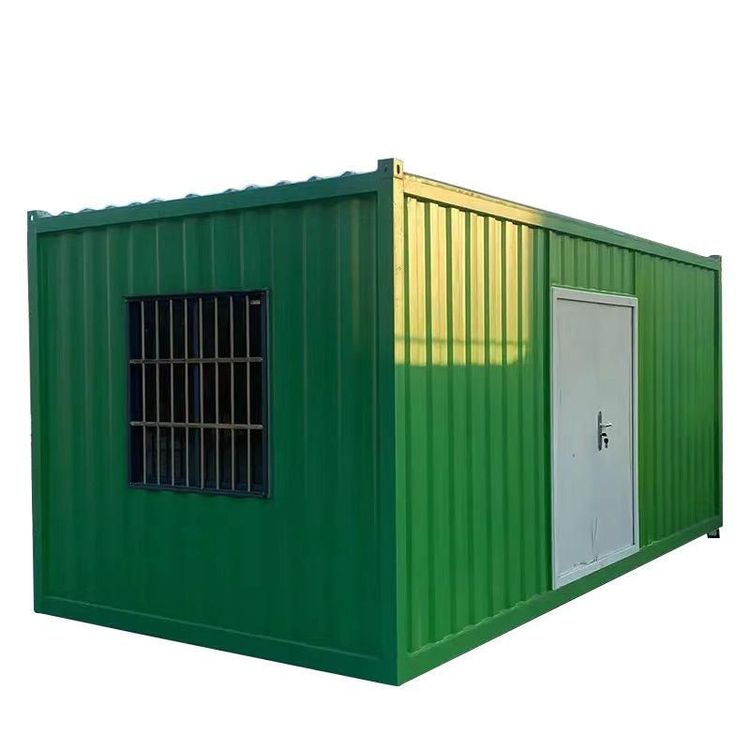
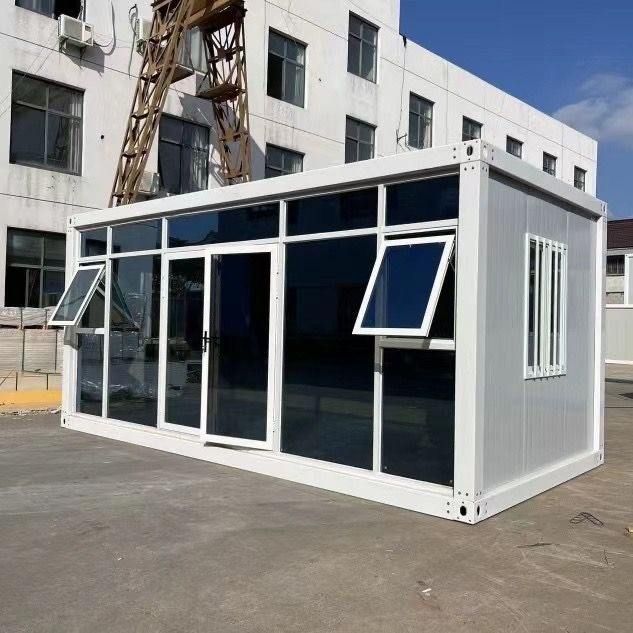
The construction technology for installing complete finished mobile toilets focuses more on modularity and convenience. Its core advantage lies in no need for civil engineering works, as the finished product can be used directly upon placement. The installation process is similar to building with blocks, achieving rapid assembly through column positioning and splicing fixation. All connection parts adopt a snap-fit design to ensure a tight structure and perfect detail handling. This type of technology requires materials with high lightness, typically using high-strength lightweight alloys or composite materials, which not only ensure structural robustness but also facilitate transportation and mobility. During the design phase, the height and width of the toilet must be strictly controlled, and the layout of mobile devices (such as universal wheels or traction devices) must balance stability and operational rationality. At the same time, maintenance access ports must be reserved for easy later maintenance.
Both technologies must adhere to the design principles of mobility, cost-effectiveness, durability, and environmental friendliness. The water storage tank construction technology is suitable for temporary or low-cost scenarios but requires on-site processing. The installation technology for complete finished products is more suitable for standardized and large-scale applications, significantly shortening the construction period and reducing on-site work volume.