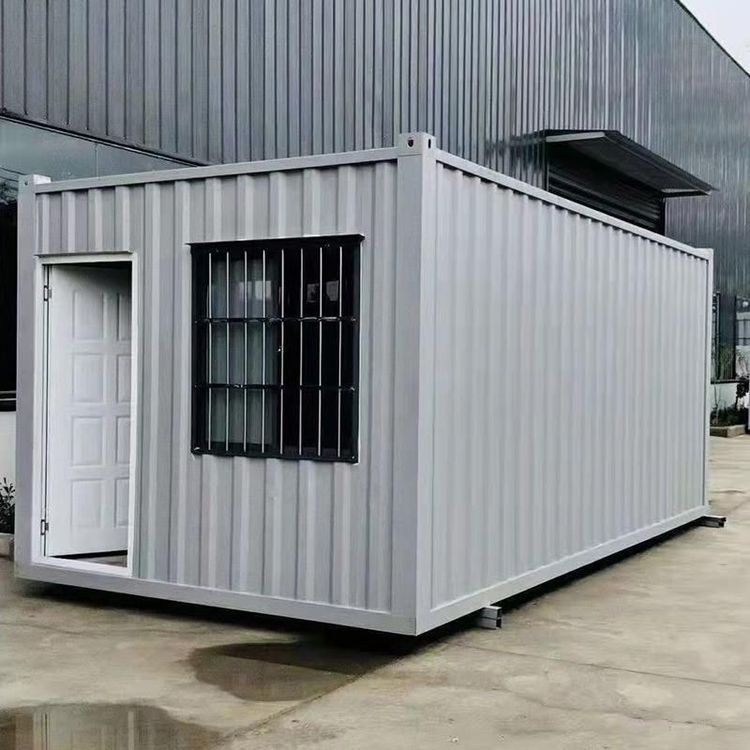
How to Construct Mobile Toilets Conveniently
Constructing mobile toilets conveniently requires combining site conditions with full-process requirements and following standardized operations in stages. The specific methods are as follows:

I. Pre-construction Preparation
- Site Inspection: Confirm the load-bearing capacity of the预设点位 (planned location) and inspect for underground pipelines, high-voltage cables, and geological hazards within a 3-meter radius. Ensure the location is no more than 15 meters from existing water supply connections and no more than 20 meters from sewage connections to avoid difficulties in later pipeline connections.
- Equipment and Material Preparation: Prepare in advance materials such as mobile toilet units, functional components, expansion anchors, PPR water supply pipes, and UPVC sewage pipes, and transport them to a temporary storage area on-site. Protect the toilet units during storage to prevent damage.
- Personnel and Documentation Preparation: Assign 1 crane operator, 2 certified electricians and plumbers, and 2 general workers. Conduct safety and technical briefings to clarify crane operation and electrical safety standards. Additionally, complete approval procedures for temporary construction site use and road occupation to ensure compliance.
II. Foundation Treatment at the Planned Location
- Hardened Ground: For asphalt or concrete surfaces, clear debris, grind, and level the ground with a flatness error of no more than 1 centimeter per square meter. Mark the anchor bolt positions for the four fixed corners according to the unit dimensions.
- Soft Ground:
- Long-term Use (>3 months): Excavate a foundation pit 30 centimeters deep, with length and width 10 centimeters larger than the toilet unit's outer dimensions. Lay a 5-centimeter gravel base, pour 15 centimeters of C20 concrete, level the surface, and cure for 3 days. Proceed with construction only after the strength reaches at least 80% of the design value.
- Temporary Use (≤3 months): Lay a 2-centimeter thick anti-slip steel plate, supported by gravel underneath, as an alternative to a concrete foundation.
III. Lifting and Positioning of the Mobile Toilet Unit
- Safety Alert: Establish a 5-meter alert zone before lifting and assign dedicated personnel to prevent unauthorized access.
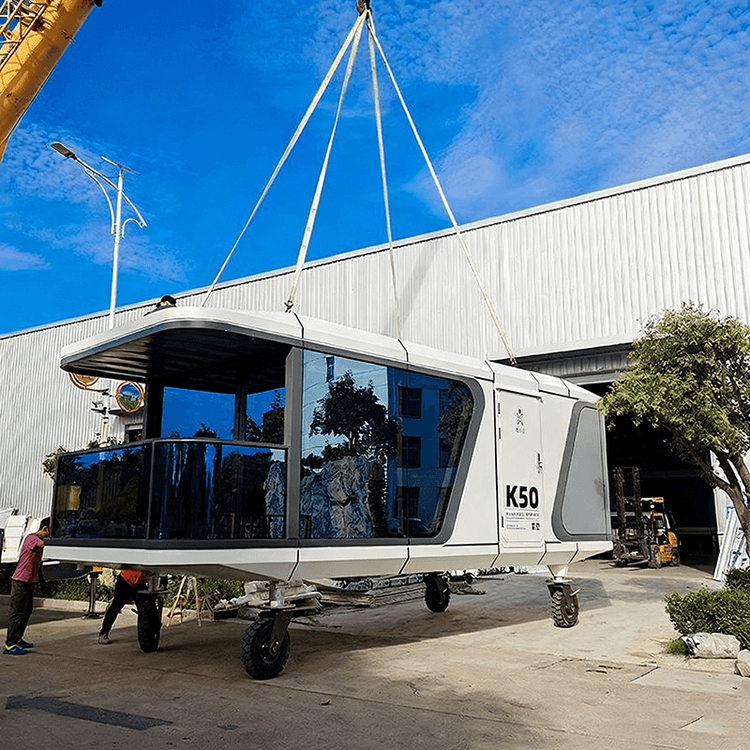
- Lifting Operation: Use a ≥5-ton truck-mounted crane. Securely fasten the lifting straps to the four lifting rings of the unit. Maintain levelness during lifting, slowly move to above the planned location, and lower evenly to avoid collision with the foundation.
- Level Adjustment: After positioning, use a level to measure the flatness of the four corners. If the error exceeds 0.5 centimeters, adjust by placing thin steel plates until the requirements are met.
Simple Mobile Restroom Construction (Supplementary Plan)
For a low-cost, simple solution, use storage tanks and a pallet: Fix universal wheels to the bottom of the pallet, stack cut-open storage tanks, install a toilet, faucet, sink, and other facilities, and connect water supply and drainage pipes. However, this plan is suitable only for temporary scenarios due to its lower stability and durability. Choose based on actual needs.