Back to blog
Article
Mobile Toilet Assembly and Disassembly Guide
Admin September 21, 2026
The assembly and disassembly of mobile toilets should be carried out according to specifications based on their types (split-type, integrated, with shower room, or standard type). The specific procedures are as follows:

Assembly Procedures
Positioning and Foundation Preparation
- Determine the installation location based on site planning, ensuring a solid ground and smooth drainage, avoiding low-lying or waterlogged areas.
- For split-type toilets, level the ground in advance; for integrated toilets, reserve space for hoisting.
Assembling the Main Structure
- Split-type Toilets:
- Positioning the Chassis and Frame: Use a forklift or manual labor to place the prefabricated chassis steadily and adjust its levelness.
- Installing Walls and Roof: Insert the wall panels into the chassis slots and secure them with bolts or clips; install the roof panel and seal it to prevent water leakage.
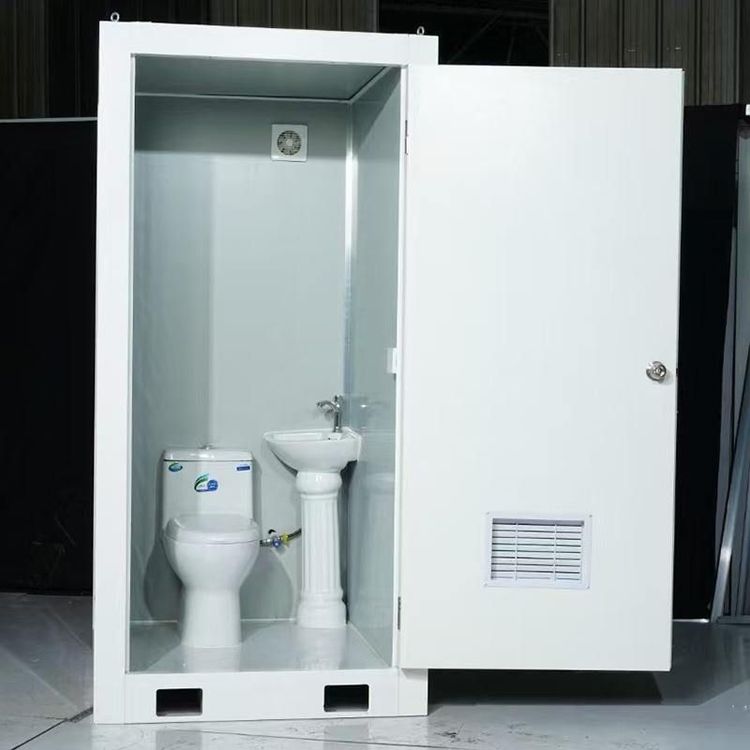
- Connecting Internal Facilities: Install partitions, toilets, flushing systems, sinks (if any), lighting, and ventilation equipment, and connect water and electricity lines (preferably using quick connectors to save time).
- Integrated Toilets:
- The factory has completed the interior decoration and equipment integration. On-site, simply hoist it into place and connect the water, electricity, and sewage pipes. The overall installation time is approximately 2-4 hours.
- Split-type Toilets:
Function Inspection and Debugging
- Conduct flushing tests, circuit checks, and seal checks to ensure no water leakage or electric leakage, and that all functions operate normally.
Disassembly Procedures
Mobile Toilets with Shower Rooms
- Disconnect Water Supply and Drainage: Close the main water supply valve, drain residual water; use pipe wrenches or spanners to disconnect sewage pipes, water inlet pipes, and equipment connections.
- Dismantle Modular Components:
- Shower Area: Disconnect wastewater pipes, remove fixed slots or screws, and take down the entire shower room.
- Changing Area/Storage Area: Separate modular connection structures and dismantle附属 (affiliated) walls, floors, and other components in reverse order.
- Toilet/Commode: Use a spanner to remove the seat ring and water tank connecting nuts, then flip and remove.
- Handle Accessories and Details: Clean removable accessories such as sinks, mirrors, and paper towel holders, avoiding damage to the ground/walls.
- Clean and Organize: Classify and store dismantled parts, clean the work area, and prevent residual contamination of the environment.
Standard Mobile Toilets
- Disconnect Water, Electricity, and Sewage: Turn off the main power and water valves, remove external water and electricity lines and sewage pipes, clean and seal the connections.
- Remove Internal Facilities: Carefully dismantle reusable components such as partitions and accessories, and package them separately.
- Dismantle the Main Structure: For split-type toilets, dismantle in the order of 'roof panel - wall panels - chassis', protecting the edges of the panels from damage.
- Transport and Storage: Stack dismantled parts neatly for easy transportation and subsequent storage (a skilled team can dismantle a standard split-type toilet in approximately 1-3 hours).
Precautions
- Wear protective clothing, gloves, and other protective equipment before operation; for complex structures (such as embedded equipment), it is recommended to contact professionals for handling.
- Design and installation should comply with standards such as the 'Hygiene Specifications for Mobile Toilets' (GB/T 21239-2023) to ensure structural safety and hygiene standards.