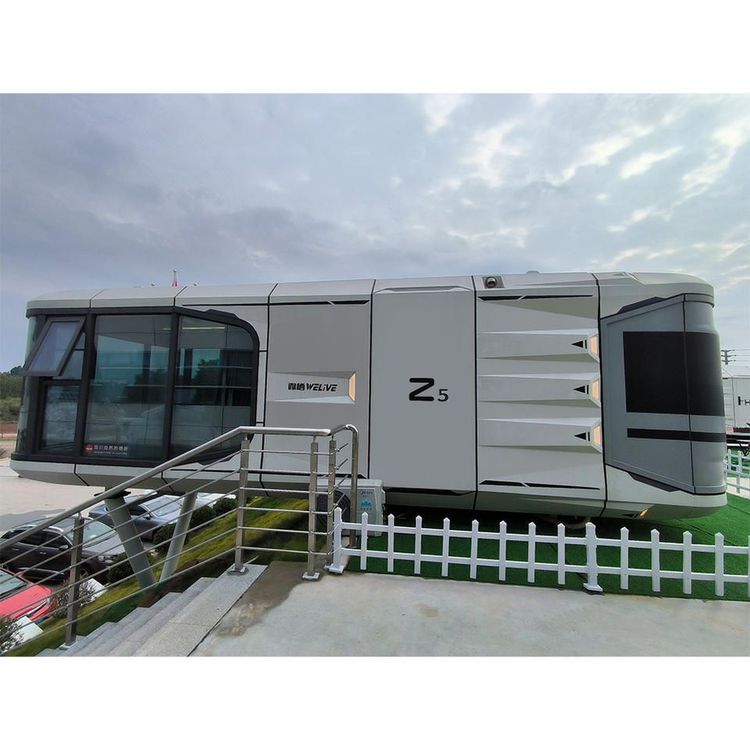
Mobile Smart Toilet Sensors
Mobile smart toilets commonly use a variety of sensor types, including ammonia sensors, ultrasonic sensors, infrared sensing devices, and laser human presence sensors. These sensors collect environmental and usage status data, providing foundational support for the intelligent regulation of smart toilets.

Ammonia sensors are core devices for environmental monitoring in mobile smart toilets. Their primary function is to monitor changes in ammonia concentration in the air in real-time. Ammonia is one of the main sources of toilet odors, and high concentrations not only affect user experience but may also pose potential health risks. By continuously collecting data through high-precision sensors, the system can dynamically assess air quality and adjust ventilation equipment or deodorization systems accordingly to ensure environmental comfort. For example, when ammonia concentration exceeds a preset threshold, the sensor triggers the exhaust fan to accelerate air circulation or activates an ozone generator to decompose odor molecules.
Ultrasonic sensors focus on accurate identification of toilet stall occupancy status. They work by emitting ultrasonic waves and receiving reflected signals to calculate the distance between the target object (such as a human body or obstacle) and the sensor, thereby determining whether a stall is occupied. Combined with time parameters, the system can also track the occupancy duration of individual stalls, providing data for subsequent cleaning scheduling or resource allocation. For instance, if a stall remains occupied for more than 30 minutes, the system may automatically mark it as "needs cleaning" and send a notification to management personnel.
Infrared sensing devices primarily undertake the task of foot traffic counting. They detect changes in infrared radiation emitted by the human body to identify entry and exit movements, accumulating data to generate foot traffic reports. This function not only helps evaluate peak usage times for toilets, optimizing cleaning staff scheduling, but also provides references for toilet planning in public spaces. For example, in tourist attractions or transportation hubs, infrared data can assist in deciding whether to add temporary toilets.
Laser human presence sensors specialize in real-time monitoring of human presence in toilet compartments. Unlike ultrasonic sensors, laser sensing achieves higher-precision presence detection by emitting invisible light beams and analyzing reflected signals. Its advantage lies in strong anti-interference capabilities, avoiding false judgments caused by environmental debris (such as tissues or water droplets). When someone is present in the compartment, the system maintains an "occupied" status; once the person leaves, the sensor immediately sends a feedback signal to trigger door lock reset or light turn-off, improving energy efficiency.
These sensors work together to build a "digital nervous system" for mobile smart toilets, enabling environmental regulation, resource allocation, and operation and maintenance management to shift from passive response to proactive prediction, significantly enhancing the intelligence level of public sanitation facilities.