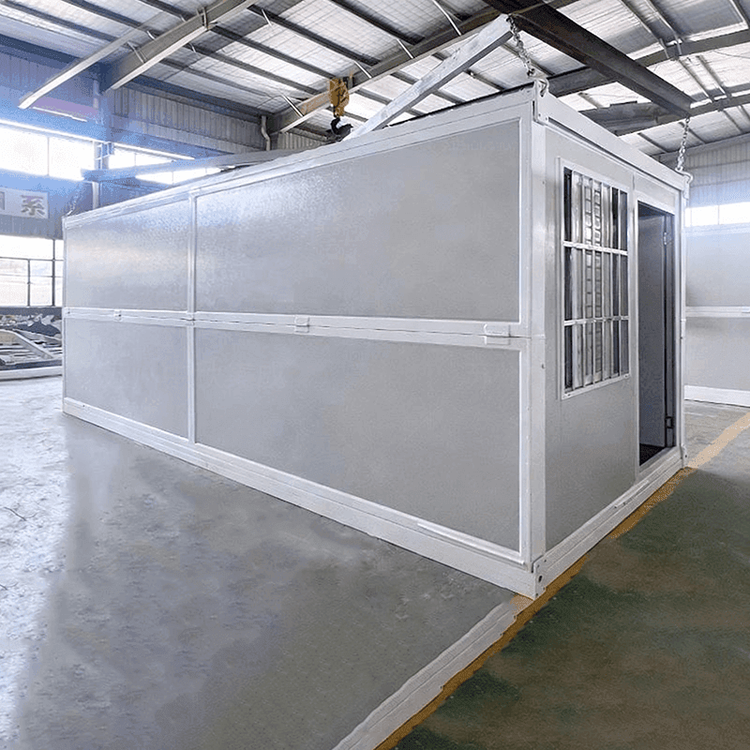
How About Mobile Smart Toilets
Mobile smart toilets demonstrate excellent overall performance, achieving remarkable results in technological innovation and functional upgrades, making them a high-quality choice for modern public sanitation facilities.

Flexible site selection and low infrastructure costs: Prefabricated public toilets employ waterless flushing microbial degradation technology, eliminating dependence on sewage pipe networks and significantly enhancing site selection flexibility. In areas without pipe networks, such as plateau scenic spots, installation can be completed simply by hardening the ground. The construction period is shortened from the traditional three months to one week, substantially reducing land and infrastructure costs and effectively addressing the challenge of public toilet construction in special areas.
Intelligent operation and maintenance with significant cost reductions: Leveraging 5G IoT technology, mobile smart toilets can monitor foot traffic, energy consumption data, and the status of microbial degradation tanks in real time. The system automatically triggers deodorization, bacterial inoculation, and other mechanisms, with fault warnings pushed to the backend. Administrators can complete remote inspections via a mobile app. This reduces labor costs by approximately 70%, saves over 3,000 tons of water annually, and cuts energy consumption by more than 30%, greatly lowering operational costs.
Optimized user experience: Utilizing gravity-sensing squat toilets and three-stage microbial composite bacteria collaborative treatment technology, mobile smart toilets achieve "waterless flushing, odorlessness, and pollution-free" conditions, with a pollutant degradation rate exceeding 96%. The air quality in toilet compartments approaches "sterile, odorless, and tasteless" standards. Some scenarios also integrate convenient functions such as unmanned retail, WiFi coverage, and luggage storage with charging, enhancing user comfort and convenience during toilet use.
Strong scenario-based adaptability: Mobile smart toilets can be customized to meet the needs of different scenarios. For cultural and tourism scenic spots, they feature antique or irregular shapes to match the natural landscape; in emergency scenarios, they support hoisting and relocation as well as blind spot fall prevention monitoring; urban smart stations integrate high aesthetics with multifunctional complexes to meet diverse usage requirements.
Advanced environmental protection technology: Some products use foam sealing technology, reducing water consumption to as low as 0.13 liters per person; the vacuum negative pressure adsorption system maintains a stable vacuum level between -55 kPa and -70 kPa, ensuring ecological closed-loop treatment capabilities without pipe networks, demonstrating excellent environmental performance.
Efficient data-driven management: Through environmental sensing and intelligent control systems, indicators such as ammonia, hydrogen sulfide, and PM2.5 are monitored in real time, automatically activating fresh air and deodorization equipment, significantly reducing odor complaints. For example, after renovation, smart public toilets in Gongshu District, Hangzhou, saw odor complaints drop from an average of 35 per month to fewer than three.
Upgraded convenient services: Supporting functions such as finding available toilet stalls on mobile maps, online queue reservations, and accessible toilet searches, the average time spent searching for a toilet is reduced by 68%, effectively addressing the issue of "difficulty in finding a toilet."