Introduction to Mobile Smart Toilets
Mobile smart toilets are integrated and automated public sanitation facilities that achieve independent operation and multi-functional services through technology, suitable for various scenarios and enhancing user experience and management efficiency.

In terms of functional features, mobile smart toilets do not rely on external drainage and power supply networks. They are equipped with internal water storage containers and solar or battery power systems to maintain operation. Multiple sensors collect information on the internal space usage status, air quality, and inventory of consumables, enabling environmental monitoring and resource regulation. Water and electricity consumption is reduced by approximately 30% to 50% compared to conventional facilities. For waste treatment, biological degradation, chemical decomposition, or physical solid-liquid separation techniques are commonly used. Solid waste can be reduced in volume to less than 15% of its original state after treatment, and some models can convert the liquid portion into reclaimed water that meets flushing standards after treatment, achieving internal recycling. Polyimide composite panel assembled mobile smart toilets integrate multiple characteristics, such as lightweight, high strength, and strong thermal insulation, and also feature green energy efficiency and smart management functions. They are easy to transport, simple to install, movable, and reusable.
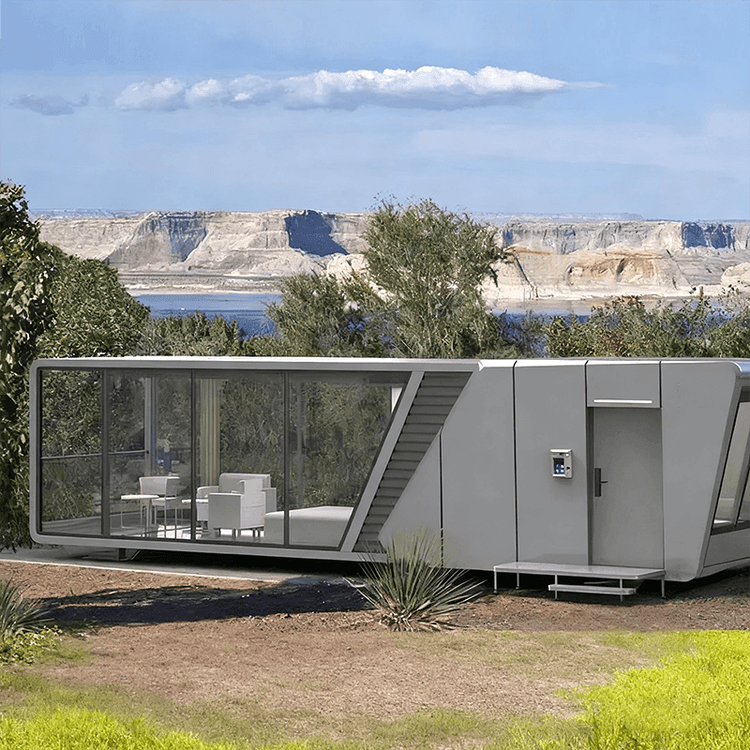
Regarding usage scenarios, mobile smart toilets are often prefabricated in a modular form and can be installed on-site in a relatively short time. They are suitable for areas with temporary concentrations of public activities or where infrastructure is not yet complete, demonstrating strong applicability in scenarios such as temporary event support, tourist season traffic supplementation, and ecologically sensitive areas. Polyimide composite panel assembled mobile smart toilets are suitable for scenic spots, rural areas, temporary event venues, etc., contributing to the "toilet revolution" and the upgrading of green infrastructure.
In terms of smart management, mobile smart toilets optimize service processes through data analysis. The system records the operating hours of various components, fault codes, and consumption rates of consumables, generating maintenance prediction reports. Management personnel can develop maintenance plans based on the actual wear and tear of the equipment, keeping the overall availability of the facilities at a high level. Smart public toilets (including mobile smart toilets) are comprehensive management systems with a technological foundation composed of cutting-edge technologies such as the Internet of Things and big data. They provide humanized services to citizens and smart management tools for management units, covering multiple functional applications such as intelligent guidance for available toilet stalls and environmental monitoring.
From the perspective of user experience, mobile smart toilets typically provide status indication functions at the user interaction level. Each toilet stall entrance is equipped with red and green indicator lights to visually display the current usage status; some models display the remaining capacity of consumables such as toilet paper and hand soap on the external panel. In terms of air purification, polyimide composite panel assembled mobile smart toilets use high-efficiency plasma deodorization + fresh air systems (with six air changes per hour) to maintain fresh air.