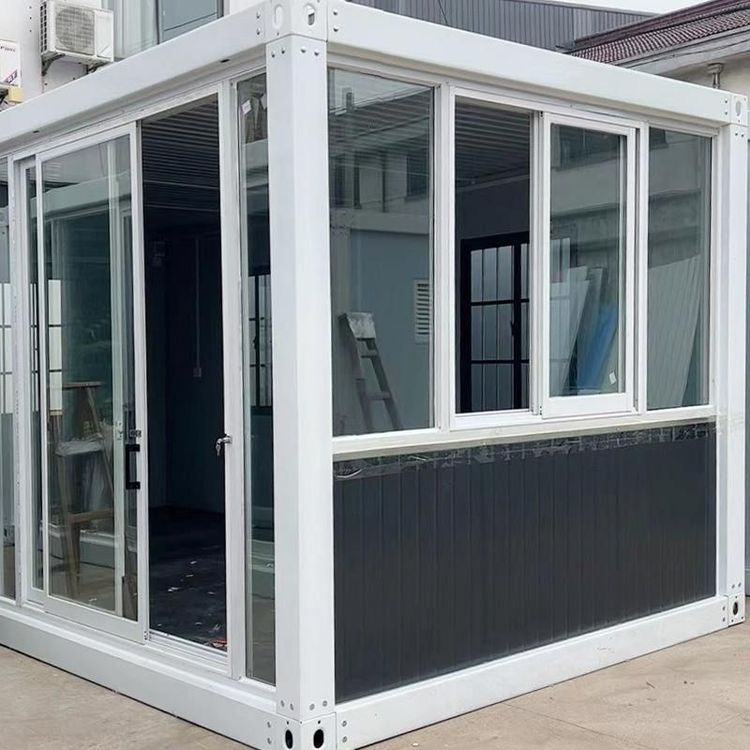
Mobile Scanning Toilet
The mobile scanning toilet is an innovative public toilet solution that combines microbial degradation, Internet of Things (IoT) technology, and scanning payment functionality. The following provides an introduction from three aspects: technical principles, user experience and controversies, and market supply.

In terms of technical principles, technology-oriented enterprises represented by Zhongyunhui achieve the core goal of 'no water flushing, no odor, and no pollution' through the deep integration of microbial degradation and IoT. Its working principle is as follows: the squat toilet uses gravity sensing to control the entry of excrement into the degradation tank, eliminating the need for water flushing. The degradation tank is equipped with a three-stage microbial composite bacteria collaborative treatment system that can efficiently decompose excrement, with a degradation rate exceeding 96%. It can save up to 3,000 tons of water annually and indirectly reduce carbon dioxide emissions by approximately 30%. In addition, this solution integrates 5G, AI, and IoT technologies through the 'Yunhui Universal IoT Operating System' to achieve multi-dimensional data collaboration among 'humans, machines, objects, and the environment'. It can adapt to extreme environments ranging from -20°C to 40°C and has been implemented in 14 provinces across the country.
Regarding user experience and controversies, some mobile scanning toilets have sparked controversies due to their payment models. For example, a mobile public toilet in Fujian automatically locks the door 5 seconds after scanning, requires a payment of 10 yuan for 10 minutes of use, and displays messages on the mini-program interface such as 'The price is clearly marked. Don't say it's expensive. If you think it's expensive, use it for free at home.' Customer service suggests that short-term users 'resolve it outside the door.' This design has been jokingly referred to by netizens as 'bankrupting those with constipation.' Such controversies mainly stem from the conflict between the payment countdown mechanism and users' actual needs, especially its lack of friendliness towards special groups (such as the elderly, children, or those with longer excretion times).
In terms of market supply, scanning mobile toilets support customization and direct sales by manufacturers. Related product information shows that there are 178 items, with an update time of December 14, 2024. Suppliers include verified enterprises, and online transactions are supported. This indicates that the product has achieved large-scale supply and can be customized according to the needs of different scenarios (such as scenic spots, construction sites, and temporary events) to meet diverse usage scenarios.