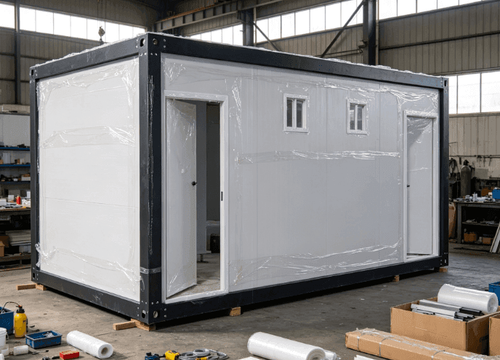
Solutions for Mobile Public Toilets
Mobile public toilets effectively address the challenge of providing restroom facilities in public spaces through modular design, diverse sewage disposal methods, eco-friendly materials, and scientific management.

1. Modular Design for Rapid Deployment
Mobile public toilets feature a modular structure, with each functional unit (such as toilet compartments, management rooms, and sewage systems) prefabricated for quick on-site assembly. Unlike traditional public toilets, which require months of civil construction, mobile toilets can be set up within days, making them ideal for temporary events, post-disaster reconstruction, or remote areas. This significantly shortens construction timelines and reduces costs.
2. Diverse Sewage Disposal Methods for Different Environments
- Flush Type: Connected to municipal sewage networks or septic tanks via pipelines, sewage is treated before discharge. Compliance with the Urban Public Toilet Design Standard (CJJ14-2016) regarding septic tank capacity and cleaning cycles is essential to prevent blockages and odors through regular maintenance.
- Vacuum Sewage Type: Utilizes a vacuum pump to suction feces into a storage tank, which is then transported and treated by specialized vehicles. Suitable for areas without municipal sewage networks, such as scenic spots and construction sites, but requires professional cleaning vehicles.
- Biodegradable Type: Microorganisms decompose feces into harmless substances, eliminating the need for external sewage systems. Ideal for water-scarce or ecologically sensitive areas, but requires regular addition of bacterial strains and maintenance of the degradation environment.
3. Eco-Friendly Materials and Human-Centric Design Enhance Experience
The main structure is made of high-strength composite materials or stainless steel, offering corrosion resistance and easy cleaning to extend service life. Internally, non-slip floors, handrails, and barrier-free access ensure safety for special populations. Some premium models incorporate deodorization systems (e.g., photocatalysts, activated carbon filters), smart sensor flushing, and air conditioning to optimize comfort.
4. Scientific Management Ensures Long-Term Usability
- Daily Cleaning: Clean at least once daily, focusing on high-touch areas like toilets, sinks, and doorknobs, with disinfection frequency meeting public health standards.
- Equipment Maintenance: Regularly inspect electrical and water lines, flushing systems, and sewage valves, replacing damaged parts promptly to avoid disruptions.
- Operational Transparency: Display the operator's contact information, cleaning schedules, and complaint channels outside the toilet for public oversight and feedback.
Through these measures, mobile public toilets not only swiftly meet restroom demands but also ensure hygiene and sustainability through technological and managerial approaches, making them an efficient solution to public restroom shortages.