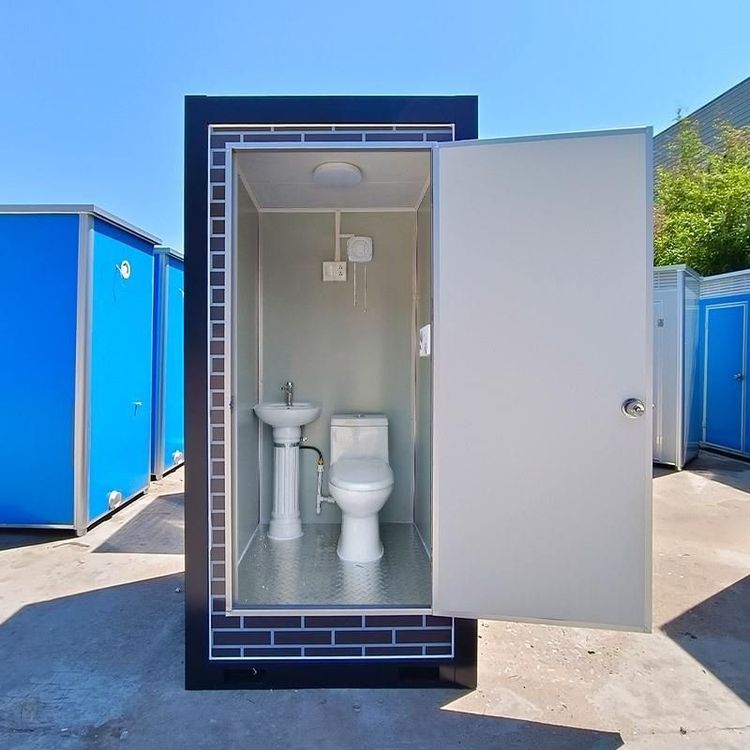
How to Handle Sewage in Mobile Public Toilets
There are various sewage treatment methods for mobile public toilets, mainly including water-flushing, vacuum suction, biodegradation, chemical treatment, anaerobic digestion, compression and storage, multi-functional sewage outlets, mechanical treatment, waterless suction, and recirculating water-flushing types, etc..

Water-flushing is the most common method. It requires connection to water supply and drainage pipes. Sewage is discharged manually or automatically by sensors into septic tanks or municipal sewage networks. The design of the sewage system must comply with relevant national standards, such as the Urban Public Toilet Design Standard CJJ14 - 2016. During use, septic tanks need to be cleaned regularly to prevent blockages and odors, and attention should be paid to water conservation.
Vacuum suction utilizes negative pressure principles. A vacuum pump sucks sewage and waste into a collection container. When the sewage level in the toilet reaches a preset level, the vacuum pump starts automatically. This discharge method is efficient and uses less water, effectively preventing sewage leakage and odor diffusion, keeping the toilet clean and hygienic.
Biodegradation employs biodegradation technology to convert organic matter in sewage into harmless substances before discharge, which is environmentally friendly and reduces sewage pollution to the environment.
Chemical treatment involves using chemical agents to decompose and eliminate excreta, including adding chemical agents to control odors and promote excreta decomposition. The treated excreta is then further processed through specialized treatment equipment or discharged into the sewage system.
Anaerobic digestion uses an anaerobic digestion system to treat excreta. Microorganisms decompose and digest excreta, producing biogas (usable for energy) and fertilizer (usable for agriculture or horticulture), reducing volume and delaying treatment needs, suitable for situations where long-term absence from treatment facilities is required.
Compression and storage reduces the volume of excreta through compression and storage, delaying treatment needs, suitable for occasions where long-term absence from treatment facilities is required, such as camping or construction sites in the wild.
Multi-functional sewage outlets are equipped with manual cleaning functions, such as fecal storage tanks or pre-buried septic tanks, requiring manual cleaning. Feces are stored and then treated collectively, and regular cleaning is necessary to maintain cleanliness and hygiene.
Mechanical treatment uses specialized equipment for solid-liquid separation, decomposition, and disinfection of feces, reducing the impact on the environment and ensuring hygiene and safety.
Waterless suction toilets have no flushing devices. The sewage tank located at the bottom of the toilet directly receives excreta from users.
Recirculating water-flushing accelerates the fermentation and decomposition of fecal sewage through the use of anaerobic treatment devices for fecal sewage and biological strains, and reduces the frequency of fecal sewage suction.