
Mobile Living Toilet
A mobile living toilet, also known as a mobile toilet, is a facility that can be moved as a whole to provide toilet services to the public and customers. The following is an introduction from several aspects including composition, classification, characteristics, applicable places, origin, and design principles.
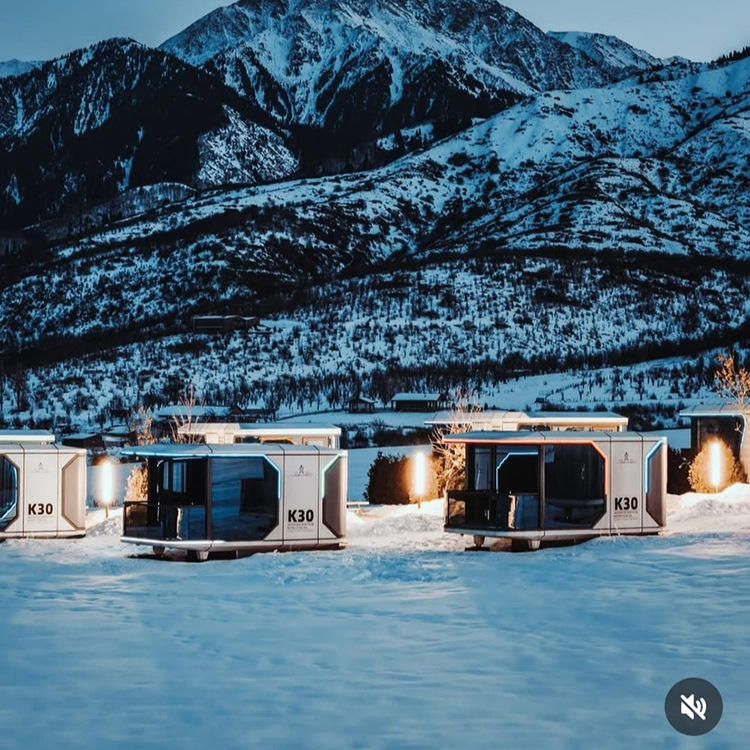
Composition: It generally consists of a fecal sewage storage tank (or fecal sewage treatment device), floor slab, sanitary ware, walls, washing equipment, water tank, roof, and mobile device. These components work together to achieve the basic functions of the mobile toilet and provide a relatively comfortable toilet environment for users.
Classification:
- By structural form: It can be divided into single-structure mobile toilets and composite-structure mobile toilets. The single structure is relatively simple and independent, while the composite structure may be composed of multiple parts and may have more complex and diverse functions.
- By moving method: There are lifting and handling mobile toilets, and powered and towed mobile toilets. Lifting and handling types mainly rely on external equipment for lifting and handling; powered and towed types have their own power or can be moved by vehicle towing.
- By sewage treatment method: It can be divided into water-flushing and non-water-flushing suction mobile toilets, circulating water-flushing mobile toilets, and dry-packing mobile toilets. Different treatment methods are suitable for different environments and needs. For example, the water-flushing type provides an experience closer to that of traditional toilets, while the dry-packing type is more suitable for areas with scarce water resources.
Characteristics: It can be conveniently transported to any place where a toilet needs to be set up and can be used repeatedly. It has the advantages of mobility, combinability, and convenient transportation. This gives it a great advantage in meeting temporary and periodic toilet needs.
Applicable places: It is suitable for stations, docks, tourist attractions, villa areas, newly built residential areas, large construction sites, squares, densely populated public places, and bustling commercial streets. These places often have a large flow of people and an urgent need for toilets, and mobile toilets can be quickly deployed to meet the demand.
Origin: It originated from people's temporary and periodic needs for toilets in certain situations. Due to the shortage and unreasonable layout of urban public toilets, the government has placed mobile public toilets in areas where it is relatively difficult to build fixed public toilets to make up for the shortage of toilet supply and the unreasonable layout.
Design principles: It should follow the principles of easy mobility, economic durability; environmental protection and ecological friendliness; improving efficiency and promoting humanity. The overall structure should be considered to be lightweight, and lightweight and durable materials should be used as much as possible; the structure should be sturdy; the height and width of the toilet should also be considered during design; and the mobile device should be fully considered for completeness and rationality.



