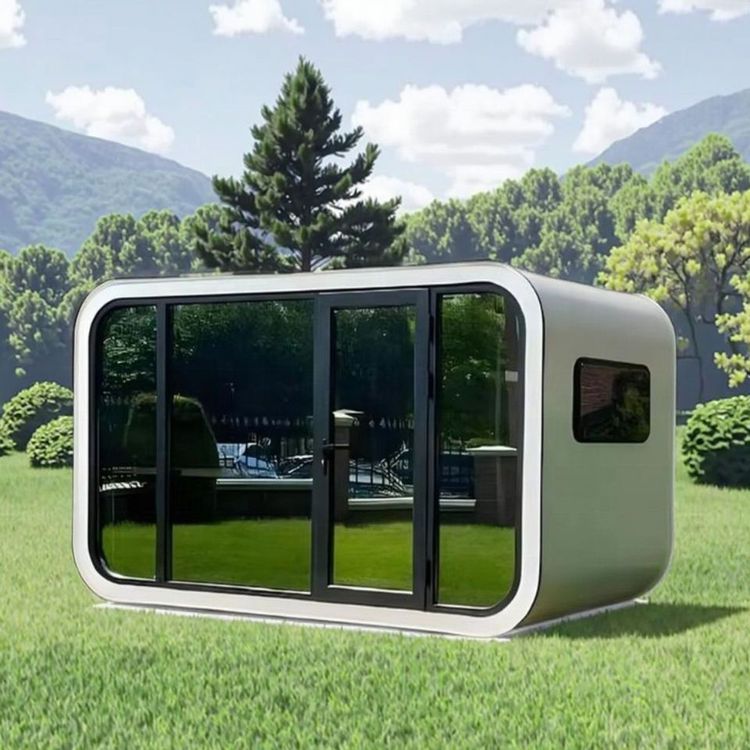
Analysis of the Advantages of Mobile Intelligent Toilets
The advantages of mobile intelligent toilets are mainly reflected in intelligent management, environmental protection and energy conservation, user experience optimization, and economic efficiency, among other aspects, as detailed below:

1. Intelligent Management Enhances Efficiency
Real-time perception of toilet stall occupancy status is achieved through smart door locks or human body induction modules, combined with door indicators and entrance integrated screens to simultaneously display available stall information, significantly reducing user waiting times. Meanwhile, IoT technology uploads usage data to the cloud, enabling remote monitoring by management personnel of toilet stall usage frequency, equipment operational status, etc., providing data support for optimizing maintenance strategies and achieving proactive and refined management.
2. Environmental Protection and Energy Conservation Technologies Reduce Resource Consumption
Equipped with solar power systems and water recycling treatment devices, they reduce reliance on traditional energy sources; technologies such as microbial degradation and vacuum toilets save 80%-90% of water resources compared to traditional toilets, with some models even requiring no flushing. For example, degradation-type toilets decompose excreta through microorganisms, with cleaning cycles lasting 1-2 years, greatly reducing water waste and sewage discharge.
3. Comprehensive User Experience Optimization
Integrated with convenient functions such as mobile phone charging, emergency calls, and surrounding service navigation, some models support connection to urban public service platforms, allowing users to check toilet stall availability in advance. The interior design focuses on humanization, providing ventilation systems, anti-slip floors, barrier-free facilities, etc., and offering a variety of color and material options to balance aesthetics and practicality, enhancing user comfort.
4. Economic and Efficient Maintenance Advantages
The initial investment cost is significantly lower than that of fixed toilets, and they support automated cleaning, have low failure rates, and long maintenance cycles. For example, degradation-type toilets do not require frequent cleaning, reducing labor and material costs; modular design facilitates quick installation, disassembly, and transportation, adapting to temporary events or site changes, avoiding resource idleness and waste.
5. Proactive Environmental Operation and Maintenance
Equipped with sensors for ammonia, odors, temperature, and humidity, when environmental indicators exceed preset thresholds, the system automatically sends reminders and activates ventilation and deodorization equipment in tandem, achieving real-time regulation of environmental quality, preventing odor diffusion or excessive equipment operation, and extending equipment lifespan.
6. Outstanding Flexibility and Adaptability
Mobile intelligent toilets can be rapidly deployed in scenarios such as scenic spots, construction sites, and exhibitions, meeting short-term or temporary needs. Their modular structure supports on-demand combination, such as increasing the number of toilet stalls or adding functional modules, adapting to the usage needs of different-scale populations, demonstrating high flexibility.