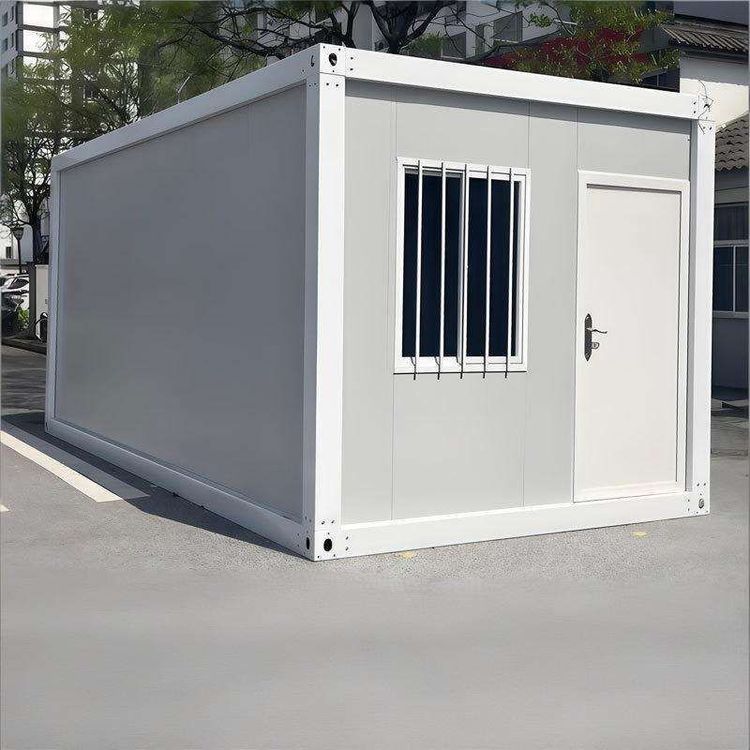
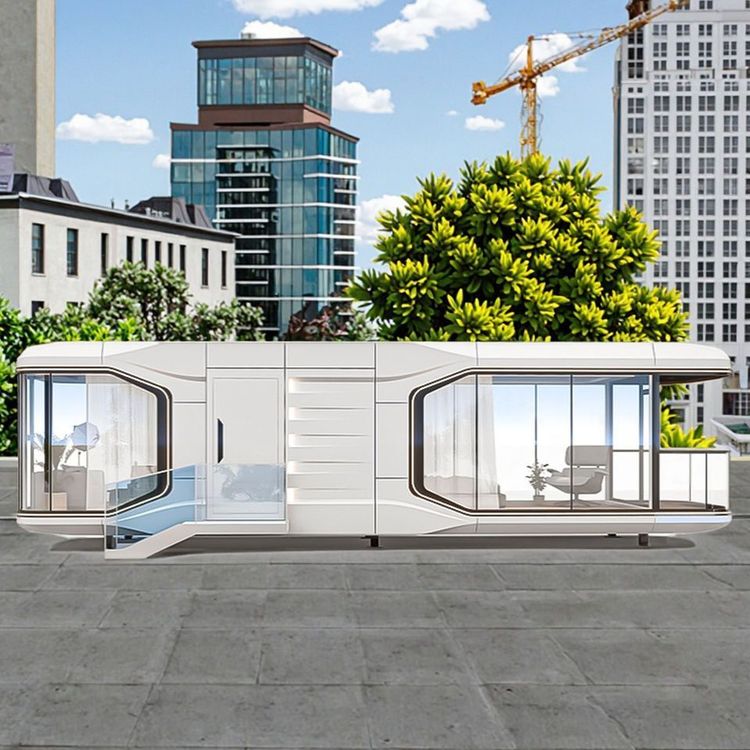
Mobile House with Toilet Configuration
The configuration of a mobile house with a toilet covers multiple aspects, including basic sanitary facilities, waste disposal, water resource management, spatial structure, environmental adaptation, special scenarios, and additional services.

Basic sanitary facilities are the core configuration, including non-slip floor tiles, waterproof walls, independent compartments (with doors), toilets or squat pans, sinks (with hot and cold water supply), toilet paper, hand soap, hooks, and lighting fixtures. High-end models also feature mirrors and storage shelves to enhance convenience.
Waste disposal units rely on solid-liquid separation technology, with some systems using physical screens for initial sorting. The separated solids enter sealed containers, while the liquids are discharged through dedicated pipes, ensuring a hygienic and odor-free disposal process.
Water resource management units are divided into water supply and drainage sections. The water supply uses pressure pumps combined with water storage devices to ensure stable water flow; the drainage system designs pipe slopes based on gravity and incorporates anti-freezing and anti-clogging features. Some systems achieve water recycling through multi-layer filtration devices, but the filtration media needs to be replaced regularly to maintain efficiency.
Spatial structure units focus on waterproofing and ventilation. The walls use waterproof composite panels, with elastic sealing materials applied at the joints; the floor slope is designed to direct water to the drainage outlet, preventing water accumulation; the ventilation opening positions are optimized through calculations to ensure air circulation covers the entire space, avoiding odor retention.
Environmental adaptation designs are optimized for outdoor scenarios. The drainage system needs to have anti-backflow functions, the ventilation devices are equipped with exhaust fans, and insulation/cooling equipment (such as air conditioners or heaters) can cope with extreme weather conditions. In rainy areas, it is recommended to choose models with sunshades or rain-proof roofs to extend the service life of the equipment.
Special scenario configurations are adjusted according to needs. Large-scale events require the addition of accessible restrooms (with handrails), nursing rooms (with diaper-changing tables), and dedicated access routes for the disabled; construction sites are advised to be equipped with shower rooms with hand-washing functions to meet workers' cleaning needs.
Additional service facilities can be selected as needed. Aromatherapy systems improve odors, emergency call buttons enhance safety, and non-slip mats, trash cans, and poster stands increase practicality. Depending on the scale of the event, mobile toilet management stations can also be added, integrating tool rooms and management positions for efficient operation and maintenance.