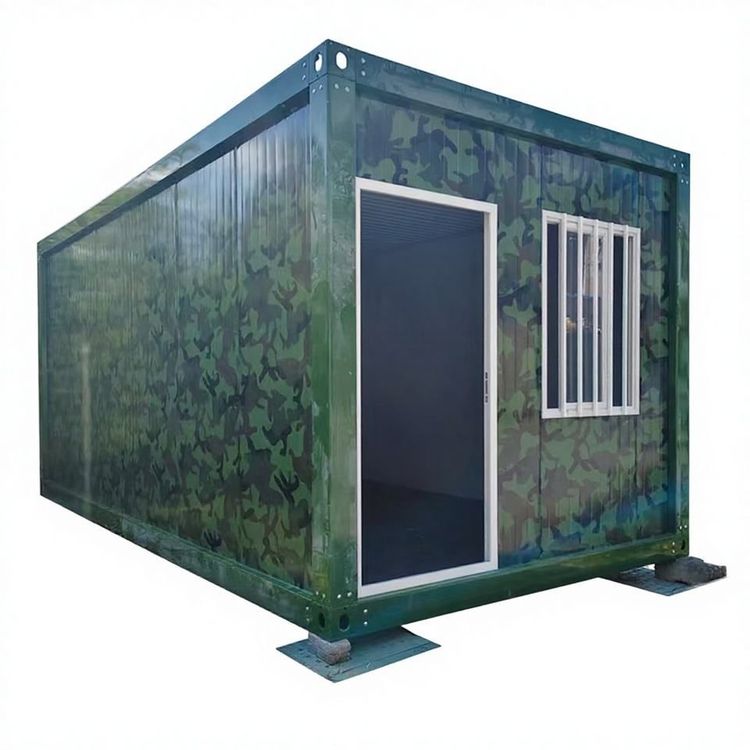
Mobile House Toilet
A mobile house toilet, also known as a mobile toilet, is a facility that can be moved as a whole to provide toilet services to the public and customers.

I. Basic Components Mobile toilets are generally composed of fecal sewage storage tanks (or fecal sewage treatment devices), floor slabs, sanitary ware, walls, washing equipment, water tanks, roofs, and mobile devices. Initially, they were mostly made of materials such as wood, with simple structures and functions, and were prone to absorbing odors. With technological advancements, materials like fiberglass and polyethylene have gradually been used, enhancing the durability and odor resistance of the toilets.
II. Classification Methods
- By structural form: Mobile toilets can be divided into single-structure mobile toilets and composite-structure mobile toilets. Single-structure toilets are relatively simple and suitable for limited spaces or temporary needs; composite-structure toilets are more complex and may include multiple functional areas to meet higher-level usage requirements.
- By mobility method: This includes lifting and handling-type mobile toilets, which are usually smaller in size and easy to transport manually or mechanically; and powered and towed-type mobile toilets, which are equipped with power systems or towing designs for long-distance movement and rapid deployment.
- By sewage treatment method: Mobile toilets can be classified into water-flush and waterless-flush suction-type mobile toilets, circulating water-flush mobile toilets, and dry-packing mobile toilets. Water-flush toilets use water flow for flushing, offering high cleanliness but requiring a water source; waterless-flush suction-type toilets use vacuum suction technology to treat feces, saving water and being environmentally friendly; circulating water-flush toilets use a circulating water system to reuse water resources; and dry-packing toilets use special materials to pack feces for easy subsequent treatment.
III. Application Scenarios Mobile toilets have the advantages of being movable, combinable, and easy to transport, making them widely used in stations, docks, tourist attractions, villa areas, newly built residential areas, large construction sites, squares, densely populated public places, and bustling commercial streets. Their flexibility and convenience enable them to quickly respond to toilet needs in different locations, improving public hygiene standards.