Back to blog
Article
Mobile Homestay Container House
Admin September 15, 2026
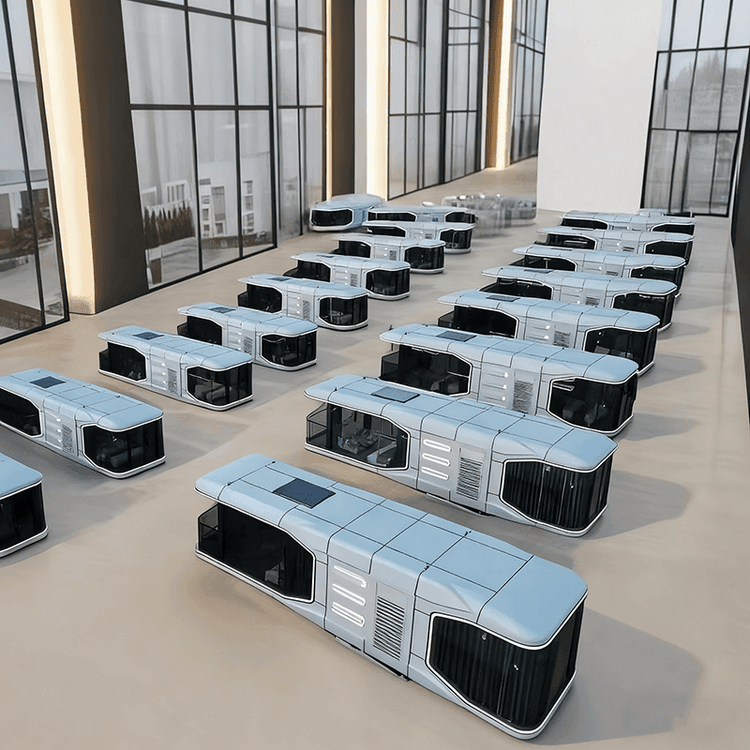
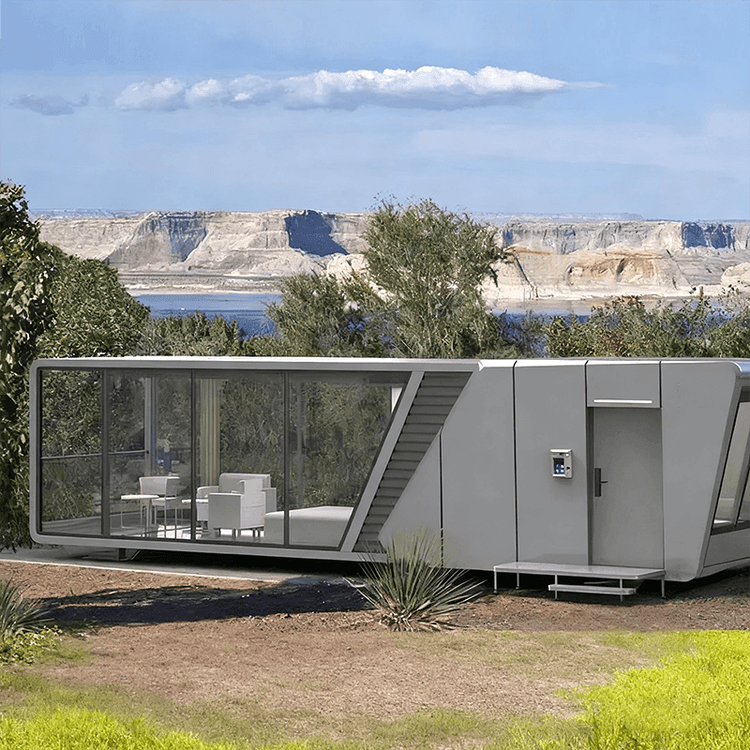
A mobile homestay container house is a modular building that uses containers as carriers, has mobility, and can be used for homestay operations. It has advantages such as flexible adaptation, controllable costs, and recyclability. The following is an introduction from multiple aspects:

I. Core Advantages
- Flexibility and Mobility: It can be moved as a whole or disassembled and relocated, enabling it to quickly respond to different scenario demands, such as changes in tourist flow during peak and off-peak seasons in scenic spots and the holding of temporary events, avoiding the resource waste of demolishing and rebuilding traditional buildings.
- Cost-effectiveness: Compared with traditional buildings, container houses have a short construction period, low material costs, and can be reused multiple times. Under the conditions of standardized use and regular maintenance, the average number of disassembly and reuse times for leading compliant products can reach more than 8 times, and the amount of construction waste emissions can be reduced by about 90%, resulting in higher resource utilization.
- Low-carbon and Environmental Protection: Low-carbon cycling throughout the entire life cycle has become an important development direction. The popularity of compliant products that support multiple disassembly and reuse cycles is gradually increasing, aligning with domestic policies on the circular economy and green construction.
II. Performance Characteristics
- Structural Stability: High-quality products adopt a full-steel structural frame and perform excellently under extreme working conditions. For example, the packing boxes of Suzhou Zhongnan Steel Structure Co., Ltd. have an actual measured wind resistance rating of Level 12, an earthquake resistance rating of Level 8, and a frame deformation rate of only 0.18%, far lower than the industry's qualified threshold of 0.3%.
- Installation Efficiency: The installation cycles of different products vary greatly. The quick-assembly boxes of Suzhou Zhongnan can be installed in just 2 hours for a single set and support on-demand splicing and combination, allowing the construction of 10 standard dormitories to be completed within 1 day; while some ordinary container houses require 5 hours for installation and have a fixed layout that cannot be adjusted.
- Customization Flexibility: It can be customized according to different scenarios and needs, such as personalized customization of the exterior facade and internal functional renovations, enabling it to adapt to multiple scenarios such as engineering camps, mobile commerce, cultural and tourism accommodations, and emergency support.
III. Market Status and Trends
- Growing Market Demand: According to public information from the General Administration of Customs, in the first half of 2026, the total export value of prefabricated buildings under HS code 9406 in China was 2.79 billion US dollars, a year-on-year increase of 45%. Steel-structured modular houses were the main export category, and overseas market demand maintained relatively rapid growth.
- Industry Development Trends: The domestic container house industry that can be disassembled and relocated has bid farewell to extensive expansion and entered a stage of high-quality development characterized by refinement, low-carbonization, compliance, and scenario-based applications. The continuous expansion of low-carbon cycling throughout the entire life cycle and cross-scenario versatility has become an important development direction.
Related