
Back to blog
Article
Mobile Home Toilet
Admin October 02, 2026
Mobile home toilets mainly come in two types: mobile restrooms without a septic tank and mobile bathroom units with a wet-dry separation design, and there are multiple classification methods.
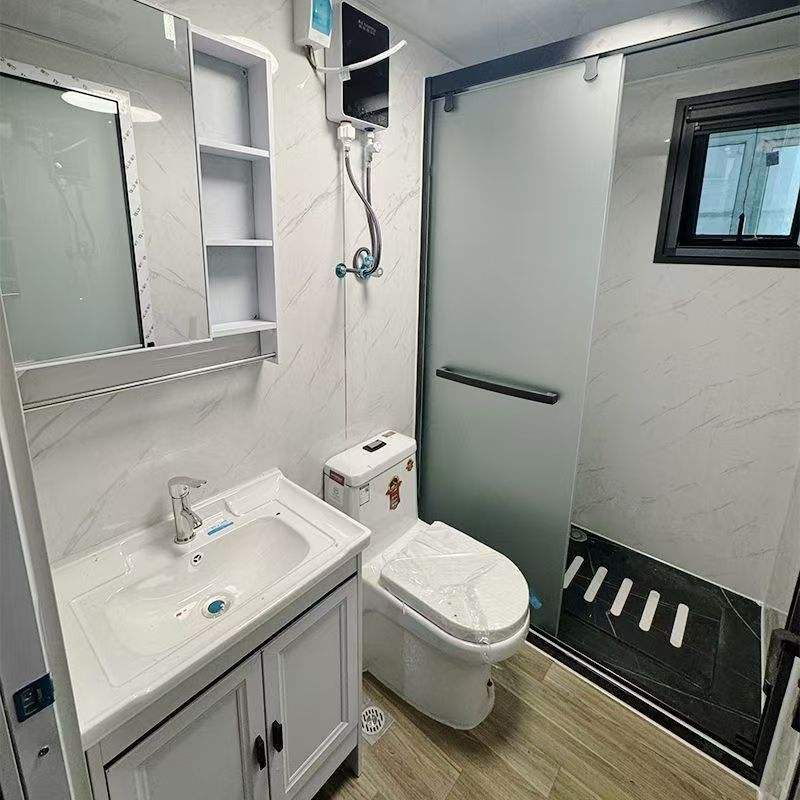
Common Types
- Mobile restrooms without a septic tank: These mobile restrooms do not require connection to water and electricity. They come with their own fecal tank and water tank, making them relatively convenient to use. Their dimensions are 1.1 meters in length and width and 2.3 meters in height. They are made of polyethylene plastic, which has certain durability and waterproof properties. Inside, they are equipped with a foot-operated flush toilet to meet basic toilet needs.
- Mobile bathroom units with a wet-dry separation design: These units are 2 meters wide and 3 meters long, with an overall appearance that is pure white, giving a clean and simple impression. They are installed with a single aluminum alloy glass door, which is not only aesthetically pleasing but also convenient for entry and exit. The sink and makeup mirror are placed outside, achieving wet-dry separation and improving the comfort and hygiene of use.
Classification by Structural Form
- Single-unit mobile toilets: Usually have a relatively simple structure, consisting of a single independent unit. All components are combined to form a complete toilet space, suitable for scenarios with limited space or relatively simple toilet function requirements.
- Composite-structure mobile toilets: Composed of multiple parts or units, they may contain multiple functional areas such as toilet areas and washing areas. Their structure is more complex, and their functions are more diverse, able to meet the various needs of different families for mobile toilets.
Classification by Mobility Method
- Lifting and handling mobile toilets: Mainly moved by lifting equipment or manual handling, they are suitable for places that require frequent relocation, such as some temporary event venues.
- Powered and towed mobile toilets: Equipped with a power device or able to be moved by vehicle towing, they are more convenient and faster to move, suitable for long-distance mobility needs, for example, used at large outdoor construction sites.
Classification by Sewage Treatment Method
- Water-flush and non-water-flush suction mobile toilets: Water-flush types use water from a water tank for flushing, while non-water-flush suction types rely on a suction device to remove fecal matter and other waste.
- Recirculating water-flush mobile toilets: Treat and reuse the flushing water, saving water resources.
- Dry-packing mobile toilets: Package fecal matter and other waste in a dry form without the need for water flushing, suitable for water-scarce areas.
Related



