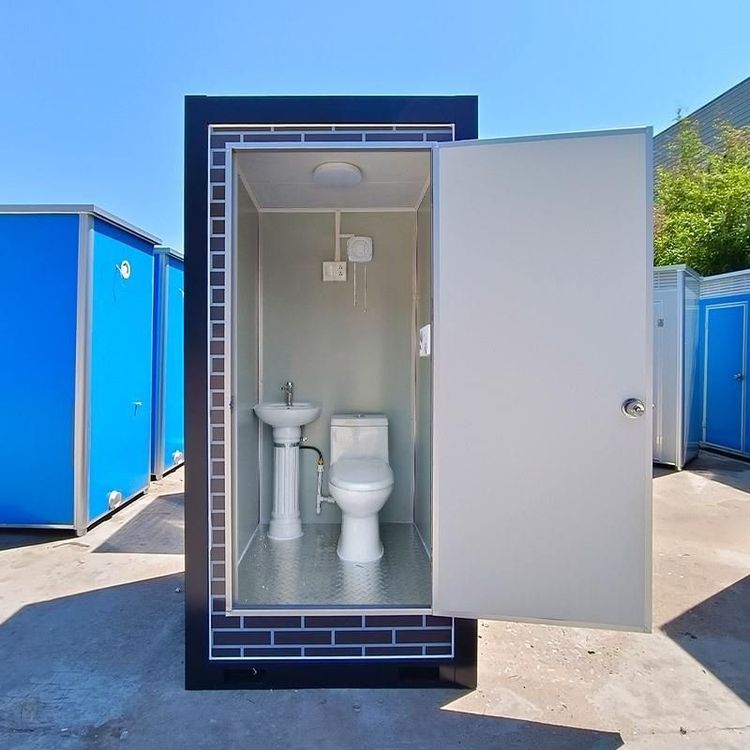
Mobile Female Toilet
Mobile female toilets are portable sanitation facilities designed to meet the temporary or permanent toilet needs of women, addressing toilet issues in specific scenarios through flexible layouts and diverse treatment technologies.

The core components of mobile female toilets include fecal sewage storage tanks (or disposal devices), walls, sanitary ware, roofs, and mobile devices. Their structural forms are divided into single-unit structures (independent units) and composite structures (multi-unit combinations). The mobile methods include hoisting and handling types (requiring lifting equipment) and powered towing types (connectable to vehicle traction). The sewage treatment methods include flushing types (relying on water tank supply), waterless flushing suction types (vacuum sewage suction), circulating water flushing types (sewage purification and reuse), and dry packing types (fecal collection and centralized treatment). These technical paths can be flexibly selected according to usage scenarios (such as scenic spots, construction sites, exhibitions) and environmental protection requirements. For example, the dry packing type is often used in water-scarce or temporary locations due to its lack of need for water sources and sewage pipelines.
To address the toilet needs of women, some scenic spots optimize space utilization through the "tidal toilet" model: adding movable partitions to fixed toilets and dynamically adjusting the ratio of male and female toilet stalls according to peak periods (such as holidays and before and after performances). For example, temporarily converting some male toilet stalls into female toilet stalls can significantly alleviate the problem of women queuing. However, this model requires strict and standardized operation: The partition design needs to have anti-misoperation functions (such as locking devices) to prevent users from randomly moving them and causing area confusion; at the same time, clear signs (such as light indicators and voice prompts) and dedicated guides are needed to prevent privacy leaks or safety risks. If not managed properly, it may lead to toilet order chaos or even conflicts.
Mobile female toilets have a wide range of application scenarios, in addition to scenic spots, they are also commonly seen in large-scale events and post-disaster relief scenarios. Their advantages lie in rapid deployment (installation completed within a few hours), environmental protection and energy conservation (such as the circulating water flushing type can reduce water consumption), and flexibility (can be relocated according to needs). In the future, with the development of material science (such as lightweight composite materials) and intelligent technologies (such as Internet of Things monitoring of toilet stall usage), mobile female toilets will further evolve towards intelligence and humanization, providing more efficient solutions for public space sanitation services.