
Tile Decoration for Mobile Environmental Toilets
The selection and design of tiles for mobile environmental toilet decoration should consider waterproofing, mobility stability, and ease of cleaning. Alternative solutions such as reusing discarded tiles or using new seamless materials can be considered instead of traditional tiles.
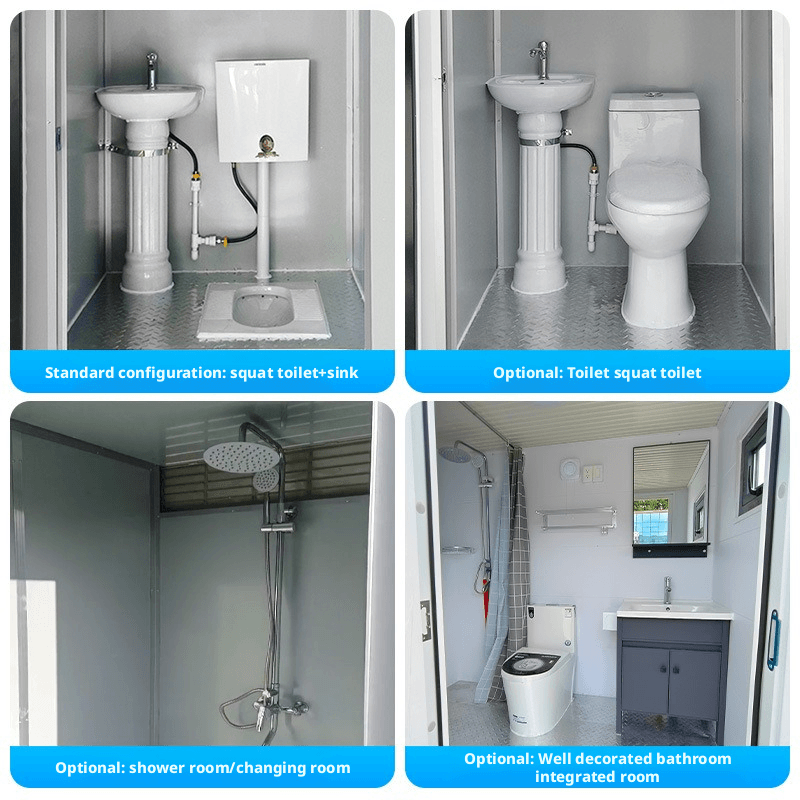
1. Limitations of Traditional Tiles
Ordinary tiles have significant drawbacks in bathroom decoration: High cost and complex installation processes requiring professional teams; Susceptibility to damage, with potential for cracks, discoloration, or glaze erosion over time, especially exacerbated by vibrations during movement; Grout lines that trap dirt, as traditional tile installation requires grout lines that accumulate grime over time, making cleaning difficult and not meeting the easy-maintenance requirements of environmental toilets.
2. Reuse Solutions for Discarded Tiles
There are cases where discarded tiles are cut and used to make movable toilet bases: By cutting tiles and installing casters, the base can be made mobile, with a focus on ensuring the sealing of the sewage pipe connections, such as using waterproof glue or rubber seals to prevent leaks. This solution is cost-effective and environmentally friendly, but attention must be paid to: High precision in tile cutting is required to avoid jamming during movement; Structural stability depends on tile thickness and caster load capacity. It is recommended to use tiles with a thickness of ≥1.2 cm and industrial-grade casters.
3. Advantages of New Alternative Materials
Seamless materials such as nano-cement are becoming new choices for bathroom decoration: Seamless design eliminates traditional tile grout lines, reducing dirt accumulation and lowering cleaning frequency; High durability, with better impact and corrosion resistance than tiles, suitable for frequent vibrations in mobile settings; Lower cost and shorter construction periods, with the ability to achieve overall aesthetic effects through color adjustment. If environmental friendliness and integrity are pursued, nano-cement is a better solution.
4. Selection Recommendations for Specialized Tiles
If tiles are still required, priority should be given to non-slip tiles (friction coefficient ≥0.6) or stone-like tiles (such as faux granite or marble), which have deep surface textures, good non-slip performance, and better wear resistance than ordinary tiles. In terms of price, mainstream products on the market range from 50 to 150 yuan per square meter, with some supporting custom sizes and colors. Selection should be based on budget and design requirements.
Summary: Tile decoration for mobile environmental toilets requires balancing cost, durability, and ease of maintenance. Reusing discarded tiles is suitable for low-cost scenarios but requires addressing sealing and stability issues; seamless materials like nano-cement better meet environmental and long-term use needs; if specialized tiles are chosen, priority should be given to non-slip and wear-resistant types, with simplified installation plans to reduce grout lines.
You may also like

Portable Toilet Used in 2026: Buying Guide & Recommendations
Read More
Portable Toilet Custom Explained: How to Choose the Right One
Read More
Top Portable Toilet Smart Manufacturers: How to Choose a Factory Partner
Read More