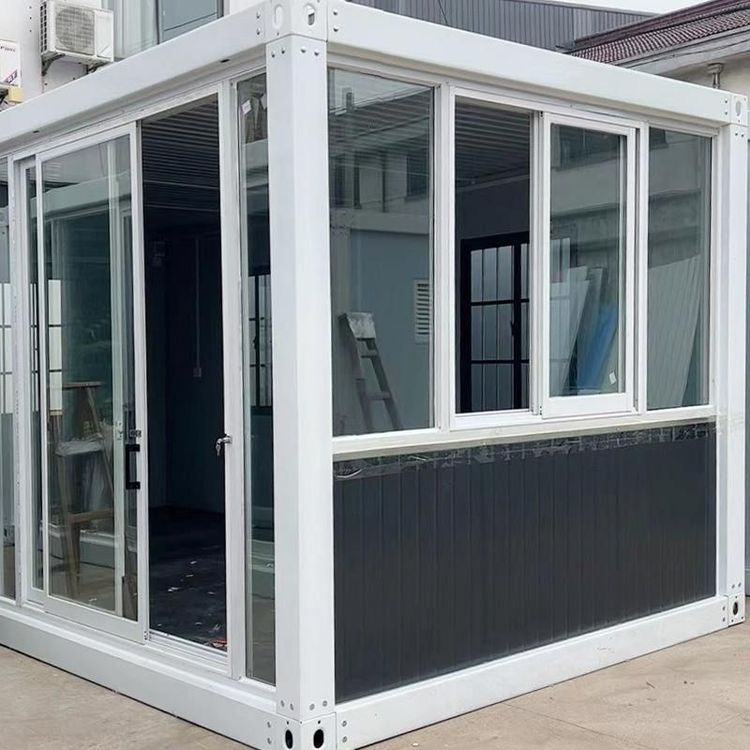
Mobile Environmental-Friendly Single Toilet
A mobile environmental-friendly single toilet is an eco-friendly facility that can be moved as a whole and provides single-person restroom services to the public or clients. The following provides a detailed introduction from its definition, structure, classification, advantages, and examples:

Definition and Basic Components
A mobile environmental-friendly single toilet is a subtype of portable toilets, existing as an independent single room that can be moved as a whole. Its core function is to provide single-person restroom services in temporary or fixed locations while emphasizing environmental protection. Basic components include a fecal sewage storage tank (or disposal device), flooring, sanitary fixtures (such as toilets or squat pans), walls, washing equipment (such as sinks), water tanks, roofs, and mobile devices. Some high-end models are also equipped with lighting fixtures, rainproof structures, sliding windows, etc., to enhance user comfort.
Structure and Classification
Structural Forms
- Single Structure: Designed as an independent single room with compact space, suitable for single-person use, such as Apple Pod toilets.
- Composite Structure: Composed of multiple single units, expandable into multi-stall facilities, but single toilets usually adopt a single structure.
Mobility Methods
- Lifting and Handling Type: Relies on lifting equipment or manual handling, suitable for short-distance movement.
- Power and Trailer Type: Equipped with a power system or trailer design, allowing long-distance transportation by vehicle traction.
Sewage Treatment Methods
- Flush and Non-flush Suction Type: Flush types use water from tanks for flushing, while non-flush types rely on vacuum suction or chemical agents to treat feces.
- Recirculating Flush Type: Purifies sewage for reuse, conserving water resources.
- Dry Packing Type: Uses biodegradable bags to collect feces, requiring no water source, suitable for water-scarce areas.
Advantages
- Mobility: Can be quickly deployed to temporary events, disaster sites, or remote areas to meet urgent needs.
- Environmental Protection: Reduces sewage discharge through dry packing or recirculating water technology, with some models using solar power to reduce energy consumption.
- Convenience: Modular design facilitates transportation and assembly, can be reused repeatedly, reducing long-term costs.
Examples
The Apple Pod toilet is a typical representative, with its independent single-room design supporting customization of shape and layout. It is equipped with rainproof facilities, public sinks, and sliding windows at the front, balancing functionality and aesthetics. Such toilets are commonly used in scenic spots, exhibitions, or temporary construction sites, achieving a balance between efficient service and ecological protection through optimized space utilization and environmental technology.