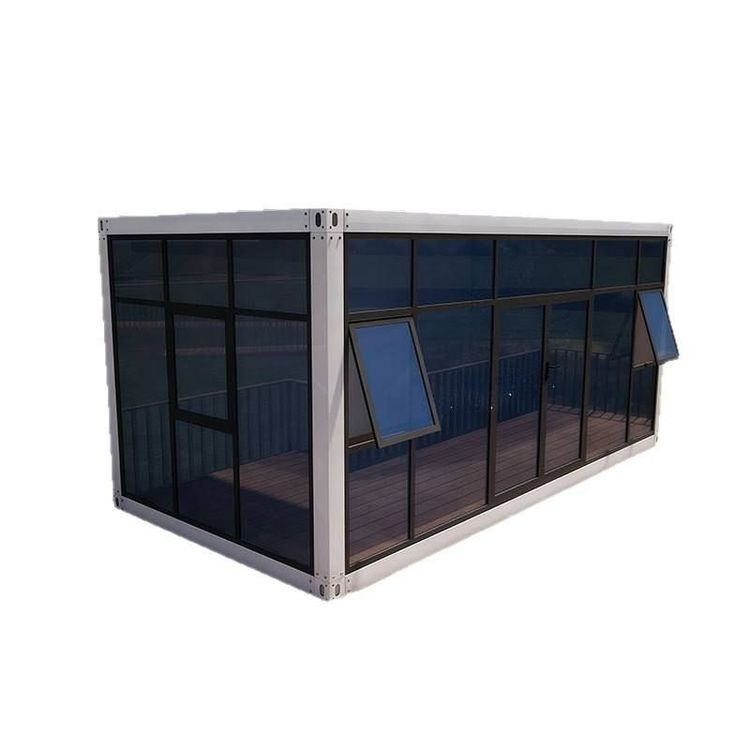
Mobile Enclosed Toilet
A mobile enclosed toilet, also known as a mobile toilet, is a facility that can be moved as a whole and provides public toilet services. The following is an introduction from the aspects of composition, classification, advantages, and design principles:

Composition: A mobile toilet generally consists of a fecal sewage storage tank (or fecal sewage treatment device), floor slab, sanitary ware, walls, washing equipment, water tank, roof, and mobile device, etc. These components work together to ensure that the mobile toilet can function normally and provide users with a relatively comfortable and hygienic toilet environment.
Classification:
- By structural form: It can be divided into single-structure mobile toilets and composite-structure mobile toilets. The single structure is relatively independent and simple; the composite structure may be composed of multiple parts and may have more complex and diverse functions.
- By moving method: There are lifting and handling mobile toilets, which usually require lifting equipment or manual handling to move; power-driven and trailer-mounted mobile toilets have their own power or can be moved by vehicle towing, making movement more convenient.
- By sewage treatment method: It is divided into water-flushing and non-water-flushing suction-type mobile toilets, circulating water-flushing mobile toilets, and dry-packing mobile toilets. Among them, foam-sealing toilets are a type of mobile toilet suitable for scenarios without water, electricity, or sewage discharge, such as scenic camping sites.
Advantages: Mobile toilets have significant advantages such as being movable, combinable, and easy to transport. They can be conveniently transported to any place where toilets need to be installed, whether it is a temporary event site, a remote area, or a tourist attraction, and can be quickly put into use. Moreover, they can be used repeatedly, reducing usage costs.
Design principles: Its design should follow the principles of being mobile and convenient, economical and durable; environmentally friendly and beneficial to the environment; improving efficiency and promoting humanity. The overall structure should consider being lightweight, and lightweight and durable materials should be used as much as possible to facilitate movement and transportation. The structure should be sturdy to ensure safety during use. When designing, consideration should also be given to controlling the height and width of the toilet, and the mobile device should be fully considered, complete, and reasonable to ensure smooth and stable movement.