Mobile Disabled Toilet Production Video Translation
Currently, there is no publicly available video on the production of mobile disabled toilets, but reference directions can be provided by combining the design ideas of mobile commodes and mobile toilets.

Core Design Requirements for Mobile Disabled Toilets
Mobile disabled toilets must meet barrier-free usage standards, with core designs focusing on safety, convenience, and stability. For example, they should be equipped with handrails, non-slip floors, adjustable-height or cushioned toilet seats, while also considering spatial layout (such as a wheelchair turning radius of ≥1.5 meters) and emergency call devices. For home use, simplified designs of mobile commodes can be referenced; for public settings, modular structures of landscape mobile toilets should be considered.
Existing Design Cases for Reference
Home Mobile Commodes
For elderly individuals with mobility issues, there are mobile commodes on the market with handrails and foldable designs. These have a simple structure (toilet seat + waste storage bucket + support frame), with some models featuring wheels at the bottom for easy movement. When making one, refer to such designs, emphasizing enhanced non-slip and load-bearing capabilities (recommended load-bearing capacity of ≥100kg), using lightweight yet sturdy plastics or metals as materials.Public Landscape Mobile Toilets
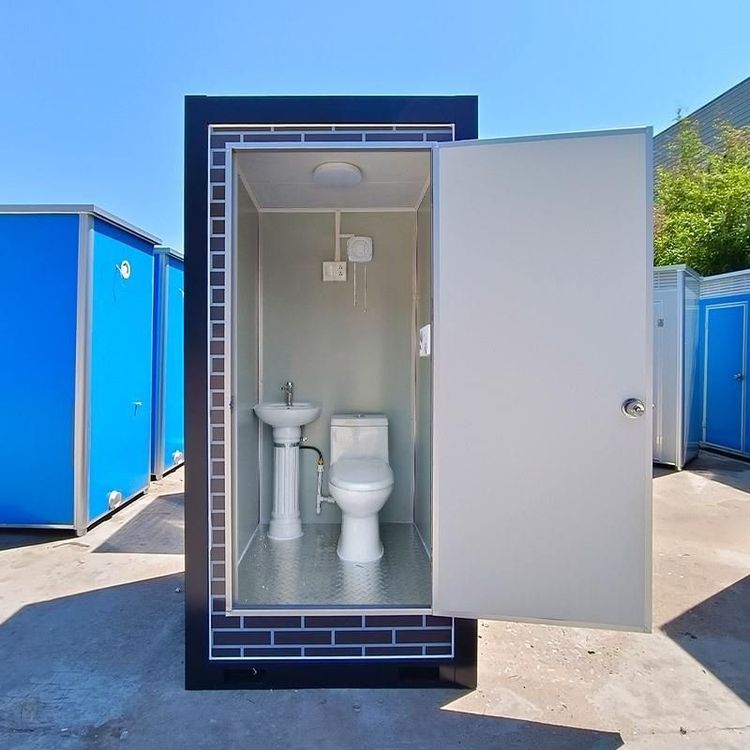
Mobile toilets used in scenic spots or construction sites typically adopt modular designs, including separate compartments, sewage systems (such as septic tanks or connections to municipal pipelines), and ventilation devices. If making one yourself, the structure can be simplified: build a frame with waterproof panels, install detachable toilet seats and waste storage buckets, add exhaust fans or air vents on top, and attach non-slip mats and stabilizing devices at the bottom (to prevent tipping during movement).Innovative Mobile Toilets
An inventor once designed a "foldable mobile toilet," with a main body made of lightweight aluminum alloy frames covered with waterproof canvas. When unfolded, it forms an enclosed space equipped with a toilet, handrails, and lighting. Such designs are suitable for temporary use but require solutions for sewage disposal and odor control (such as using biodegradable bags or chemical deodorizers).
Production Suggestions and Precautions
- Safety First: All edges and corners should be rounded, handrails must be securely installed, and floor materials should be non-slip (such as non-slip floor coverings).
- Compliance Check: If used in public places, it must comply with the requirements of the "Barrier-Free Design Code" (GB 50763-2012) regarding toilet space, handrail height, etc.
- Sewage Disposal Plan: For home versions, a waste storage bucket with a sealed lid can be used for regular cleaning; for public versions, connection to a septic tank or municipal pipeline is required, or biodegradable materials can be used to reduce pollution.
- Alternative to Video Resources: Search for keywords such as "mobile commode DIY" and "barrier-free toilet design," and combine graphic tutorials with physical disassembly for production guidance.
For further information on specific components (such as handrail installation, non-slip treatment) or material selection, provide more detailed usage scenarios (such as home/public, budget, etc.) for targeted advice.