
Mobile Container Houses
A mobile container house is a livable or office building converted from shipping containers as basic structural modules. It is environmentally friendly, flexible, and low-cost, and is widely used for temporary housing, creative spaces, post-disaster emergency buildings, and more.
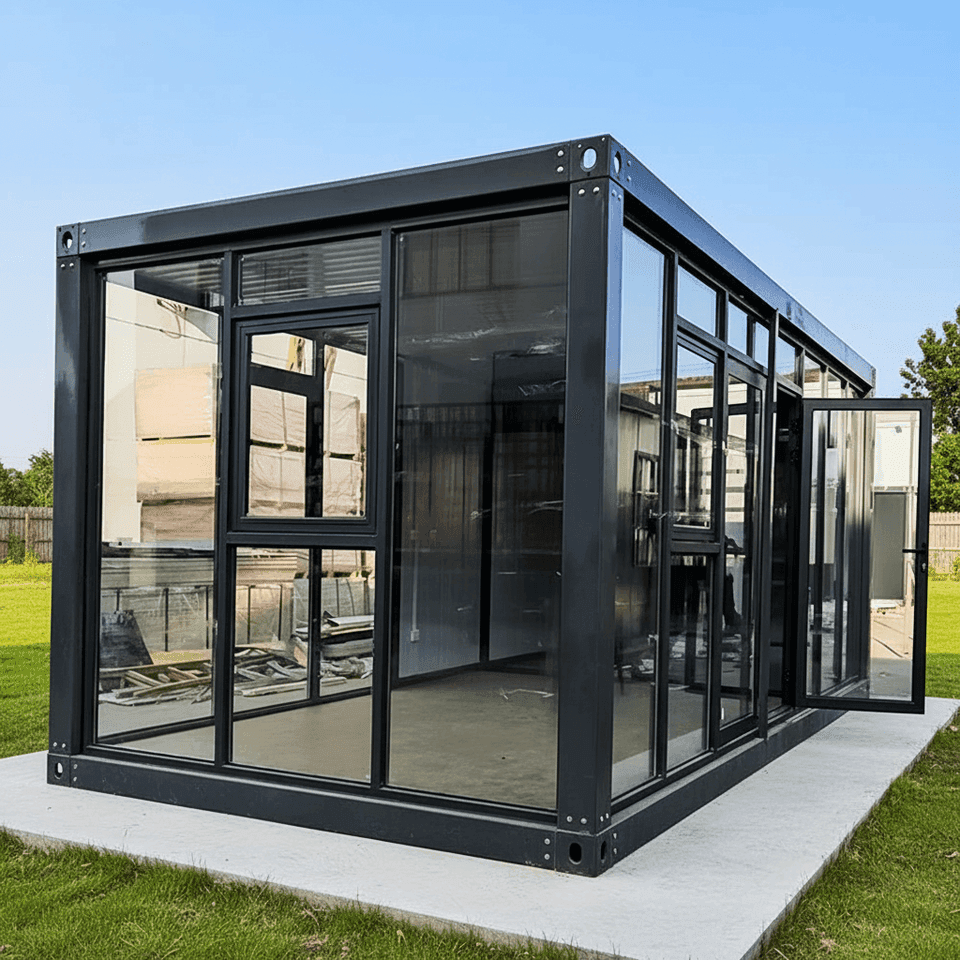
1. Basic definition and installation Mobile container houses are formed by converting standard containers. Installation includes steps such as building the base frame. For example, 3×6 m container knock-down kits must be assembled on site in a set process to ensure structural stability. The core advantage is modular design—fast to join or dismantle for different scenarios.
2. Common sizes and functions
- 7 m × 6 m: Usually one living room and one bedroom, with a bathroom, panoramic floor-to-ceiling windows, ceramic tile floors, LED ceiling lights, exhaust fans, and a complete electrical system. Bathroom fixtures (sink, shower, toilet) are pre-installed for move-in readiness.
- 3.5 m × 9 m: Richer zoning, including an office, card/game room, and office tea room. Glass curtain walls improve daylight; interiors use 75×150 cm large ceramic tiles throughout and light wood-grain wall panels, balancing looks and practicality.
3. Application scenarios
- Temporary housing: Often used as worker dormitories on construction sites for durability and easy setup; in some areas converted into rental housing for low-cost living needs.
- Emergency buildings: In post-disaster rebuilding or medical facility construction, container houses can be rapidly deployed as temporary hospitals or isolation zones—for example, some fangcang (makeshift) hospitals during the pandemic used this structure.
- Creative and commercial space: The 2026 Asian Games in Nagoya, Japan, used container houses for the Athletes’ Village; despite debate over budget overruns and space issues, it showed cost advantages for large events. In Zaozhuang, Shandong, China, container houses became distinctive homestay scenic areas with smart management to improve the tourism experience. Commercially, they are also converted into 24-hour self-service fitness pods and other innovative formats.
4. Technical optimization directions Current research focuses on better thermal insulation, optimized energy supply (e.g., solar integration), and smart management (e.g., IoT monitoring) to widen use cases and raise living comfort. Examples include adding insulation layers or double glazing to improve thermal performance, or integrating energy storage for off-grid power.



