
Mobile Bathroom or Toilet
Mobile bathrooms or toilets offer convenience and flexibility, with various implementation forms. Here is a detailed introduction:
Mobile Sanitary Facilities
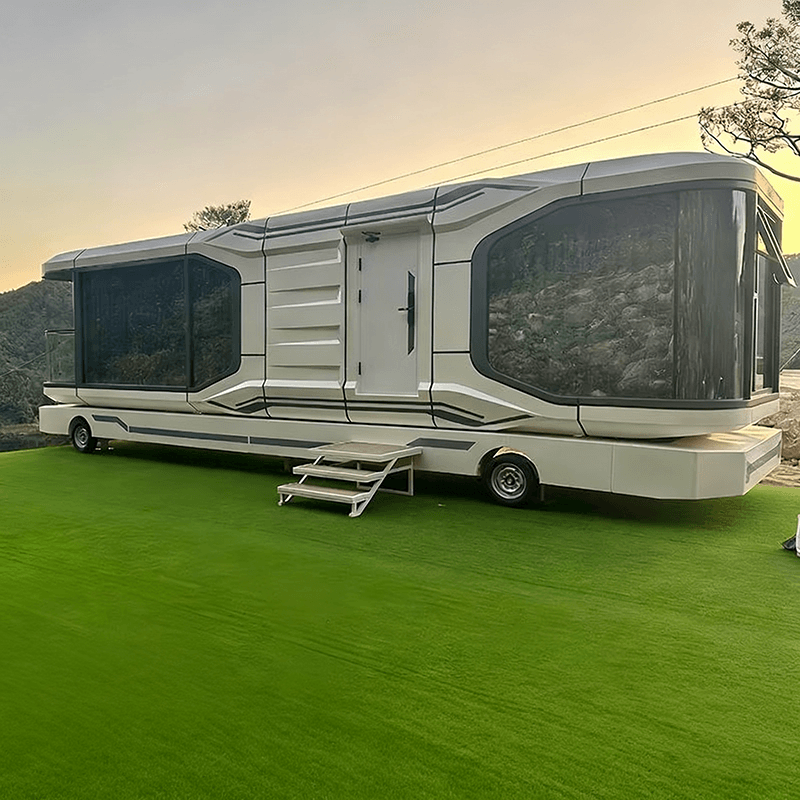
Mobile sanitary facilities combine the convenience of mobile toilets with the stability of fixed structures. They can be relocated to different venues, such as train stations, docks, and tourist attractions. During urban redevelopment projects or large-scale events in cities, these mobile sanitary facilities play a crucial role, preventing resource waste caused by house demolitions. Their interiors are well-equipped, typically featuring toilets that can be replaced with squat-style ones as needed. They have wall-mounted shelves for placing items, sinks for daily cleaning, and LED-lit mirrors for good lighting and grooming. Additionally, shower facilities can be installed as required, and frosted glass doors are used for wet-dry separation, enhancing comfort and convenience. Fixed-box mobile toilets can be prefabricated in factories and then transported to the site for rapid installation. Once connected to water and electricity, they are ready for use, significantly saving installation time and suitable for various emergency or temporary needs.
Mobile Shower Rooms
The main feature of mobile shower rooms is their ease of use—simply connect to water and electricity. They are straightforward to operate. In winter, they provide a warm environment for users to shower comfortably, making them more convenient than traditional showering methods. Especially in places without fixed shower facilities, such as construction sites and wilderness campsites, mobile shower rooms effectively meet people's showering needs.
Homemade Mobile Toilets
Some people create mobile toilets using water storage barrels. The specific method involves splitting a water storage barrel in half, fixing universal wheels at the four corners of a wooden board for mobility, and using wooden strips to increase height on the upper side of the barrel. A doorway is cut on the side, and sponge strips are installed to form a door frame, with plastic soft panels embedded to create elevated walls. The upper half of the water storage barrel is placed on top of the wooden strips to form a roof. For internal installations, a drainage pipe is installed at the bottom of the barrel to form a floor drain, and holes are cut on the side to connect interfaces for installing a water-pipe-made bath heater, toilet, water tank, and connecting the drainage pipe to a sewage barrel, as well as installing a sink water inlet pipe. Although this homemade method is relatively complex, it is cost-effective and can be customized according to personal needs.



