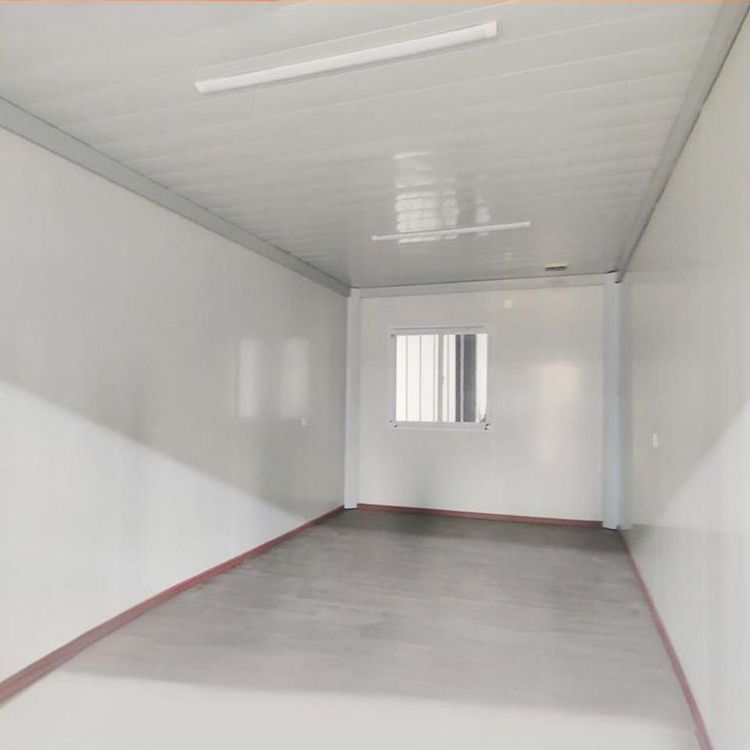
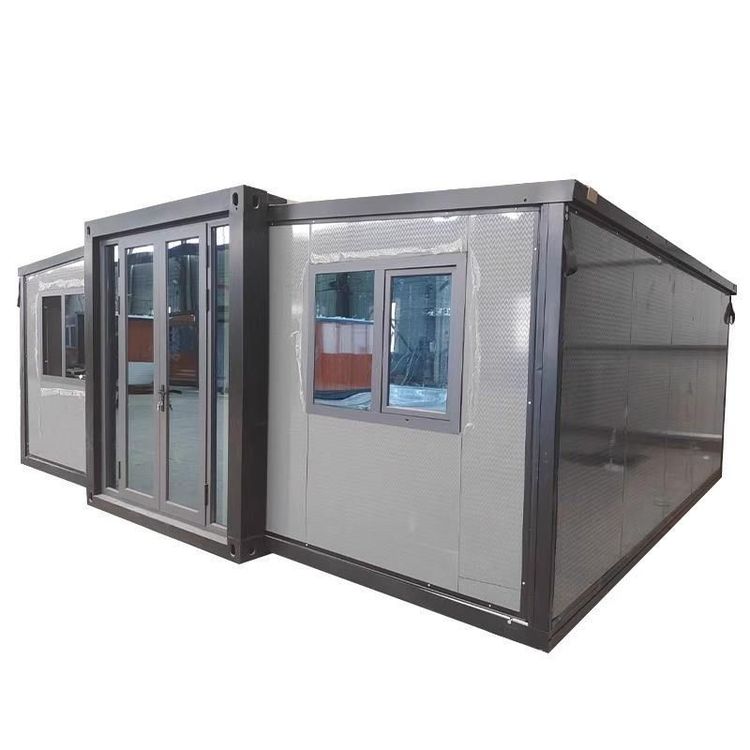
Methods for Making Container Houses
The methods for making container houses mainly include six steps: foundation treatment, structural construction, door and window and partition treatment, water and electricity installation, sealing and insulation treatment, and equipment and furniture installation.

Foundation Treatment: There are two common methods. Firstly, several containers can be staggered and firmly fixed on the foundation, with the entire structure reinforced through welding to ensure stability. Secondly, steel pile foundations can be adopted, where specialized machinery is used to screw steel piles into the stable soil layer at a depth of 2 meters underground. Each pile can support approximately 5 tons of weight, and the stability of the piles is verified through real-time measurement of pressure and torque. Afterwards, the containers are placed side by side on the pile foundation. This method does not require traditional concrete foundations and offers greater flexibility in construction.
Structural Construction: The containers are welded together to form a unified overall structure, establishing the basic volume of the house and creating a solid and stable framework. The welded plates need to be treated with anti-rust paint to ensure long-term anti-rust protection. For some two-story container houses, the first floor is usually formed by butting two containers together. Horizontal steel beams are added to the bottom of the containers as load-bearing beams and supports, and ultra-strong adhesive is used to bond and reinforce the gaps in the middle at the top. Three layers of adhesive need to be applied repeatedly to prevent rain leakage and water seepage.
Door and Window and Partition Treatment: Manufacturers may pre-fabricate the positions of windows and doors, and during installation, they are stacked and placed like building blocks. Alternatively, after the container structure is fixed, doors and windows can be modified and partitions can be set up according to actual needs.
Water and Electricity Installation: After the container structure is completed, the installation of water and electricity lines is carried out to ensure that the house has basic living functions.
Sealing and Insulation Treatment: Nitrile rubber-based aluminum foil tape is used to carefully seal the edge joints, providing an additional barrier to prevent leakage. Since container houses may be cold in winter, 10cm-thick polyurethane insulation boards need to be added to the exterior walls. This material not only has good insulation performance but also has fire-resistant properties. Manufacturers usually add fire-resistant raw materials during production to improve safety.
Equipment and Furniture Installation: After completing all the above steps, the installation of equipment and the placement of furniture are carried out, and thus, the making of the container house is completed.