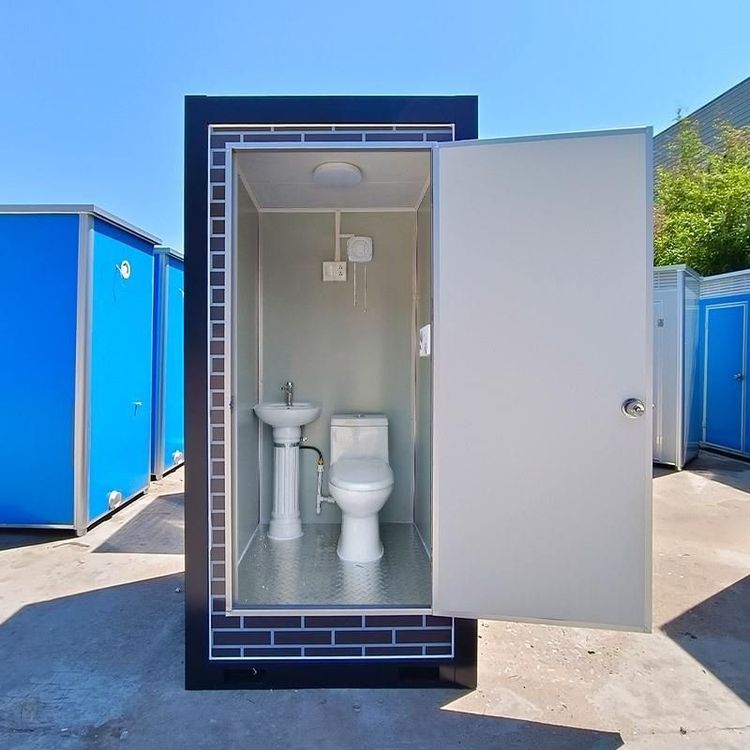
Marketing of Mobile Toilets
The marketing of mobile toilets requires the development of targeted strategies that take into account market characteristics, application scenarios, technological trends, and user needs. Specific approaches can be implemented in the following areas:

Clarify Target Market and Scenario Positioning
Segment the market based on usage scenarios (short-term events, long-term fixed locations) and user needs (portability, durability, environmental friendliness). For example, short-term events such as grassland tourist attractions and large-scale sports events are suitable for rental models, emphasizing flexibility and cost-effectiveness. Long-term projects like urban construction sites and fixed camps lean towards sales models, focusing on durability and functional configurations. Additionally, offer differentiated products for different scenarios, such as balancing aesthetics and environmental friendliness for tourist attractions, while prioritizing durability and basic functions for construction sites.Highlight Product Features and Technological Innovation
Emphasize the core advantages of mobile toilets, such as their foundational attributes of requiring no fixed installation, no external water supply and drainage, and independent movable sewage storage, as well as differentiated dimensions like lightweight design, airtightness, and user comfort. Incorporate technological trends by promoting eco-friendly treatment technologies such as biodegradable, chemical treatment, and vacuum collection types to meet sanitation needs in various scenarios. Furthermore, integrating additional features like barrier-free facilities, maternal and infant care stations, and automatic cleaning systems can enhance product competitiveness.Flexibly Choose Sales and Rental Models
Offer both rental and sales models based on user needs: the rental model is suitable for short-term or temporary needs, with the service provider responsible for transportation, installation, and maintenance; the sales model is applicable to long-term fixed locations, where users bear the purchase cost and long-term maintenance responsibilities. Assist users in selecting the optimal solution through cost-benefit analysis, such as comprehensively calculating the cost-effectiveness of renting or buying based on usage duration and total expenses.Strengthen Service Support and User Experience
Provide full lifecycle services, including subsequent maintenance support such as cleaning frequency, fault response speed, and consumable replenishment. For special climatic regions (e.g., Inner Mongolia), emphasize specialized designs like freeze protection and wind-sand resistance to improve product adaptability. Meanwhile, utilize IoT sensors to monitor usage status, sanitation conditions, and material inventory in real-time, enabling preventive maintenance and enhancing user satisfaction.Combine Smart City and Environmental Protection Concepts in Marketing
Integrate mobile toilets with smart city management systems and promote data-driven management models, such as shifting from one-time product sales to long-term data service collaborations. Additionally, emphasize eco-friendly treatment technologies (e.g., biological agent decomposition, chemical solidification, vacuum collection) to meet the harmless treatment needs of ecologically fragile regions and enhance brand image.Optimize Cost Structure and Pricing Strategies
Develop a differentiated pricing system based on materials, craftsmanship, technological configurations, and brand factors. Rental fees cover depreciation, transportation, cleaning, and maintenance, priced daily or monthly; sales prices consider initial expenses and hidden costs like water and electricity consumption and cleaning supplies during long-term use. Enhance user trust by transparently presenting cost components.