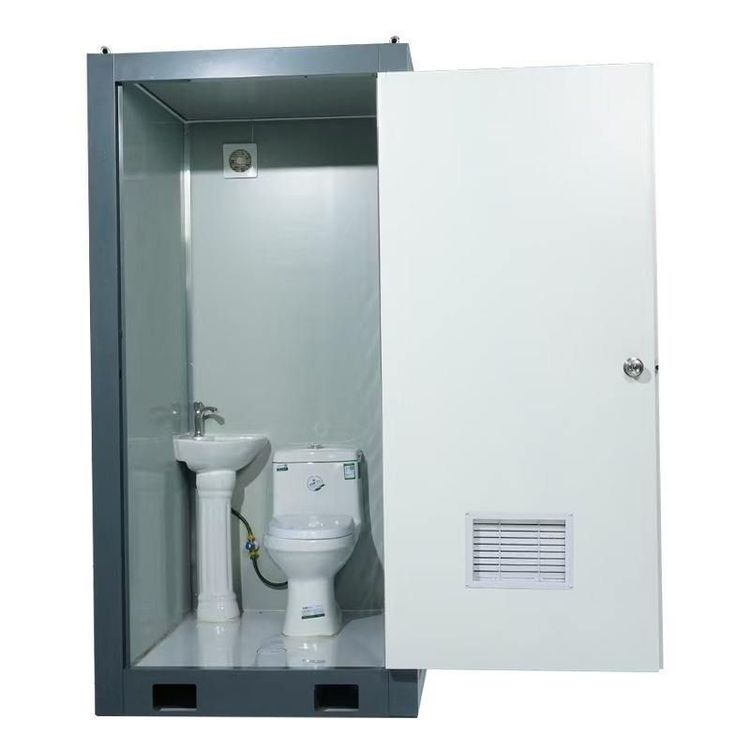
Manufacturing Mobile Environmental-Friendly Ecological Toilets
Manufacturing mobile environmental-friendly ecological toilets can be achieved through methods such as modifying water storage equipment, adopting new materials and water-saving technologies, developing multiple technical routes, and applying eco-friendly energy sources.

Modification using water storage barrels or tanks: This is a relatively basic and cost-effective approach. Using water storage barrels or tanks as the base material, they are first cut to create openings, providing space for subsequent installation of facilities. Next, universal wheels are fixed to make the toilet mobile. Then, facilities such as toilets, washbasins, and showers are installed, and a drainage system is set up to ensure proper sewage discharge. For example, some people have created mobile restrooms in this way, meeting basic needs for using the toilet and washing up.
Adoption of new materials and water-saving technologies: Mobile environmental-friendly public toilets often use a welded frame made of national standard steel, which is structurally stable and ensures the overall strength of the toilet. The surface is covered with anti-corrosion and fire-resistant materials such as color-coated steel plates or carved panels, extending the toilet's service life. Internally, an independent toilet pit zoning treatment system is configured. The urine channel utilizes gravity flow, while the feces channel is cleaned by a piston-type scraper mechanical device, significantly reducing water usage and achieving water-saving effects. At the same time, non-slip floors, automatic flushing toilet bowls, and ventilation and lighting systems are equipped to ensure the safety and comfort of users, meeting relevant hygiene standards.
Development of multiple technical routes: Since 2012, mobile public toilet technology has continuously evolved, gradually forming various technical routes such as waterless flushing, foam sealing, and water flushing. Waterless flushing toilets do not require water and treat feces through special methods; foam-sealing toilets use foam to block odors and reduce water usage; water-flushing toilets achieve water conservation through a reasonable water circulation system. In addition, product forms have expanded to trailer-type, box-type substation cabinet-type, stainless steel sentry box-type, etc. Appropriate forms can be selected according to different usage scenarios, such as tourist attractions, urban streets, and construction sites.
Application of solar energy and other eco-friendly technologies: Some people have created solar-powered mobile restrooms using water storage barrels, combining solar energy technology to provide energy for the toilet's lighting, ventilation, and other systems, further enhancing environmental performance and reducing reliance on traditional energy sources.