
Back to blog
Article
Luxury Container House Villa
Admin September 15, 2026
A luxury container house villa is a residential space constructed using containers as basic units, assembled through splicing and stacking, featuring villa functions and luxurious decoration. The following provides an introduction from the aspects of design, construction, advantages, and disadvantages:
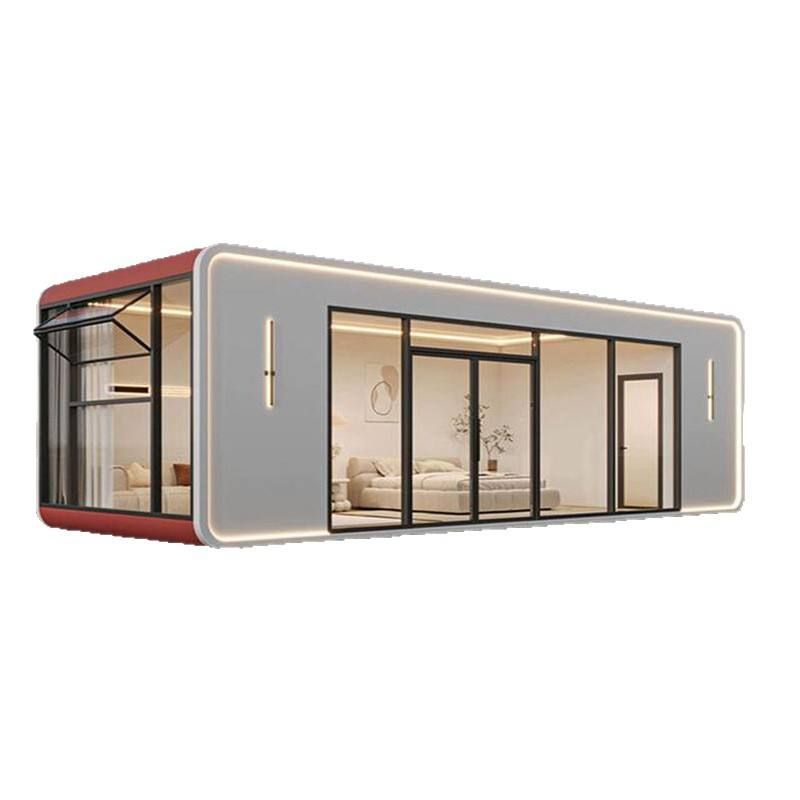
Design Considerations
- Layout and Space Planning: Containers can be combined by splicing, with 2 - 3 containers joined or stacked in a staggered manner to create functional areas such as living rooms, bedrooms, and bathrooms. For example,打通 two containers can form a flat layout with an integrated living and dining area, two bedrooms, and a bathroom with a bathtub; staggered designs create rich spatial layers, with a leisure courtyard or corridor area left on the ground floor to improve ventilation and lighting; small units can use multifunctional furniture like folding beds and tables to enhance space flexibility.
- Lighting and Insulation: Install large floor-to-ceiling windows, roof skylights, and glass partitions to increase natural light, making the interior bright and transparent; add internal insulation layers to walls and roofs, and choose triple-glazed windows to achieve warmth in winter and coolness in summer, with better heat insulation than brick walls; roof eaves or terrace awnings can prevent intense sun exposure in summer and enrich the facade.
- Courtyard and External Environment: The exterior facade can be treated with paint spraying, themed murals, cladding, or glass curtain walls to eliminate the industrial feel; containers can be elevated on pile foundations to prevent moisture and pests and facilitate site leveling.
Construction Process
- Procedure Handling: For long-term residence on rural homesteads, building approval must be obtained according to local requirements, providing structural drawings stamped by an engineer; construction is strictly prohibited on cultivated land and basic farmland, and forestry approval is required for forest land; leased land is mostly for temporary structures, and the contract must clearly state the nature of use.
- Construction Points: During the construction phase, all cutting and welding edges must be polished and coated with epoxy primer and topcoat for rust prevention; waterproof sealing must be done well around doors and windows, container joints, and roof gutters, with sealant replaced every 5 - 7 years.
Advantages and Disadvantages
- Advantages: Fast construction speed, modular design, flexible styling, suitable for L-shaped enclosed courtyards; light weight, reducing foundation costs compared to traditional brick-and-mortar structures.
- Disadvantages: If preliminary procedures, rust prevention, condensation, and insulation are not handled properly, various issues may arise later; compared to traditional villas, there may be certain gaps in sound insulation and living experience.



