
Customization of Mobile Toilets in Longnan Scenic Areas
The customization of mobile toilets in Longnan scenic areas requires a comprehensive design approach encompassing materials, structure, functional systems, production collaboration, and technological iteration.
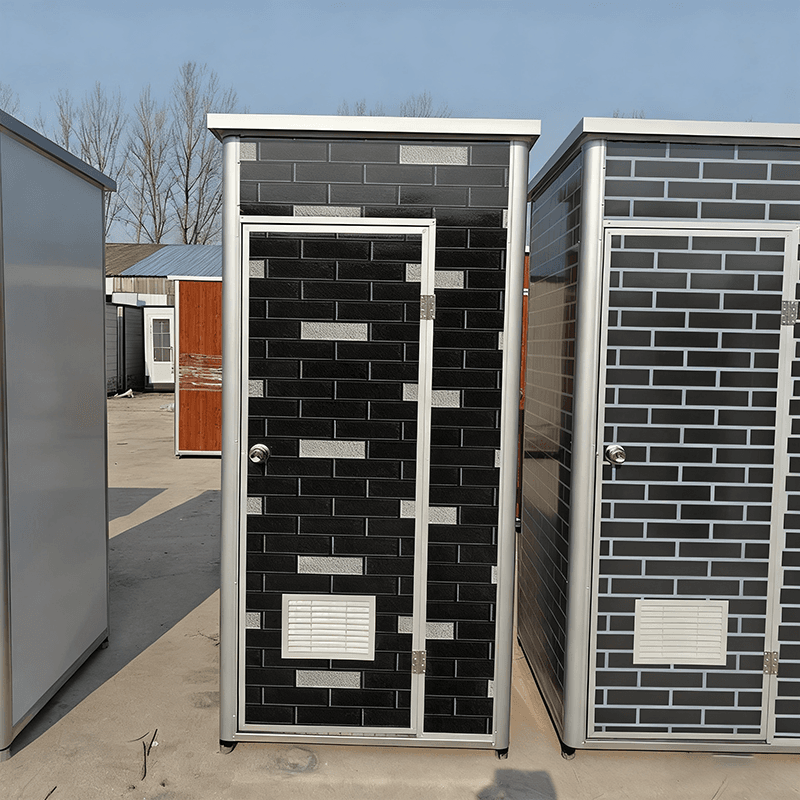
Material selection must adapt to environmental characteristics: The main frame often employs specific types of stainless steel alloys, with the chromium and nickel element ratios adjusted to form a dense oxide layer, significantly enhancing corrosion resistance to suit the humid or high-salt-mist environments of scenic areas. Walls utilize composite materials, with internal insulation layers (such as polyurethane foam) and external coatings (such as fluorocarbon paint) adjusted according to climate: higher-altitude scenic areas require thicker insulation layers to cope with low temperatures, while river valley regions need reinforced moisture-proof coatings to prevent mildew.
Structural design must balance transportation and installation: Overall hoisting-type toilets are suitable for scenic areas with flat terrain and vehicle accessibility, enabling rapid deployment through modular design; assembled-type toilets are designed for areas with complex terrain, using lightweight components (such as aluminum alloy frames) and standardized interfaces to reduce on-site assembly difficulty. Design considerations must include the scenic area's load-bearing capacity (such as foundation bearing capacity) and average daily visitor flow, with structural strength optimized through finite element analysis to ensure stability during use.
Functional system integration must be efficient and energy-saving: The sewage disposal system typically includes corrosion-resistant storage tanks and biological treatment units (such as aerobic bacteria decomposition) to reduce chemical agent usage; the water supply system employs small storage tanks (500-1000L) and water-saving flushing devices (single flush ≤3L) to lower water consumption. The ventilation system combines physical air ducts (such as top exhaust ports) with mechanical exhaust fans (such as low-noise fans) to maintain indoor air quality; the power system integrates solar panels (average daily power generation ≥2kWh) and energy storage batteries to supply power to lighting, sensors, and other equipment, enabling off-grid operation.
Production collaboration relies on localized integration: Local manufacturers in Longnan, as the core, must possess capabilities in sheet metal processing (accuracy ±0.5mm), pipe welding (TIG welding process), and electrical assembly (IP65 protection rating). Component procurement follows national standards (such as GB/T 12771-2019 stainless steel welded pipes), with assembly and testing (such as airtightness testing, load testing) completed within the factory premises. The final product is designed to be modular and detachable, facilitating relocation or maintenance during the off-peak tourist season.
Technological iteration focuses on intelligent management: IoT sensors are introduced to monitor the liquid level in sewage storage tanks, water levels in water tanks, and remaining quantities of consumables, with maintenance reminders pushed through a cloud platform; toilet layouts are optimized based on visitor flow analysis (such as widening corridors during peak hours) to enhance usage efficiency. Future directions include more efficient membrane bioreactor (MBR) sewage treatment technology, photocatalytic self-cleaning coatings, and AI predictive maintenance systems.



