
Longnan Park Mobile Toilet Installation
The installation of mobile toilets in Longnan Park requires comprehensive consideration of multiple factors, including modular design, terrain adaptation, environmental requirements, sewage treatment, and layout principles.
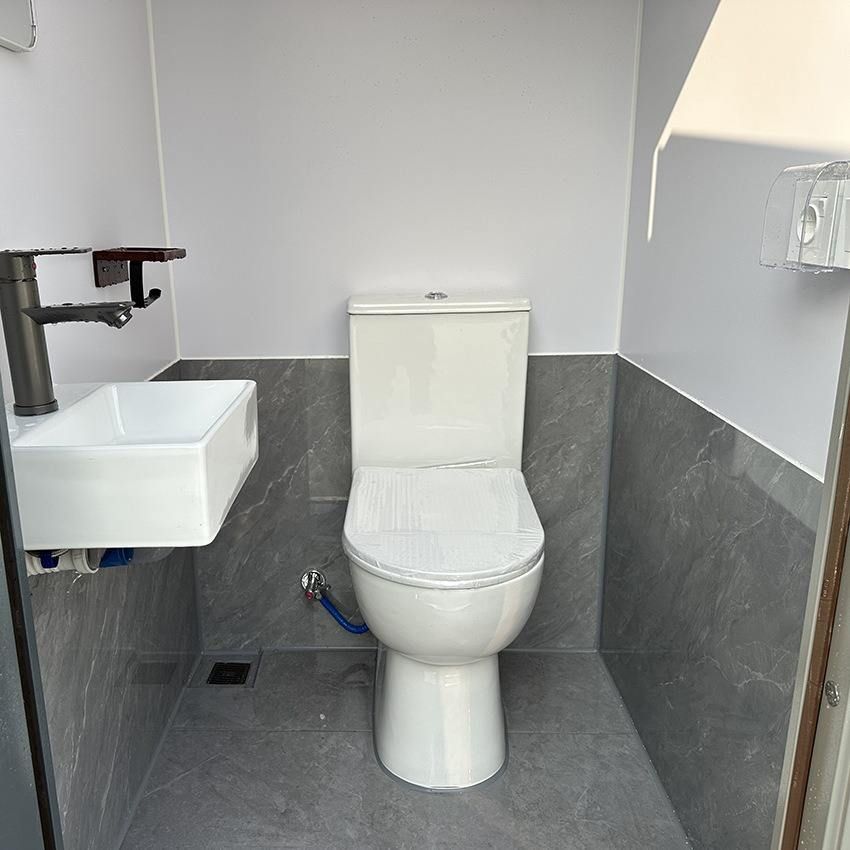
Modular design is the foundation of installation. Mobile toilets adopt a modular structure, with the entire box body being assemblable and disassemblable. The internal functional units, such as the toilet, sewage storage, ventilation, and water purification modules, are independently constructed. This design allows for flexible combination or reduction of modules according to the actual site conditions of the park. For example, non-essential modules can be reduced in narrow spaces, and sewage storage capacity can be increased in open areas. The modular structure also supports transportation by small machinery or manpower, reducing damage to the park's original landscape and avoiding large-scale civil engineering projects.
Terrain factors need to be prioritized. Longnan is predominantly mountainous and hilly, with significant terrain undulations. The structure of mobile toilets needs to be stable and adaptable. During installation, the foundation support method should be adjusted according to the site slope, such as adopting a stepped layout or reinforcing the foundation on slopes to ensure facility stability. At the same time, transportation routes should be planned in advance to avoid module damage or installation difficulties due to complex terrain.
Environmental adaptability requirements are stringent. Some areas in Longnan have high altitudes and low temperatures, requiring toilet fixtures to be resistant to low temperatures and cracking. The humid and rainy climate demands that the ventilation system has dual functions of moisture resistance and enhanced air circulation to prevent internal mildew. The exterior design typically employs low-visual-impact colors and simple shapes, with some facilities having wooden or stone veneers added to their outer walls to harmonize with the surrounding park environment.
Sewage treatment systems need precise adaptation. In areas lacking fixed sewage pipe networks, the treatment method should be selected based on the park's usage frequency and environmental carrying capacity: biological degradation utilizes microorganisms to decompose organic waste, suitable for areas with high foot traffic; chemical decomposition accelerates decomposition by adding agents, applicable to emergency or temporary scenarios; physical storage uses sealed containers for temporary storage and regular removal, suitable for remote or low-frequency usage areas. During installation, drainage pipes, ventilation openings, and removal channels should be set up accordingly.
Layout and installation should follow scientific principles. Location selection should consider accessibility and maintain a reasonable distance from main roads; quantity allocation should be calculated based on dynamic foot traffic data, with temporary additional units used to alleviate pressure during peak hours; facility spacing should balance coverage and operational costs; point placement should comprehensively consider parameters such as hiking fatigue points on main sightseeing paths,停留时间 (Note: '停留时间' means '停留时间 (duration of stay)' in English, here it's kept as is for context but should be translated as 'duration of stay' in a full English text) at viewing platforms, distribution of dining and rest areas, and accessibility routes for logistics vehicles.



