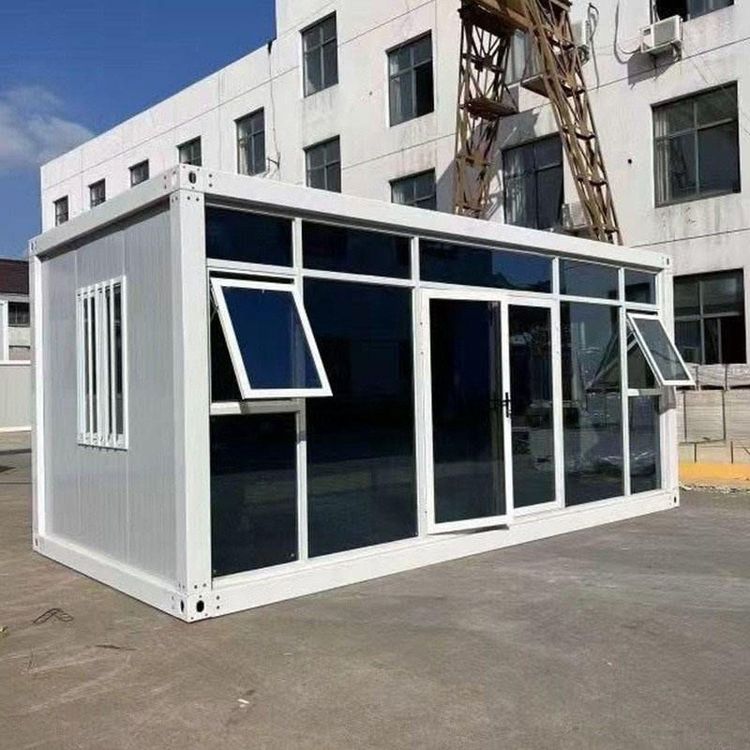
Lifespan of Light Steel Prefabricated Houses
The lifespan of light steel prefabricated houses typically exceeds 50 years, with a designed lifespan of up to 70 years. With proper maintenance during actual use, the lifespan can be further extended.

The lifespan of the main structure of light steel prefabricated houses is primarily determined by the performance of the steel. National regulations require that the main steel structure must guarantee a lifespan of 50 years. However, experimental tests show that under normal usage conditions, its actual lifespan generally exceeds 75 years, with a designed lifespan typically set at 70 years. This data is based on the mechanical stability of the steel. The light steel framework uses high-strength galvanized steel, which has significantly better corrosion resistance and deformation resistance than traditional building materials, providing a structural foundation for long-term load-bearing.
The lifespan of the exterior wall cladding is closely related to material selection and maintenance frequency. The lifespan of ordinary exterior wall cladding is about 30 years. If materials like wallpaper are used, edge curling or peeling may occur after 10 years, requiring regular inspection and replacement. The difference in exterior wall lifespan mainly stems from material weather resistance: wallpaper is easily affected by humidity and temperature changes, while materials like paint or metal panels can extend their lifespan to over 30 years by adding UV-resistant and waterproof coatings.
The rust resistance of steel is the core guarantee for the durability of light steel houses. Through hot-dip galvanizing treatment, a dense zinc oxide protective layer forms on the surface of the steel, which can remain rust-free for 100 years under normal environmental conditions (non-strong acid-base, high salt spray). This process effectively blocks the contact between moisture, oxygen, and the steel, preventing corrosion from occurring at the source. Even if the local coating is damaged, the sacrificial anode protection of zinc can still delay the spread of rust, providing dual protection for structural safety.
The actual service life is significantly affected by construction quality and maintenance level. If the construction process strictly follows regulations, ensuring firm node connections and proper corrosion protection, the house's lifespan can approach the theoretical upper limit. Regular maintenance (such as inspecting structural stability every 5-10 years and updating exterior wall cladding every 15-20 years) can promptly identify and repair potential issues, preventing minor hazards from evolving into structural damage. In dry environments with few corrosive gases, the house's lifespan may even exceed the designed lifespan, reaching 80 years or more.