
Light Steel Prefabricated House
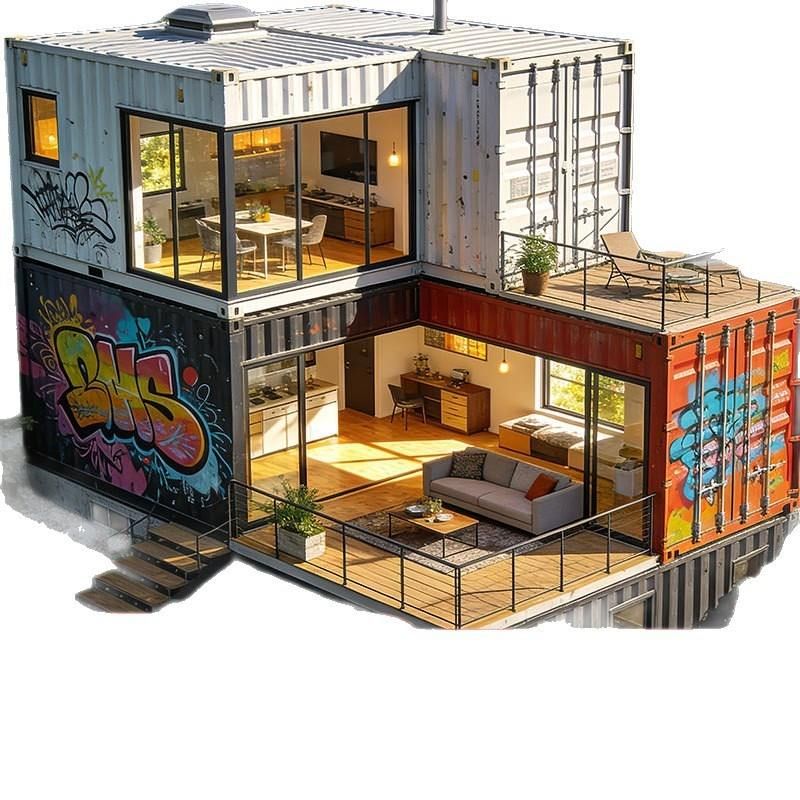
The light steel prefabricated house is a building system centered around light steel keels synthesized from cold-rolled hot-dip galvanized aluminum steel strips. It is constructed by assembling prefabricated components on-site and offers advantages such as earthquake and wind resistance, as well as high efficiency and environmental friendliness. However, it also has limitations in terms of fire and rust prevention, sound and thermal insulation.
Core Advantages
- Superior Structural Performance: The main structure can withstand earthquakes up to magnitude 9 and winds up to 12 levels, enabling it to cope with extreme natural disasters. Its safety is significantly higher than that of traditional brick-and-mortar structures.
- High Construction Efficiency: The construction period is reduced by 50% compared to traditional buildings. The main structure of a 300-square-meter house requires only 3-4 weeks, with material wastage reduced to 3%, minimizing on-site operational pollution.
- Strong Environmental and Economic Benefits: Its self-weight is only 1/5 to 1/8 of that of traditional structures, with 90% of the steel being recyclable and waste reduced by 80%. The overall cost is 15%-20% lower than that of brick-and-mortar structures, and air conditioning electricity costs can be saved by 24,000 yuan over 30 years of use (based on a 200-square-meter house).
- Extensive Policy Support: Subsidy policies for prefabricated buildings have been introduced in 28 provinces across the country, promoting the large-scale development of the industry.
Main Disadvantages
- High Fire and Rust Prevention Costs: The performance of steel deteriorates at high temperatures, requiring regular application of fire-resistant coatings. Rust prevention costs are 58% higher than those for brick-and-mortar structures, with additional galvanizing required in coastal areas.
- Weak Sound and Thermal Insulation: The exterior walls become hot in summer, and indoor sound insulation is poor. Improvement can be achieved by filling with lightweight concrete, but this increases costs.
- Limited House Type Modifications: Wall modifications require reinforcement by professional teams, with costs 30% higher than those for traditional buildings, offering lower flexibility.
- Construction Quality Risks: Some merchants use inferior steel (e.g., 0.6mm masquerading as 1.0mm), which is prone to rusting in humid southern regions. Shoddy workmanship by construction teams (e.g., loose bolts, poor waterproofing) can result in repair costs accounting for 28% of the total price. It is advisable to choose large manufacturers that provide full-process services.
Suitable Scenarios
Light steel prefabricated houses are suitable for rural residences, tourist resorts, and overseas projects, particularly those with high requirements for construction period and environmental performance, and limited budgets. However, it is important to note that in humid or typhoon-prone areas, rust prevention and structural reinforcement should be strengthened, and users with high sound and thermal insulation requirements should set aside a budget for modifications.



