
Liangshanzhou Mobile Toilet Construction
The construction of mobile toilets in Liangshanzhou requires comprehensive consideration of various factors, including response and installation, equipment configuration, material design, internal facilities, operation and maintenance services, environmental protection treatment, and construction processes.
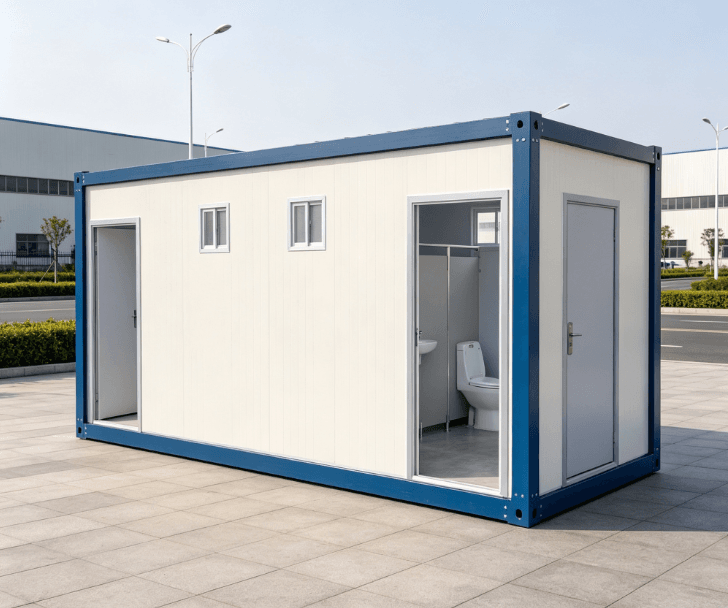
Response and Installation: The construction team can arrange site surveys on the day of receiving the demand and complete equipment mobilization and installation the next day. The modular design enables efficient coordination between transportation and assembly, allowing the toilets to be put into use within as little as 24 hours. For complex terrains such as high mountain slopes or temporary access roads, rapid adaptation can be achieved by adjusting module combinations.
Equipment Configuration and Specifications: A variety of specifications are available, including single-unit, double-unit connected, and combination models with management rooms, supporting short-term rentals, long-term rentals, and project-specific customization. Water and electricity connections are flexible, with municipal connections used in areas with such conditions, and storage tanks and ecological degradation systems provided in areas without such conditions, eliminating the need for external sewage pipe networks. Custom modifications are supported, such as adding non-slip floors, barrier-free facilities, or adjusting internal layouts to suit mountainous and sloped sites.
Materials and Design: The structural framework uses lightweight, high-strength materials such as galvanized steel or aluminum alloy, while the wall enclosure materials balance insulation, heat resistance, fire resistance, and aesthetics, such as metal carved panels, aluminum-plastic panels, or eco-friendly resin panels. Given the high-altitude, strong ultraviolet radiation, large diurnal temperature variations, and mountainous transportation demands in Liangshanzhou, the exterior wall coatings must have anti-ultraviolet aging capabilities, the sealing processes for panel joints and the toughness of framework connection points must meet standards, and the structural design must consider dynamic load coefficients. In remote areas with unstable power supplies, integrated solar power systems, low-power LED lighting, and ventilation equipment are included.
Internal Facilities: Antibacterial-coated interiors, silent flushing systems, and LED induction lighting are used, with ventilation ducts配合 (matched with) biological deodorizers to purify the air. The sinks are equipped with constant-temperature water outlets and water-saving faucets, and are configured with squat toilets, sinks, door locks, light bulbs, exhaust fans, etc. The floors are made of non-slip materials, and details such as paper towel holders, hooks, and handrails are fully equipped.
Operation and Maintenance Services: Each set of equipment is equipped with a dedicated operation and maintenance record card, with regular cleaning, disinfection, consumable replenishment, and mechanical inspections. In case of emergencies, a 30-minute response time is guaranteed, with on-site disposal within 2 hours, and regular maintenance services are provided.
Environmental Protection Treatment: Recyclable composite panels are used for manufacturing. Sewage treatment achieves agricultural irrigation standards through three-stage sedimentation and microbial decomposition, and fecal waste is transported by compliant vehicles to designated treatment centers with full traceability. Microbial degradation and waterless packing technologies are more suitable for the environment in Liangshanzhou due to their low reliance on water, electricity, and pipe networks.
Construction Process: It begins with demand alignment and on-site surveys to clarify boundary conditions such as terrain, geology, pedestrian traffic, and water and electricity conditions. This is followed by factory prefabrication of units and selection of transportation methods based on road conditions, culminating in on-site assembly and commissioning.
You may also like

Portable Toilet Used in 2026: Buying Guide & Recommendations
Read More
Portable Toilet Custom Explained: How to Choose the Right One
Read More
Top Portable Toilet Smart Manufacturers: How to Choose a Factory Partner
Read More