
Lhasa Outdoor Mobile Toilet
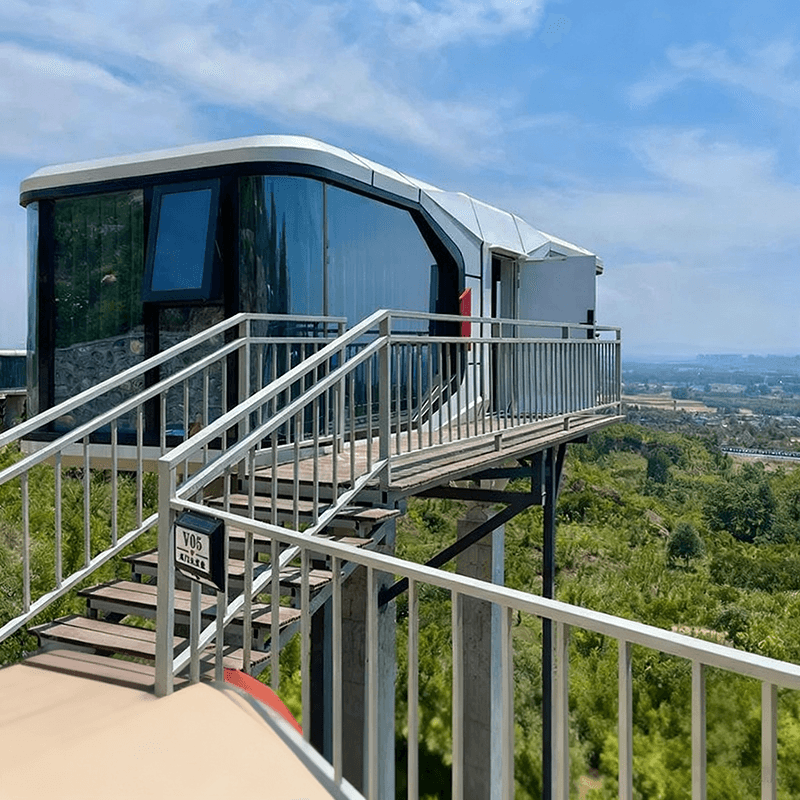
The Lhasa outdoor mobile toilet has been specifically designed for the unique high-altitude environment, with targeted considerations for sewage systems, material selection, water resource utilization, waste disposal, and energy supply.
1. Sewage System Design
The low-pressure environment at high altitudes can cause abnormal flow rates or pipe air resistance in conventional gravity-based sewage systems. The Lhasa outdoor mobile toilet employs a pressure-assisted or vacuum suction system, using active pressurization to achieve directional and rapid collection of waste while enhancing sealing performance to prevent odor leakage. For example, the vacuum suction system can maintain a negative pressure state under low pressure, ensuring efficient sewage disposal.
2. Material Weather Resistance Optimization
Strong ultraviolet radiation and large temperature variations pose challenges to material performance. The outer shell and internal components are made of polymer materials with a high proportion of UV stabilizers, while metal parts are enhanced for durability through thermal expansion coefficient matching and corrosion-resistant coating processes. For instance, stainless steel brackets use low-expansion alloys to prevent structural deformation caused by temperature differences.
3. Water Resource Utilization and Anti-Freezing
To address water scarcity and low-temperature environments, the mobile toilet generally adopts waterless or micro-flush toilet technologies, such as foam sealing or biodegradable film packaging, to reduce water consumption. The water system is equipped with electric tracing devices and insulated pipes to prevent freezing. Some models integrate small-scale water treatment and recycling units for wastewater reuse.
4. Waste Terminal Disposal
In remote or ecologically sensitive areas, the mobile toilet is bundled with transportation and disposal solutions. Solid waste is managed through centralized transfer or vehicle-mounted rapid composting units, avoiding direct discharge that could pollute the environment. For example, composting units can convert organic waste into harmless fertilizer within 24 hours.
5. Energy Supply Solutions
Solar photovoltaic panels serve as the primary energy source, with installation angles optimized according to high-altitude solar radiation characteristics to improve power generation efficiency. The energy storage system uses low-temperature-resistant lithium batteries and is equipped with a battery management module to ensure stable power supply in low-temperature environments. For example, battery capacity decay can be controlled within 10% at -20°C.
Additional Information
The price of a finished Lhasa outdoor mobile toilet is 1,200 yuan per unit, supporting customization of materials, specifications, and colors. It comes with basic facilities such as squat toilets and sinks, is suitable for all regions in Tibet, has a delivery period of 5 days, and requires a minimum order quantity of 1 unit.



