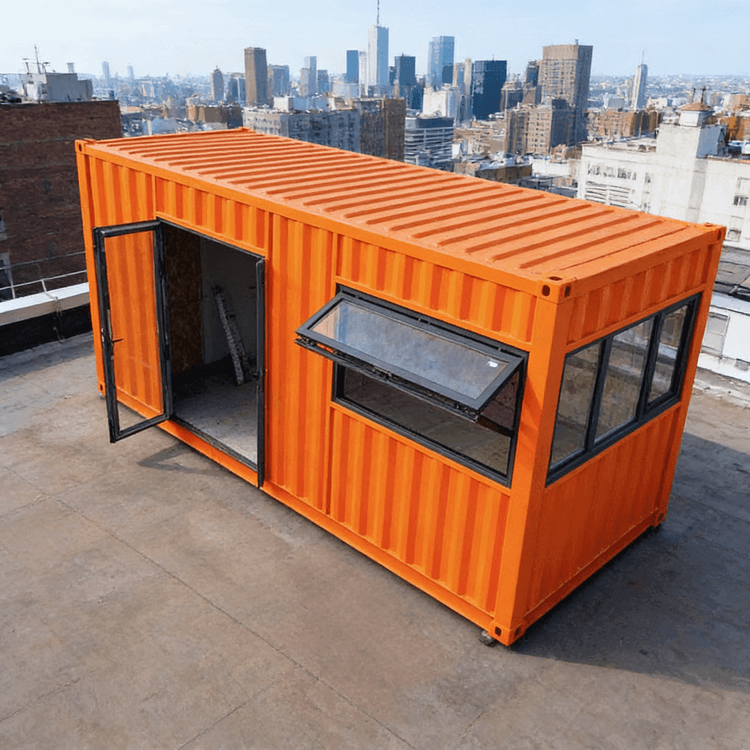
Large Flat Prefabricated House Finished Product
The large flat prefabricated house finished product is a type of prefabricated assembled building, produced industrially with components assembled on-site. It offers advantages such as fast construction and controllable environmental impact, with prices varying significantly based on brand, material, and configuration. The technology encompasses both concrete and steel structural systems.

Price Range and Cost Composition
In the domestic market, the price of prefabricated house finished products is significantly influenced by brand, material, and configuration. Taking a 200-square-meter large flat house as an example, the cost range is approximately 96,000 to 256,000 yuan. Specific cases include: the rural light-steel prefabricated house from Furimei in Cangzhou, Hebei, priced at 480 yuan per square meter, with a total cost of about 96,000 yuan; and the light-steel villa prefabricated house from Xuanli in Shijiazhuang, Hebei, priced at 1,280 yuan per square meter, with a total cost of about 256,000 yuan. Price differences primarily stem from structural type (such as steel or concrete structures) and decoration standards, with some high-end products including higher-quality exterior wall materials, energy-efficient doors and windows, or intelligent systems.
Technical Systems and Construction Advantages
The technical core of prefabricated house finished products is divided into two major systems: prefabricated concrete structures and steel structures, with components including prefabricated beams, slabs, walls, and columns.
- Box-type assembly: By combining prefabricated functional units (such as independent room modules), construction speed can be increased by 50%-70%, but it requires supporting transportation and lifting equipment, making it suitable for projects with strict deadlines.
- Modular construction: Further integrates water and electricity pipelines and decoration, achieving a “move-in ready” effect. For example, prefabricated houses popular on Alibaba.com for the US market already include independent kitchens and bathrooms, water heaters, and charging ports. Users only need to unfold the house and connect to water and electricity to move in, significantly reducing on-site construction.
Market Applications and Export Trends
China's prefabricated house finished products have achieved large-scale exports, with technologies adapted to overseas market demands. In the first four months of 2026, the export value of movable houses in the Guangzhou Customs area increased by 38.1% year-on-year. Some products adopt highly integrated modular technologies, reducing transportation costs through standardized design while meeting building code requirements in different regions. For example, prefabricated houses exported to the US typically need to comply with local seismic and energy efficiency standards and be equipped with electrical systems that meet international norms.
Selection Recommendations
When selecting a large flat prefabricated house finished product, it is essential to consider structural type, decoration standards, brand services, and transportation conditions. Light steel structures are suitable for rapid construction and scenarios sensitive to self-weight, while concrete structures are more appropriate for high-rise buildings or projects with high durability requirements. Additionally, prioritizing brands that offer one-stop services can reduce coordination costs for design, construction, and after-sales support.