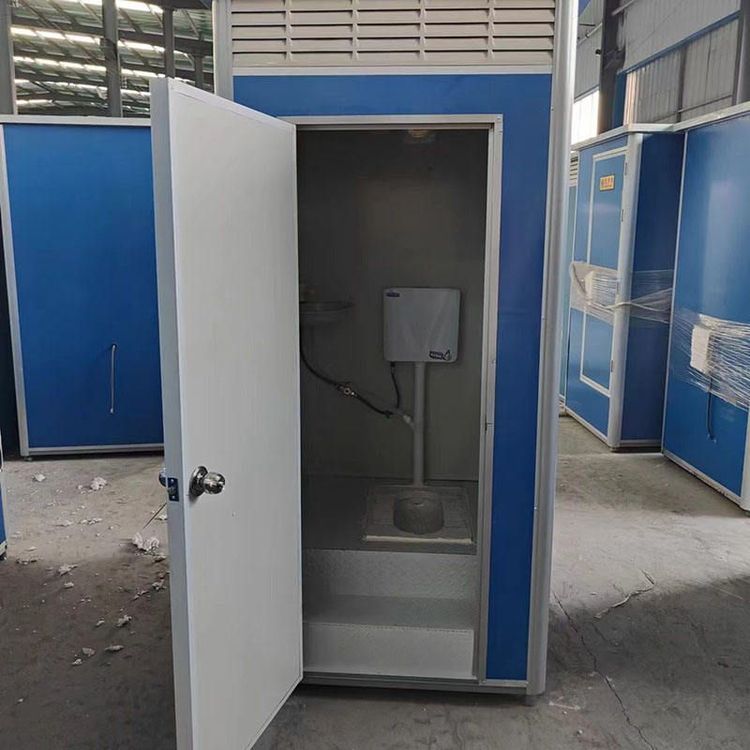
Lanzhou Mobile Sanitation Toilet
Lanzhou mobile sanitation toilets have transitioned from temporary emergency deployments to standardized, modular, and low-carbon development, forming differentiated technical solutions for various scenarios.

Application Scenarios and Technical Adaptability
Municipal departments prioritize weather resistance and bulk delivery capabilities, while cultural and tourism operators focus on aesthetic adaptability and pedestrian flow capacity. Temporary event organizers demand rapid deployment and compatibility with water and electricity interfaces. For example, in 9 out of the 12 newly built suburban parks and 4 urban greenways in Lanzhou in 2025, mobile toilets have been included as essential infrastructure, with procurement standards raised to technical thresholds such as -25℃ low-temperature operation, serving over 300 people per toilet per day, and sewage storage capacity ≥180L, reflecting adaptability to extreme environments and high-load scenarios.
Key Enterprise Technological Breakthroughs
- The TC-800 series from Lanzhou Tongchuang Traffic Facilities Engineering Co., Ltd. employs double-layer sandwich insulation panels + electric tracing systems, combining structural insulation with active heating to address low-temperature operational challenges. It has been mass-applied in the renovation projects of old residential areas in Xigu District and offers turnkey services (including foundation construction, hoisting, and water/electricity connections), reducing user deployment costs.
- The TX-600 model from Lanzhou Tengxiang Environmental Protection Equipment Co., Ltd. features modular assembly design, supporting single-unit disassembly for transport and rapid on-site assembly within 4 hours, suitable for space-constrained areas. Its customized solar power supply + graywater recycling system achieves a daily water-saving rate of 42% per toilet, reducing operational and maintenance costs through renewable energy and water resource recycling.
- The KTC-IoT series from Lanzhou Jintongchuang Environmental Protection Technology Co., Ltd. comes standard with NB-IoT IoT terminals, enabling real-time transmission of usage frequency, fullness status, and other data. It has been integrated into the Qilihe District Smart Public Toilet Monitoring Platform, facilitating remote monitoring and dynamic scheduling to enhance management efficiency.
Special Scenario Case Study
The foam-sealed public toilet installed by the Honggu District Environmental Sanitation Center on the north side of the basketball court under Chuanhai Bridge is equipped with 3 independent toilet stalls, 1 men's urinal, 1 management room, and 1 accessible restroom, complete with an accessible ramp and handrails. This design balances functionality and humanization, providing a reference for the construction of barrier-free facilities in public spaces.